

one of the reasons why I'm critical of "bigger models will solve this" is that cranking the output velocity of technician work sharpens the need for process work, which is the domain of expertise. process is incredibly hard to get right. most fields are bad at it. and it's *gaining* importance.

Ed
when it comes to LLMs, I have been trying to beat the technician/expert drum. LLMs are becoming master technicians, but they obviously lack integrative capabilities to deploy expertise. but I'm starting to realize that a lot of people don't understand, or don't value the difference.
Sep 25, 2026 at 1:55 PM
Deep research requires a slower pace than tech industry work
Anyone working in an industry for a while will become accustomed to that culture—its processes, its norms, its values, its tacit knowledge. Much of this is incredibly valuable, of course, but these ideas can also represent constraints. There are some important impedances here between tech industry culture and research culture. In particular, tech culture is calibrated to a much faster pace. This can lead to impatience or early abandonment when confronting problems which require a researcher’s pace.
Deep research requires a slower pace than tech industry work
Anyone working in an industry for a while will become accustomed to that culture—its processes, its norms, its values, its tacit knowledge. Much of this is incredibly valuable, of course, but these ideas can also represent constraints. There are some important impedances here between tech industry culture and research culture. In particular, tech culture is calibrated to a much faster pace. This can lead to impatience or early abandonment when confronting problems which require a researcher’s pace.
Large tech companies don't need heroes
Large tech companies operate via systems. What that means is that the main outcomes - up to and including the overall success or failure of the company - are driven by a complex network of processes and incentives. These systems are outside the control of any particular person. Like the parts of a large codebase, they have accumulated and co-evolved over time, instead of being designed from scratch.

Slow down to speed up: so much has changed in 6 months’ time
An overview of what’s changed in engineering during the last six months, how various tech companies are changing how they work, and why slowing down could be a sensible strategy
Tech companies are cutting jobs and betting on AI. The payoff is far from guaranteed
AI experts say we’re living in an experiment that may fundamentally change the model of work

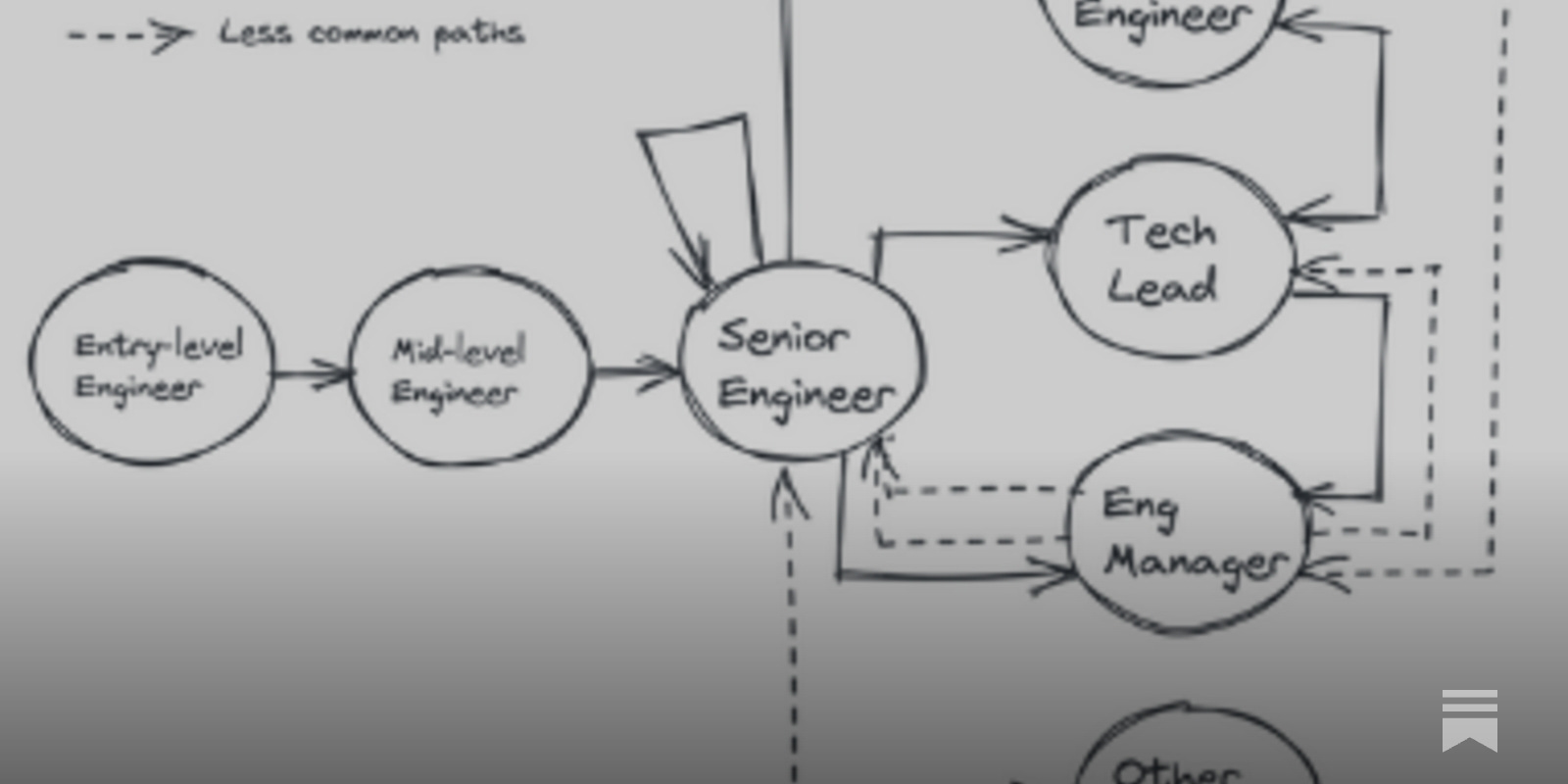
Engineering Career Paths at Big Tech and High-Growth Startups
Levels at big tech, the most common career paths, and what comes after making it to Staff
No Vibes Allowed: Solving Hard Problems in Complex Codebases – Dex Horthy, HumanLayer
Prompting Science Report 4: Playing Pretend: Expert Personas Don't Improve Factual Accuracy
<span> <p><span>This is the fourth in a series of short reports that help business, education, and policy leaders understand the technical details of working with AI through rigorous testing. Here, we ask whether assigning personas to models improves performance on difficult objective multiple-choice questions. We study both domain-specific expert personas and low-knowledge personas, evaluating six models on GPQA Diamond (Rein et al. 2024) and MMLU-Pro (Wang et al. 2024), graduate-level questions spanning science, engineering, and law. </span></p> <p><span>We tested three approaches:</span></p> <p><span>• In-Domain Experts: Assigning the model an expert persona (“you are a physics expert”) matched to the problem type (physics problems) had no significant impact on performance (with the exception of the Gemini 2.0 Flash model).</span></p> <p><span> • Off-Domain Experts (Domain-Mismatched): Assigning the model an expert persona (“you are a physics expert”) not matched to the problem type (law problems) resulted in marginal differences.</span></p> <p><span> • Low-Knowledge Personas: We assigned the model negative capability personas (layperson, young child, toddler), which were generally harmful to benchmark accuracy. </span></p> <p><span>Across both benchmarks, persona prompts generally did not improve accuracy relative to a no-persona baseline. Expert personas showed no consistent benefit across models, with few exceptions. Domain-mismatched expert personas sometimes degraded performance. Low-knowledge personas often reduced accuracy. These results are about the accuracy of answers only; personas may serve other purposes (such as altering the tone of outputs), beyond improving factual performance.</span></p></span>

Why embracing complexity is the real challenge in software today
In the midst of industry discussions about productivity and automation, it’s all too easy to overlook the importance of properly reckoning with complexity.

Avoiding Digital Productivity Traps - Cal Newport
Last week in this newsletter, I summarized some interesting results from a study that analyzed the behavior of 164,000 knowledge workers. It found that introducing ... Read more

Engineering managers have a new job description
Why engineering managers are expected to be hands-on again and how AI tools are making it possible to stay technically sharp while still leading.

1/7 Proud to share our paper, accepted as an oral at ICML '26! We highlight how Big Tech’s influence on AI R&D drives damaging outcomes, and what we as researchers can do about it. We also discuss underlying economic causes. See link for paper, and below for a brief summary arxiv.org/abs/2512.03077
> Making the models smarter doesn't solve the problem. It makes the problem harder to see. So many relatable sentences here.

Mary Berk
I found this article so, so helpful at explaining why slogging through is the best way to learn (and so much more): ergosphere.blog/posts/the-machines-are-fine/
1/7 Proud to share our paper, accepted as an oral at ICML '26! We highlight how Big Tech’s influence on AI R&D drives damaging outcomes, and what we as researchers can do about it. We also discuss underlying economic causes. See link for paper, and below for a brief summary arxiv.org/abs/2512.03077


