

Thrilled to be sharing my latest work at #CogSci2026! Many of the spaces we move through, from kitchens to airports, were designed with specific uses in mind. How do people create such environments, and how do users figure out what they were designed for? 📃 osf.io/preprints/psyarxiv/hd6px_v1
May 12, 2026 at 11:15 PM
Developer Experience Goals for Atproto Spaces - AT Protocol
A new series nailing down the moving parts of building on Spaces

Designing Spaces for Design – Firefox UX
As we've opened or moved into new Mozilla offices and community spaces over the last year or so, we in User-Experience have been thinking about how to create spaces to ...

Architecture and the Internet: Designing places in cyberspace
Cyberspace, as the information space is called, has become accessible in the past decade through the World Wide Web. And although it can only be experienced through the mediation of computers, it is quickly becoming an alternative stage for everyday economic, cultural, and other human activities. As such, there is a potential and a need to design it according to place–like principles. Making places for human inhabitation is, of course, what architects, landscape architects, and town planners have been doing in physical space for thousands of years. It is curious, therefore, that Cyberspace designers have not capitalized on the theories, experiences, and practices that have been guiding physical place–making. While most 3D environments closely mimic physical spaces, they are, by and large, devoid of the essential characteristics that differentiate a ‘place’ from mere ‘space.’ And only rarely are they sensitive to, and take advantage of, the peculiarities of Cyberspace. We believe that this state of affairs is temporary, characteristic of early adoption stages of new technologies. As the Web matures, and as it assumes more fully its role as a destination rather than as means of communication, there will be a growing need to design it according to place–making principles. By looking at physical architecture as a case study and metaphor for organizing space into meaningful places, this paper explores the possibility of organizing Cyberspace into spatial settings that not only afford social interaction, but, like physical places, also embody and express cultural values. At the same time, because Cyberspace lacks materiality, is free from physical constraints, and because it can only be ‘inhabited’ by proxy, these ‘places’ may not necessarily resemble their physical counterparts.
Screen As Room: An Architectural Perspective on User Interfaces — Christoph Locher · Interaction Designer
With the use of video games as social spaces being observed for several years and the increased focus put on virtual social spaces due to the scarceness of physical social spaces in the last months, the concept of “spatial interfaces” is once again at the center of discussions. I want to add an alternative perspective to this, looking at the properties of physical spaces as metaphors, rather than models, for interfaces and exploring seven of them in more detail.
What the Future of Working at Home May Look Like
Innovative home designs find ways to combine living and work spaces

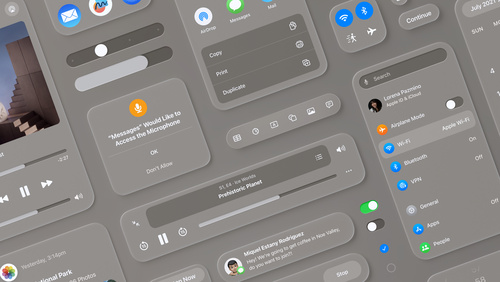
Principles of spatial design - WWDC23 - Videos - Apple Developer
Discover the fundamentals of spatial design. Learn how to design with depth, scale, windows, and immersion, and apply best practices for...


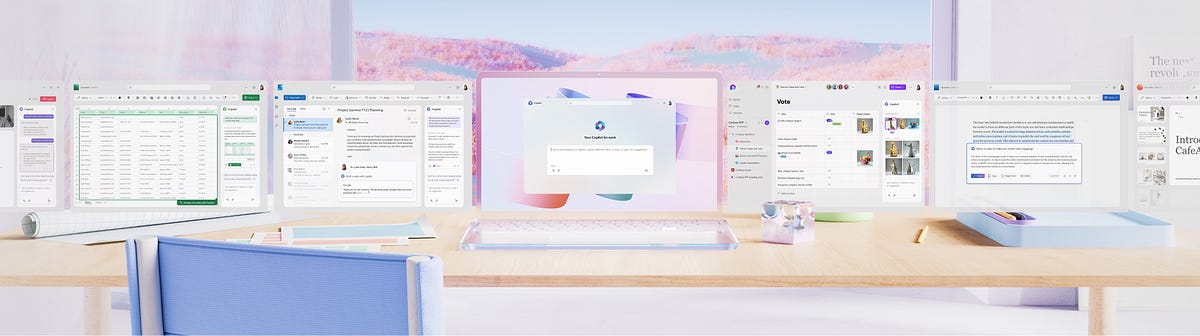
Behind-the-Design: Meet Copilot
When the system is the product; on crafting the next generation of user experiences
Roomy (@roomy.space)
Atmospheric co-gardening of multiplayer spaces. About us: https://a.roomy.space Discord: https://discord.gg/mbQYgFVBQx (being replaced asap) Made by @erlend.sh, @zicklag.dev and @meri.garden

Is it a Hackerspace, Makerspace, TechShop, or FabLab? - Make:
The past decade has seen the sudden, dramatic appearance of community spaces offering public, shared access to high-end manufacturing equipment. These spaces are interchangeably referred to as hackerspaces, makerspaces, TechShops, and FabLabs. This can lead the intended audience to become incredibly confused as to why there might be so many names for a single concept. I'd like to take some time to untangle the mess, explain the concepts behind each title, and talk about why I now make significant distinctions between all of these types of spaces.

Design for spatial user interfaces - WWDC23 - Videos - Apple Developer
Learn how to design great interfaces for spatial computing apps. We'll share how your existing screen-based knowledge easily translates...
Community Spaces on AT Protocol - at:// pizza thoughts
Scaled-down design patterns
we have an idea for communities in the app that we're calling "spaces" — places where people can gather around shared interests or social groups. here's a peek at some early prototypes. these are explorations, not polished or final. looking for feedback, esp from community builders 👀

alex benzer
the bsky team is working on various ideas for creating smaller social spaces in the app. which use case is most interesting to you? 1. posting into "topics" that organize public posts 2. posting into "communities" or "groups" that can be public or private 3. posting directly to your followers only

