

This entire grift relies on convincing people that they don't know how to do the things they have always known how to do, and ironically, if it works, we will, in a very short amount of time, forget how to do all the things we have always known how to do.

More Perfect Union
Jimmy Fallon: "And do you use ChatGPT when raising your baby?" Sam Altman: "I cannot imagine figuring out how to raise a newborn without ChatGPT."
Dec 9, 2025 at 3:40 PM
Launching the Tacit Knowledge Podcast: How the world's hardest problems really get solved
By Kumar Garg
Let me remind me
Truly learning a lesson is deeper than simply knowing the lesson. It’s possible to know a whole lot more than you’re capable of acting on with regularity. And it’s the act, not the mere knowing, th…

Double Click: You Can Just Do Things—But Should You Always? | Figma Blog
The catchphrase is catching fire as early adopters ride the new wave of AI-powered tools. Here’s how we might channel that energy and avoid the risk of being overwhelmed.

The mistake we all make... and the simple experiment that reveals it
Your answer reveals how you see the world – and the common error that hampers our decision making. In an extract from his new book, psychologist Richard Nisbett reveals the ‘mindware’ to help us think smarter

How to do hard things
A fully general system for learning to do things you currently find difficult, only somewhat tongue-in-cheek.
Solving a Million-Step LLM Task with Zero Errors
LLMs have achieved remarkable breakthroughs in reasoning, insights, and tool use, but chaining these abilities into extended processes at the scale of those routinely executed by humans,...

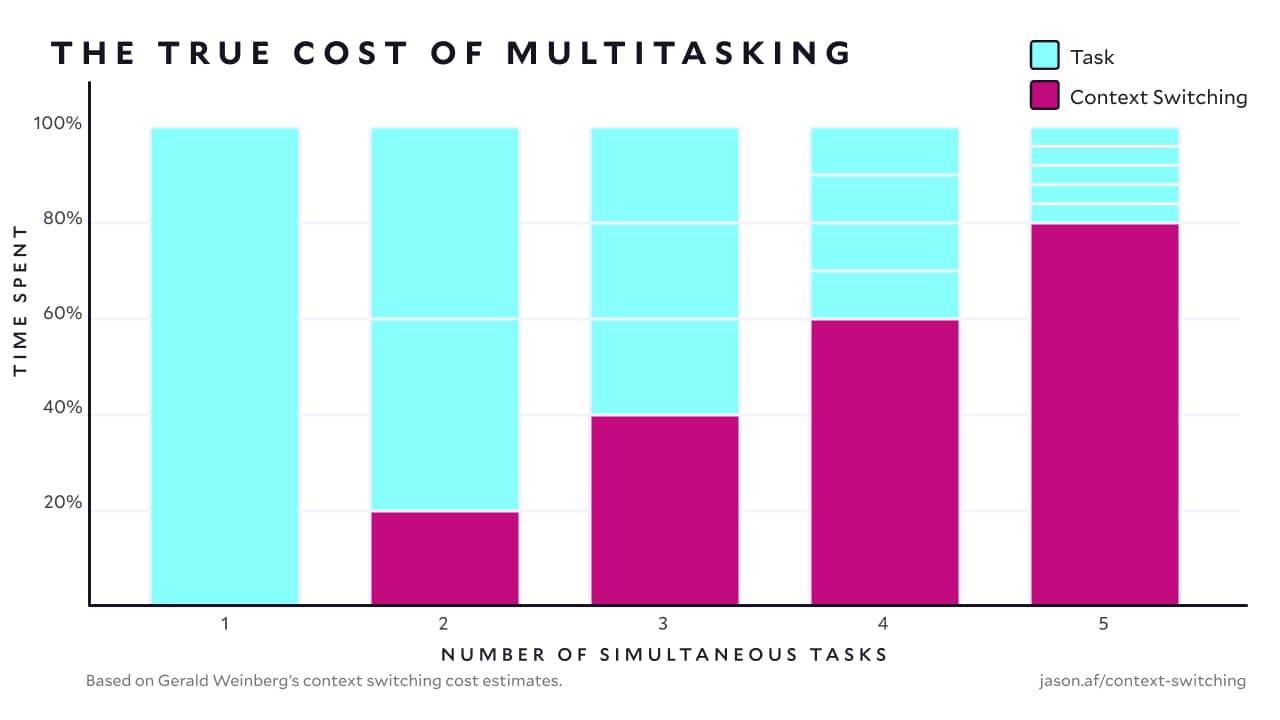
Please stop multitasking. I’m begging you. Please.
The greatest trick we ever pulled on ourselves as knowledge workers was convincing ourselves we could juggle multiple projects with no consequences.
Copying Better: How To Acquire The Tacit Knowledge of Experts
Much of expertise is tacit: that is, it cannot be captured through words alone. We look at techniques, drawn from the field of Naturalistic Decision Making, designed to acquire the tacit knowledge of experts.

Six Ways to Think Long-term: A Cognitive Toolkit for Good Ancestors
None of these six ways is enough alone to create a long-term revolution of the human mind — a fundamental shift in our perception of time. But together — and when practised by a critical mass of people and organisations — a new age of long-term thinking could emerge out of their synergy.

How To Think Real Good | Meta-rationality
Practical epistemology: heuristics for how to think about difficult things, particularly using formal methods.
How I stopped worrying and learned to love the easy fix
On the balance between perfect solutions and pragmatic fixes in software engineering
Freefall 4399 July 13, 2026
TRANSCRIPT Sam: Telling the computer what I want to have done. It makes my job easy. I don't know how it works. I don't know what I'm actually doing. Sam: I've always assumed the other guys know what they're doing. If they're using A.I. as well... this could be a problem. Sam: It makes it too obvious that almost nobody knows what they're actually doing. That destroys one of the illusions societies are built on.
Works in Progress: The Long Journey to Doing Good Better
The more I learn, the more I realize how much I don’t know. — Albert Einstein

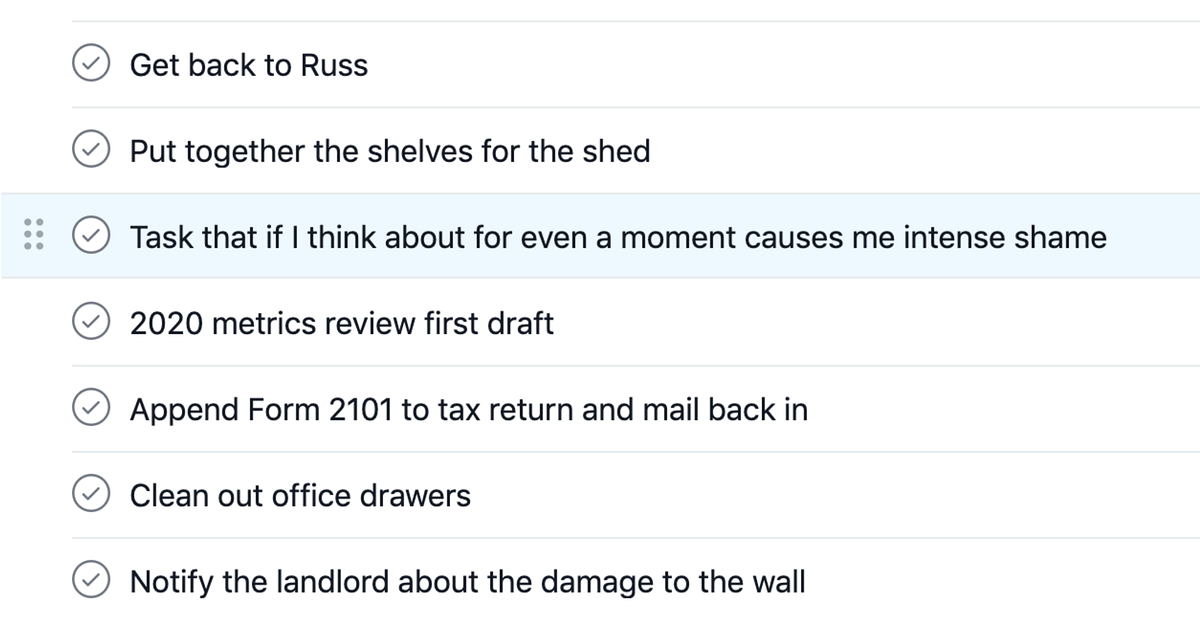
‘Ugh Fields’, or why you can’t even bear to think about that task
Have you ever had a long-overdue task — a task which isn’t so bad in itself — but which you can’t even bring yourself to think about?
The Akrasia Effect: Why We Don’t Follow Through on What We Set Out to Do and What to Do About It
Plus, 3 strategies to help you start beating procrastination now.
Ever thought we acquire generalizable knowledge by discarding details and compressing our experiences? In a new BBS paper, @sabinasloman.bsky.social and I argue otherwise, proposing a novel way of studying human learning inspired by double descent in ML. Disagree? Propose a commentary by May 15 :)

