

What should we make of recent language model advancements in mathematics? In my new post, I reflect on long-standing cognitive debates about symbols and neural networks in light of this progress. infinitefaculty.substack.com/p/symbols-neural-networks-and…

Symbols, neural networks, and mathematical intelligence
infinitefaculty.substack.comJul 27, 2026 at 10:55 PM
Symbols, neural networks, and mathematical intelligence
Some reflections on connectionism and the basis of higher-level cognition

Is AI the End of Math As We Know It? | Quanta Magazine
Mathematicians are facing the sudden shift with grief, anger, and a desperate search for fresh ideas: “If we don’t adapt, there’s just no more math in 50 years.”

Bartosz Naskręcki on Twitter / X
Congrats to @LechMazur for the solution and to Terence Tao for the digestion and storytelling. You see the trend. Mathematicians are still needed if we want to make any sense of the formal proofs. For now... Maybe the next gen LLMs will simply read allthe blogs of Terry and… https://t.co/yXiISCrNAF— Bartosz Naskręcki (@nasqret) August 13, 2026
I’ll write romance novels if AI solves all maths, Chinese Fields winner jokes
As AI models prove they can push the boundaries, mathematicians are grappling with the threat that they could become obsolete.

How linguistics learned to stop worrying and love the language models
Language models (LMs) can produce fluent, grammatical text. Nonetheless, some maintain that language models don’t really learn language and also, even if they did, that would not be informative for the study of human learning and processing. On the other side, there have been claims that the success of LMs obviates the need for studying linguistic theory and structure. We argue that both extremes are wrong. LMs can contribute to fundamental questions about linguistic structure, language processing, and learning. They force us to rethink arguments and ways of thinking that have been foundational in linguistics. While they do not replace linguistic structure and theory, they serve as model systems and working proofs of concept for gradient, usage-based approaches to language. We offer an optimistic take on the relationship between language models and linguistics.
Artificial intelligence is a familiar-looking monster, say Henry Farrell and Cosma Shalizi
The academics argue that large language models have much older cousins in markets and bureaucracies

Mathematics in the age of AI
An essay, based on a public lecture delivered at the 2026 International Congress of Mathematicians, on how the mathematical community might respond to the arrival of artificial intelligence tools that are capable of performing research-level mathematical tasks. Rather than debating the capabilities of such tools, we condition on the hypothesis that these capabilities will arrive, and examine instead a question that is orthogonal to it: what the goals and values of mathematical research actually are. The problem-solving component of mathematics is used as a case study.

Model Collapse Ends AI Hype

Ale×ey on Twitter / X
Funniest possible outcome of new ai math proofs publications would be that explosive progress cannot be delivered through individual genius and singular products but only through contextualized human understanding and embedding of knowledge.— Ale×ey (@EqualParallel) October 7, 2026
AI Data Centers Will Be Obsolete (Geometric Reasoning Explained)
Mapping the Mind of a Large Language Model
We have identified how millions of concepts are represented inside Claude Sonnet, one of our deployed large language models. This is the first ever detailed look inside a modern, production-grade large language model.
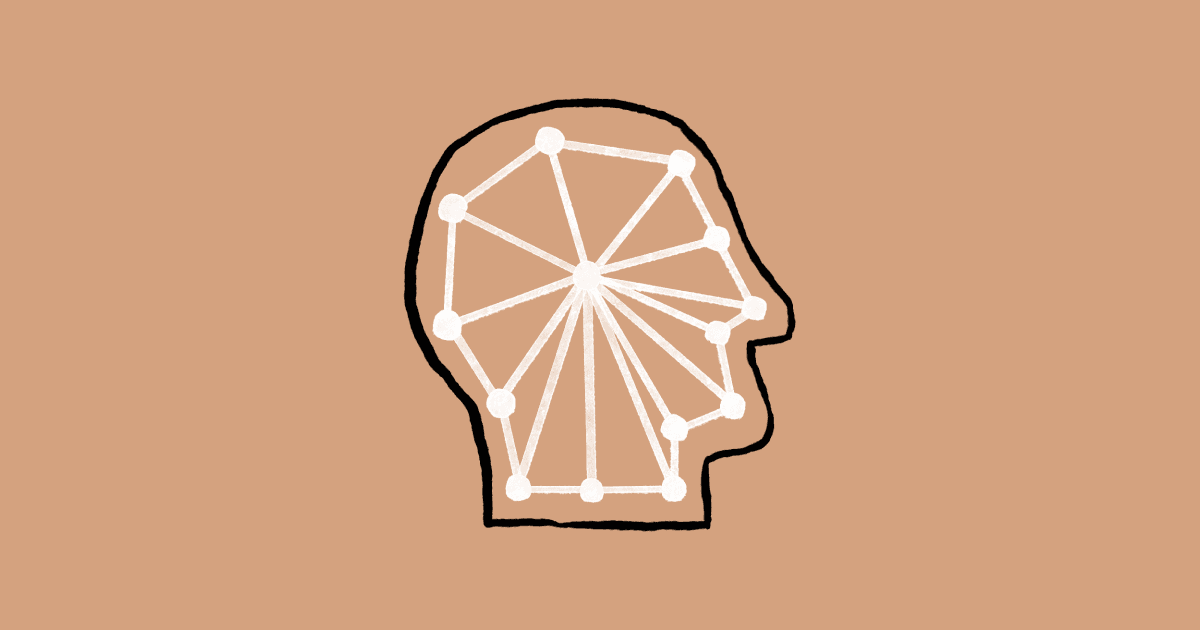
Large language models are cultural technologies. What might that mean?
Four different perspectives

What comes next with open models
Markets, capabilities, cope, and bewilderment in the industrialization of language models.

The AI Revolution in Math Has Arrived | Quanta Magazine
AI is being used to prove new results at a rapid pace. Mathematicians think this is just the beginning.

Artificial intelligences and human scientists exhibit...
We investigate the effectiveness of artificial intelligences (AI)-specifically large language models (LLMs)-relative to human scientists at high-level cognitive tasks in social science such as...
