

Models do not improve linearly (any more). New models improve more than expected on hard tasks. Now let's think about it a bit more. It means progress is directed towards the hard tasks. It also means the easier tasks improve less than expected. Which alphaxiv.org/abs/2608.00355
Aug 9, 2026 at 11:11 AM
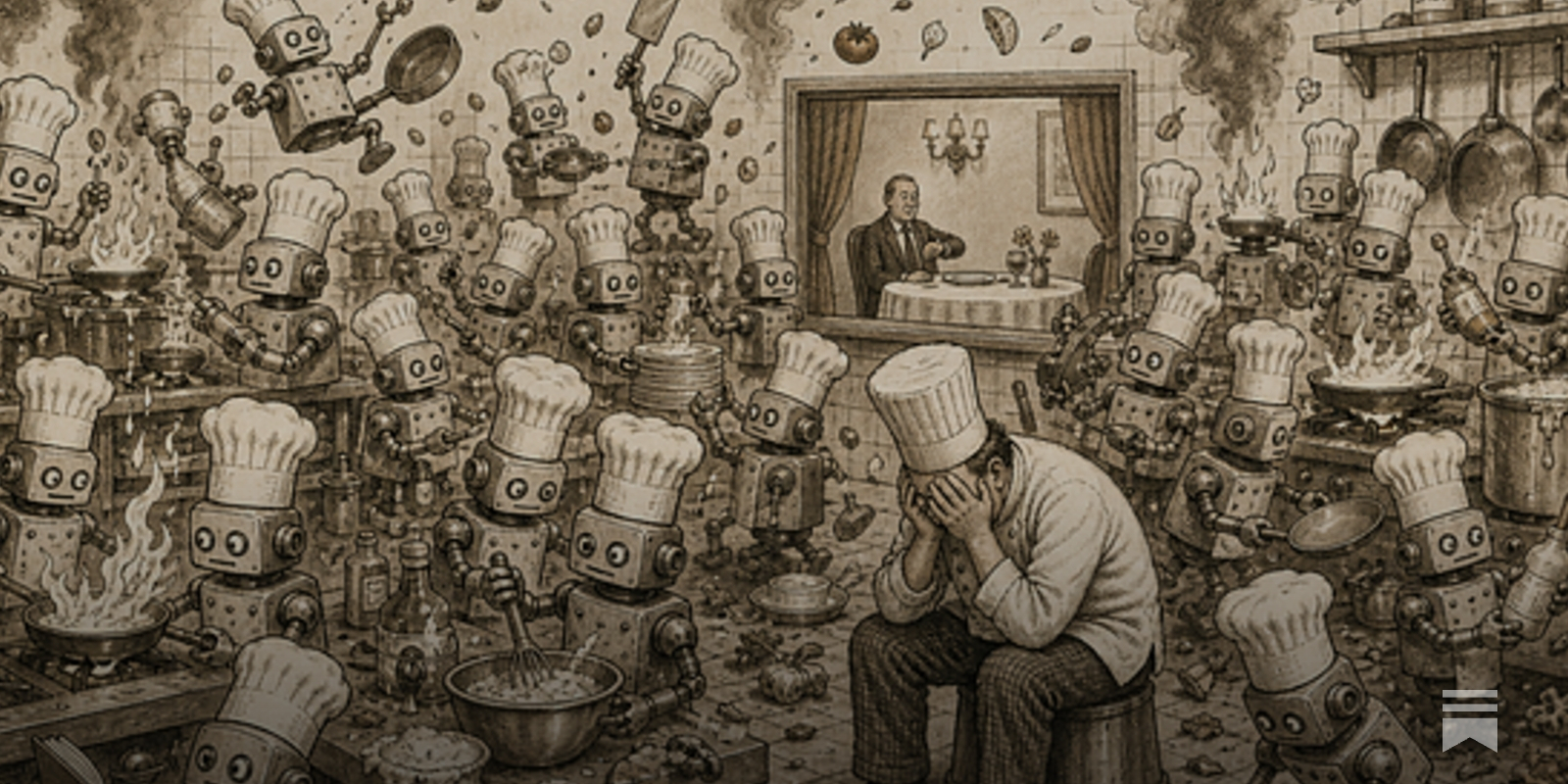
We should be more tired than the model
Adding deliberate friction back into development

AI Doesn’t Reduce Work—It Intensifies It
One of the promises of AI is that it can reduce workloads so employees can focus more on higher-value and more engaging tasks. But according to new research, AI tools don’t reduce work, they consistently intensify it: In the study, employees worked at a faster pace, took on a broader scope of tasks, and extended work into more hours of the day, often without being asked to do so. That may sound like a win, but it’s not quite so simple. These changes can be unsustainable, leading to workload creep, cognitive fatigue, burnout, and weakened decision-making. The productivity surge enjoyed at the beginning can give way to lower quality work, turnover, and other problems. To correct for this, companies need to adopt an “AI practice,” or a set of norms and standards around AI use that can include intentional pauses, sequencing work, and adding more human grounding.

AI Is Forcing Employees to Work Harder Than Ever
Another new study adds to the understanding that AI is actually making work more demanding for employees instead of making it easier.

AI boosts worker productivity — but does that translate to final outputs? | MIT Sloan
A new study found that developers using AI tools can write much more code than those working without AI, but they don’t release as much new software.

Efficiency is the Enemy
If you ever find yourself stressed, overwhelmed, sinking into stasis despite wanting to change, or frustrated when you can’t respond to new opportunities, you need more slack in your life. Here’s how slack works and why you need more of it.
AI Completely Failing to Boost Productivity, Says Top Analyst
AI may or may not excel at a lot of things, but from an economic standpoint, it's definitely not making us more productive.

Are better models better? — Benedict Evans
Every week there’s a better AI model that gives better answers. But a lot of questions don’t have better answers, only ‘right’ answers, and these models can’t do that. So what does ‘better’ mean, how do we manage these things, and should we change what we expect from computers?

When AI builds itself
Our progress toward recursive self-improvement, and its implications.

The Productivity Is Real. The Scaling Isn't.
What running an AI agent team taught me about why organizations can't do what one person can.

Harness Engineering for Self-Improvement
The concept of recursive self-improvement (RSI) dates back to I. J. Good (1965), where he defined an “ultraintelligent machine” as a system that can surpass humans in all intellectual activities and design better machines to improve itself. Yudkowsky (2008) used the phrase “recursive self-improvement” for a specific feedback loop: an AI uses its current intelligence to improve the cognitive machinery that produces its intelligence. This feedback loop in modern AI may indicate the model rewriting its own weights directly, or more broadly the model improves the training pipeline and the deployment system, which in turn enables a better successor model with improved performance across economically valuable tasks. The speed of research development in AI has been shown to drastically accelerated in frontier labs (Anthropic; OpenAI).
How to make Slack less bad for you | Robert Heaton
Slack claim to be in the business of "making your working life simpler, more pleasant, and more productive". We’re about to be cynical, so let’s acknowledge that this claim is probably at least par...

The Optimization Trap: Why Too Much Efficiency Makes Us Fragile with Olivier Hamant
Writing Code vs. Shipping Code: Productivity Effects Across Generations of AI Coding Tools
How do the productivity effects of AI evolve across successive generations of tools, and to what extent do task-level gains ultimately translate into final outp

Writing Code vs. Shipping Code: Productivity Effects Across Generations of AI Coding Tools
How do the productivity effects of AI evolve across successive generations of tools, and to what extent do task-level gains ultimately translate into final outp
one of the reasons why I'm critical of "bigger models will solve this" is that cranking the output velocity of technician work sharpens the need for process work, which is the domain of expertise. process is incredibly hard to get right. most fields are bad at it. and it's *gaining* importance.

Ed
when it comes to LLMs, I have been trying to beat the technician/expert drum. LLMs are becoming master technicians, but they obviously lack integrative capabilities to deploy expertise. but I'm starting to realize that a lot of people don't understand, or don't value the difference.

