

Does Your Brain Think Accurately About Time?
Chicago Booth’s Kristin Donnelly talks about her research on time-duration asymmetry.

Time-Duration Asymmetries in Consumer Decision-Making
Abstract Consumers routinely make decisions about short time periods, such as waiting for a table or deciding whether to pay for faster delivery. Such periods are often expressed by either a duration or a clock time (e.g., if it is 6:00 PM now, “Your table will be ready in 30 minutes” vs. “Your table will be ready at 6:30 PM”). Eight experiments (N = 16,604) show that these logically equivalent frames change how long a period feels, with downstream consequences for consumer decisions. Relatively short time periods feel longer when framed by duration rather than by start and end time (i.e., clock times or calendar dates), but this pattern reverses as periods get longer. We refer to this phenomenon as time-duration asymmetry: framing an interval by its start and end time versus its duration changes how long it feels, with the direction of the effect depending on the interval’s length. We propose that this occurs because duration frames evoke compressive scalar representations shaped by diminishing sensitivity, whereas start-end frames situate time within structured categorical systems that attenuate compression. This research offers a unified framework for understanding how subtle differences in temporal framing shape perceptions of time and subsequent decisions.

Delta
Delta is a first-person movement-heavy platformer game focused on physics-based traversal, speedrunning, and mechanical mastery. And somewhere ahead, the one you lost is still waiting.
Thinking, Fast and Slow
Thinking, Fast and Slow is a 2011 popular science book by the Israeli-American psychologist Daniel Kahneman. Its main thesis is a differentiation between two modes of thought: "System 1" is fast, instinctive and emotional; "System 2" is slower, more deliberative, and more logical.

When Bad Things Happen in Slow Motion - Nautilus
Is there more to our experience of time than the foibles of memory?

Physical healing as a function of perceived time
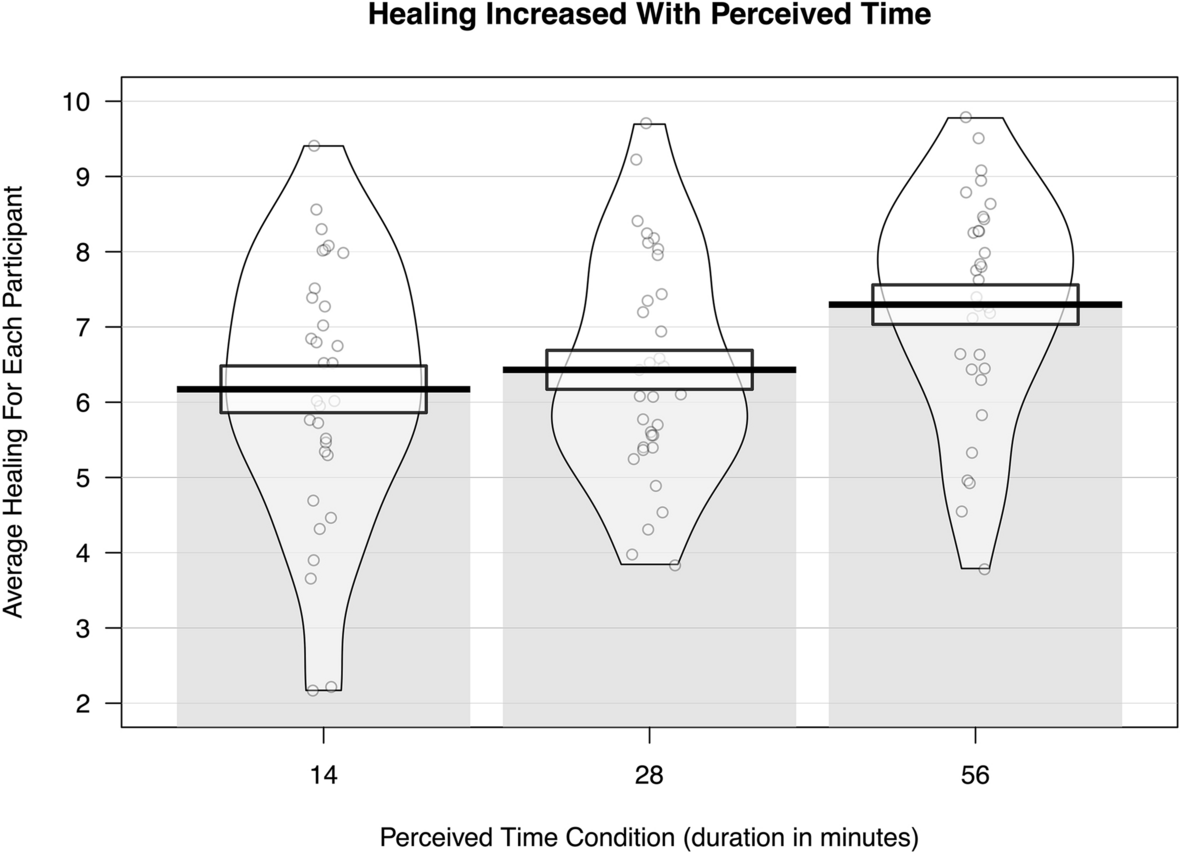
In this study we wounded study participants following a standardized procedure and manipulated perceived time to test whether perceived time affected the rate of healing. We measured the amount of healing that occurred across three conditions using a within-subjects design: Slow Time (half as fast as clock time), Normal Time (clock time), and Fast Time (twice as fast as clock time). Based on the theory of mind–body unity—which posits simultaneous and bidirectional influences of mind on body and body on mind—we hypothesized that wounds would heal faster or slower when perceived time was manipulated to be experienced as longer or shorter respectively. Although the actual elapsed time was 28 min in all three conditions, significantly more healing was observed in the Normal Time condition compared to the Slow Time condition, in the Fast Time condition compared to the Normal Time condition, and in the Fast Time condition compared to the Slow Time condition. These results support the hypothesis that the effect of time on physical healing is directly affected by one’s psychological experience of time, independent of the actual elapsed time.
Stimming as Temporal Awareness
Why Autistics Aren't Odd, Just More Attuned to the Human System Clock

To Make Sense of the Present, Brains May Predict the Future | Quanta Magazine
A controversial theory suggests that perception, motor control, memory and other brain functions all depend on comparisons between ongoing actual experiences and the brain’s modeled expectations.

» The Life and Times of Maxis, Part 3: The Sims The Digital Antiquarian
I don’t think people realize how much tactical and strategic forethought goes into their daily lives. There’s a whole subconscious time-efficiency layer in our lives. In essence, real-time strategy is our lives.
Izabella Kaminska on Twitter / X
The problem of our time is not merely information overload. It is that the time required to construct a coherent understanding of reality is becoming longer than the time during which that understanding remains valid.— Izabella Kaminska (@izakaminska) October 16, 2026
AI World Clocks
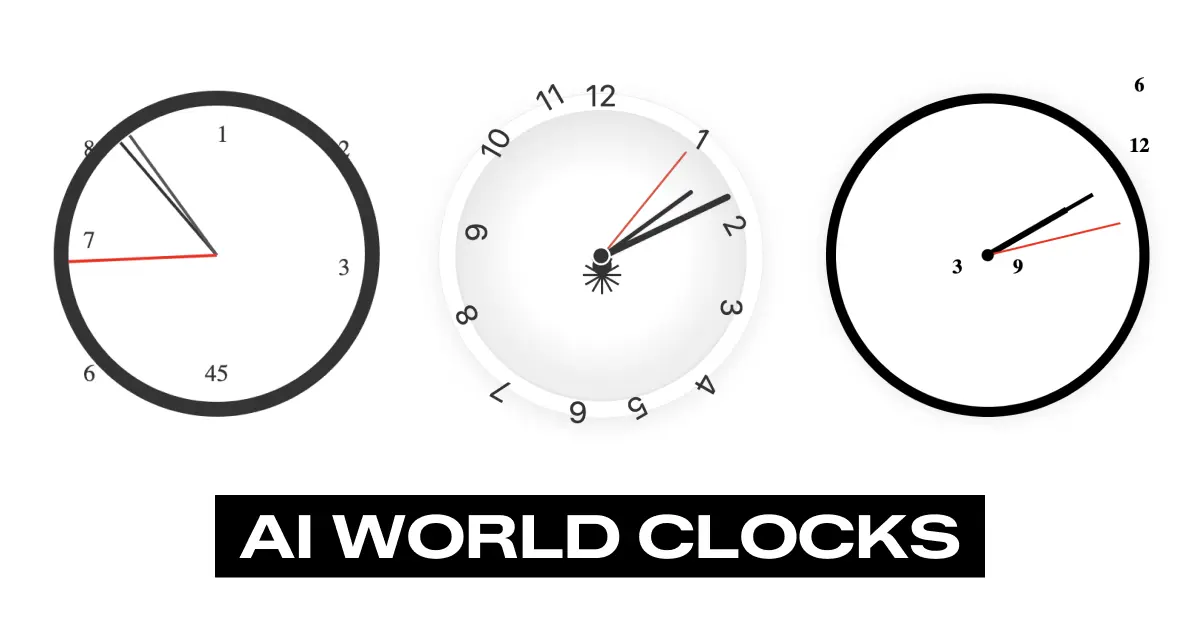
The current time as rendered by 9 different AI models. By Brian Moore.
ε/δ Thinking
We live in a world shaped by, and highly conducive to, discrete or 0/1 thinking. But not so long ago, we lived in a world shaped by, and highly conducive to, a…
An update on leap seconds – Tony Finch
It has been a couple of years since my previous blog post about leap seconds, though I have been tweeting on the topic fairly frequently: see my page on date, time, and leap seconds for an index of threads. But Twitter now seems a lot less likely to stick around, so I’ll aim to collect more of my thinking-out-loud here on my blog.

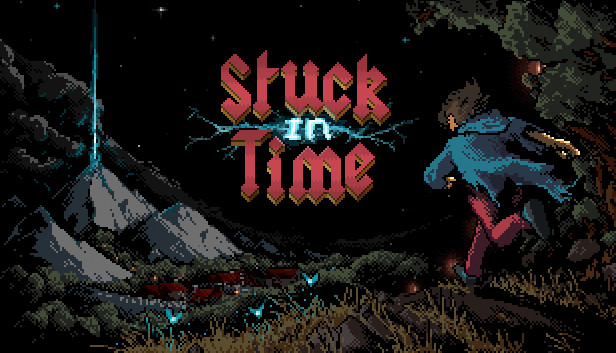
Stuck In Time
A unique mix of adventure and idle game. Plan and optimise your loops carefully and let the grind happen automatically. Explore this unique world, meet strange characters and escape the loop. A high-quality idle game that elevate the mechanics through an old school pixel-art adventure.
The new 20% time, minus the time
Attention is replacing hours. But is it 120% time all over again?

Additionally, thinking in seconds and "DeltaTime" creates the illusion that the game is continuous in time. It's not! It's a sequence of frames! For one thing, if you pick weird times, you'll get "aliasing" where quick events have the occasionally extra-frame added here or there.
Nov 7, 2025 at 6:43 PM
