

Something I’ve been thinking about recently: A lot of useful discoveries come from “the process” - understanding a system, seeing its behavior, getting curious, playing with it, the surprising finds along the way. I’m concerned that by “abstracting” the process we’ll significantly harm that
Sep 9, 2026 at 10:56 PM
The Engine of Scientific Discovery: How New Methods and Tools Spark Major Breakthroughs
Abstract. How do we spark new scientific discoveries? Why do some breakthroughs seem even accidental? And most importantly, how can we accelerate them and
Up and Down the Ladder of Abstraction
"In science, if you know what you are doing, you should not be doing it. In engineering, if you do not know what you are doing, you should not be doing it. Of course, you seldom, if ever, see either pure state."
The Alien Space of Science: Sampling Coherent but Cognitively...
Scientific discovery is constrained not only by what is true, but by what is cognitively available to the researchers currently exploring a field. Many directions are coherent in light of the...

AI has supercharged scientists—but may have shrunk science
Analysis of 41 million papers finds that although AI expands individual impact, it narrows collective scientific exploration
Without a theory of intelligence
The history of science — and of progress — is a series of benefits that are direct results of new tools.
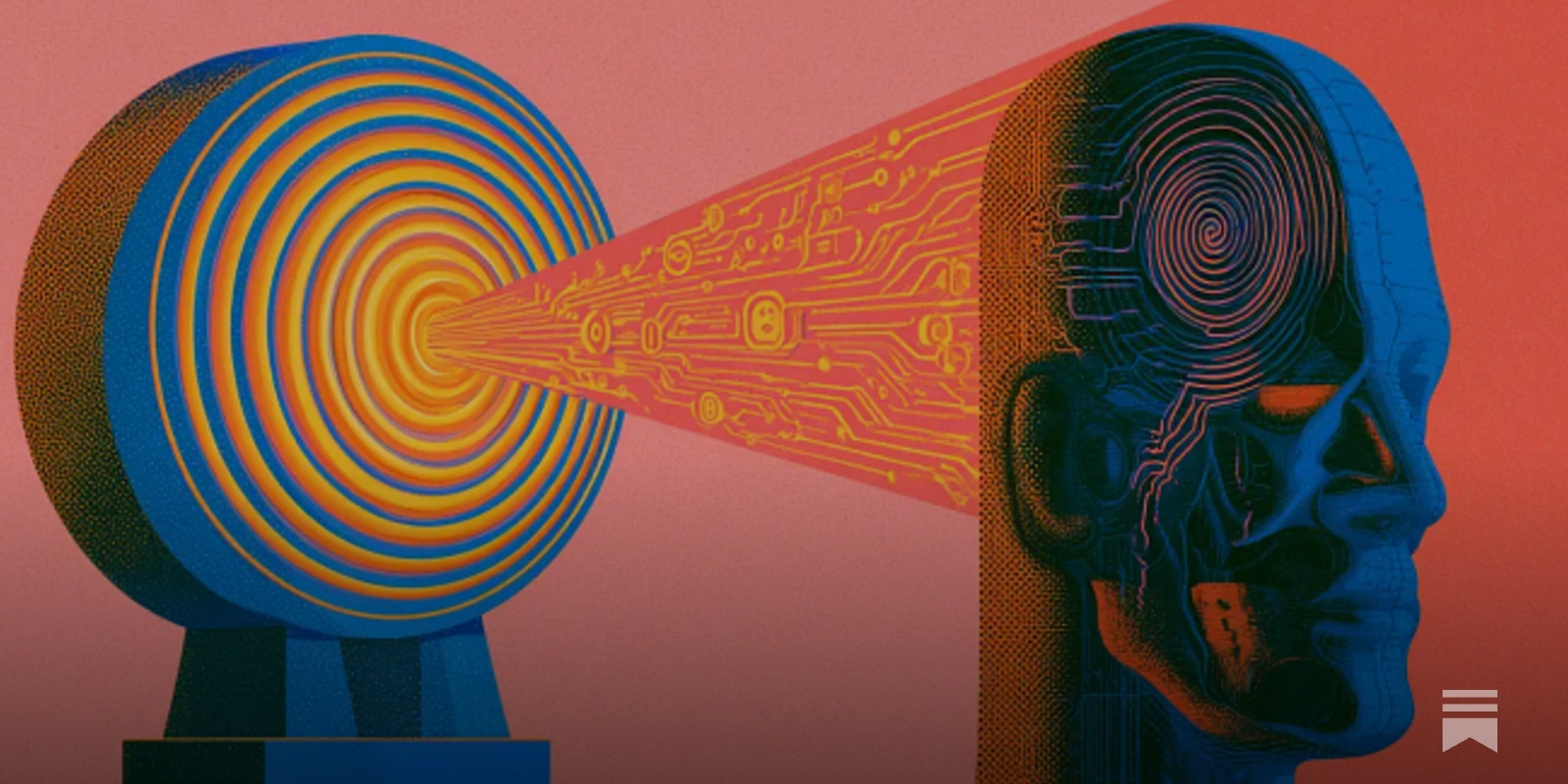
Complexity Explorables
A collection of interactive explorable explanations of complex systems in biology, physics, mathematics, social sciences, epidemiology, ecology and other fields....
The Bazaar of Scientific Knowledge | shishyko!
What if we didn't collapse all the knowledge from the scientific process into one paper?
Addressing the Precision-Breadth-Simplicity Impossible Trinity in Psychological Research: A Comprehensive Exploration Approach
Psychological research faces a fundamental challenge—the Precision-Breadth-Simplicity (PBS) impossible trinity. While experimental findings are often precise and simple, they tend to be narrow in scope. Conversely, broad-and-simple concepts frequently lack precision. Developing theories that are both precise and broad is scientifically valuable but inevitably introduces complexity, which conflicts with humans’ cognitive limitations in processing complexity. To address this impossible trinity, I propose a comprehensive exploration (CE) approach—a data-guided theory-building framework that involves: (1) designing experimental conditions in a stimulus-driven way, with minimal upfront theoretical specification; (2) conducting experiments with tens of millions of observations (e.g., 40 million responses in Huang, 2025a); (3) modeling the results through iterative improvements; and (4) producing the outcome: a moderately complex quantitative information-processing model to integrate diverse empirical findings. Inspired by similar strategies that drove breakthroughs in artificial intelligence (e.g., ImageNet’s role in advancing object recognition), the CE approach offers a promising path toward more integrative psychological theories. Initial implementations in visual working memory research demonstrate both its practicality and potential to transform how we study mental processes.

Introducing TRIBE v2: A Predictive Foundation Model Trained to Understand How the Human Brain Processes Complex Stimuli | Keith Doelling
This is some very cool work by some awesome colleagues Jean-Rémi King, and Teon Brooks! Seriously not enough good things can be said about how cool it is. You should enjoy it and play with it. And kudos to Meta for open sourcing it. At the same time, I'm already seeing posts about how the model will replace fMRI experiments as researchers will simulate how the brain "really works" instead of running costly experiments. I think this goes WELL beyond what its creators intend. We are already seeing that use of AI in science allows you to explore charted ideas more thoroughly and much more rapidly but slows us down in finding novel ideas (https://lnkd.in/eMR2akqt). At the same time, there is growing concern that LLM performance will collapse as they are increasingly trained on their own output (https://lnkd.in/eavgfyuY). Leaving neuroscience to AI simulations risks following the same fate, where we generate seemingly new findings without gaining new meaning. A mechanistic understanding of how the brain works (if that is still your goal) will be found at the margins, in errors and idiosyncrasies of neural function. What TRIBE provides is a super useful and cool instantiation of our current understanding on how and where neural activity is instantiated in the brain. But it won't help us make groundbreaking new findings of how neural circuits lead to cognition and behavior. Experiments on real human brains, may be costly, but they will always be necessary!
Introducing TRIBE v2: A Predictive Foundation Model Trained to Understand How the Human Brain Processes Complex Stimuli | Keith Doelling
This is some very cool work by some awesome colleagues Jean-Rémi King, and Teon Brooks! Seriously not enough good things can be said about how cool it is. You should enjoy it and play with it. And kudos to Meta for open sourcing it. At the same time, I'm already seeing posts about how the model will replace fMRI experiments as researchers will simulate how the brain "really works" instead of running costly experiments. I think this goes WELL beyond what its creators intend. We are already seeing that use of AI in science allows you to explore charted ideas more thoroughly and much more rapidly but slows us down in finding novel ideas (https://lnkd.in/eMR2akqt). At the same time, there is growing concern that LLM performance will collapse as they are increasingly trained on their own output (https://lnkd.in/eavgfyuY). Leaving neuroscience to AI simulations risks following the same fate, where we generate seemingly new findings without gaining new meaning. A mechanistic understanding of how the brain works (if that is still your goal) will be found at the margins, in errors and idiosyncrasies of neural function. What TRIBE provides is a super useful and cool instantiation of our current understanding on how and where neural activity is instantiated in the brain. But it won't help us make groundbreaking new findings of how neural circuits lead to cognition and behavior. Experiments on real human brains, may be costly, but they will always be necessary!
How should social science think about AI?
Big structures and large processes are back, baby

Cultivating a state of mind where new ideas are born
Solitary work, creativity and larval ideas

Rationality: What It Is, Why It Seems Scarce, Why It Matters by Steven Pinker
In the twenty-first century, humanity is reaching new heights of scientific understanding—and at ...
Developing creative identity
I was a theoretical physicist from 1992 to 2007. It was a romantic activity, exploring the fundamental nature of the cosmos! I became a university professor, wrote papers and books, and got to explore some of the most beautiful ideas ever discovered. In parallel, I also developed a fascination with the social systems humanity uses to make knowledge. Systems like the university or peer review are immensely deep inventions: our discovery system is itself one of the great inventions of humanity! But I believed a radically better discovery system must be possible. I became obsessed with this idea, eventually giving up tenure to work on it1. My first big project was to write a book helping develop and spread the fundamental ideas underlying the modern open science movement.
