

Apps - Social Media Lab
As part of our work, the Lab develops public-facing information-integrity dashboards, along with research apps and tools, to support social science research on online participation and communities. Our apps and tools are used by thousands of students, educators and researchers worldwide each year. If you are interested in developing a custom version of any of […]
Crowdsourced Health Research Studies: An Important Emerging Complement to Clinical Trials in the Public Health Research Ecosystem
Background: Crowdsourced health research studies are the nexus of three contemporary trends: 1) citizen science (non-professionally trained individuals conducting science-related activities); 2) crowdsourcing (use of web-based technologies to recruit project participants); and 3) medicine 2.0 / health 2.0 (active participation of individuals in their health care particularly using web 2.0 technologies). Crowdsourced health research studies have arisen as a natural extension of the activities of health social networks (online health interest communities), and can be researcher-organized or participant-organized. In the last few years, professional researchers have been crowdsourcing cohorts from health social networks for the conduct of traditional studies. Participants have also begun to organize their own research studies through health social networks and health collaboration communities created especially for the purpose of self-experimentation and the investigation of health-related concerns. Objective: The objective of this analysis is to undertake a comprehensive narrative review of crowdsourced health research studies. This review will assess the status, impact, and prospects of crowdsourced health research studies. Methods: Crowdsourced health research studies were identified through a search of literature published from 2000 to 2011 and informal interviews conducted 2008-2011. Keyword terms related to crowdsourcing were sought in Medline/PubMed. Papers that presented results from human health studies that included crowdsourced populations were selected for inclusion. Crowdsourced health research studies not published in the scientific literature were identified by attending industry conferences and events, interviewing attendees, and reviewing related websites. Results: Participatory health is a growing area with individuals using health social networks, crowdsourced studies, smartphone health applications, and personal health records to achieve positive outcomes for a variety of health conditions. PatientsLikeMe and 23andMe are the leading operators of researcher-organized, crowdsourced health research studies. These operators have published findings in the areas of disease research, drug response, user experience in crowdsourced studies, and genetic association. Quantified Self, Genomera, and DIYgenomics are communities of participant-organized health research studies where individuals conduct self-experimentation and group studies. Crowdsourced health research studies have a diversity of intended outcomes and levels of scientific rigor. Conclusions: Participatory health initiatives are becoming part of the public health ecosystem and their rapid growth is facilitated by Internet and social networking influences. Large-scale parameter-stratified cohorts have potential to facilitate a next-generation understanding of disease and drug response. Not only is the large size of crowdsourced cohorts an asset to medical discovery, too is the near-immediate speed at which medical findings might be tested and applied. Participatory health initiatives are expanding the scope of medicine from a traditional focus on disease cure to a personalized preventive approach. Crowdsourced health research studies are a promising complement and extension to traditional clinical trials as a model for the conduct of health research.

You can just review things: A digital ethnography of informal peer review
Across scholarly communities, manuscripts face similar evaluative rituals: editors invite experts to privately assess submissions through formal peer reviews. This closed, loosely structured, and...

Evidence appraisal: a scoping review, conceptual framework, and research agenda
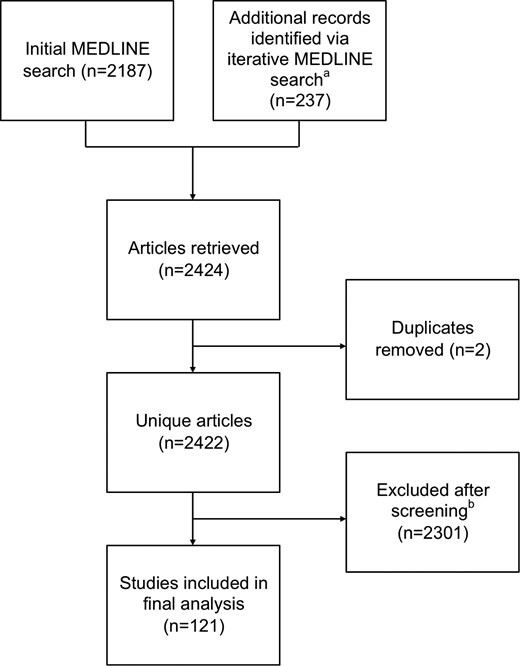
Abstract Objective Critical appraisal of clinical evidence promises to help prevent, detect, and address flaws related to study importance, ethics, validity, applicability, and reporting. These research issues are of growing concern. The purpose of this scoping review is to survey the current literature on evidence appraisal to develop a conceptual framework and an informatics research agenda. Methods We conducted an iterative literature search of Medline for discussion or research on the critical appraisal of clinical evidence. After title and abstract review, 121 articles were included in the analysis. We performed qualitative thematic analysis to describe the evidence appraisal architecture and its issues and opportunities. From this analysis, we derived a conceptual framework and an informatics research agenda. Results We identified 68 themes in 10 categories. This analysis revealed that the practice of evidence appraisal is quite common but is rarely subjected to documentation, organization, validation, integration, or uptake. This is related to underdeveloped tools, scant incentives, and insufficient acquisition of appraisal data and transformation of the data into usable knowledge. Discussion The gaps in acquiring appraisal data, transforming the data into actionable information and knowledge, and ensuring its dissemination and adoption can be addressed with proven informatics approaches. Conclusions Evidence appraisal faces several challenges, but implementing an informatics research agenda would likely help realize the potential of evidence appraisal for improving the rigor and value of clinical evidence.
Making sense of preprints by adding context – The Publish Your Reviews initiative - LSE Impact
Improving scientific publishing is often framed as an issue of openness and speed and less often as one of context. In this post, Ludo Waltman and Jessica Polka make the case for a more contextualised approach to open access publishing and preprinting, and introduce the Publish Your Reviews initiative. Launched today by ASAPbio, the initiative

The Medium is the Message: How Non-Clinical Information Shapes Clinical Decisions in LLMs | Proceedings of the 2025 ACM Conference on Fairness, Accountability, and Transparency
There has been a growing interest in the HCI community to study Health, with particular focus in understanding healthcare practices and designing technologies to support and to enhance these practices. A majority of current health studies in HCI have ...


Home | Bellingcat's Online Investigation Toolkit
A toolkit for open source researchers

Individual Experience vs. The Cochrane Review
On my decade-long exploration seeking a scientific language for singular evidence.

The Utility of AI Tools in Auditing Adherence to Pre-Analysis Plans
Pre-analysis plans (PAPs) can improve research reproducibility by reducing researchers’ degrees of freedom, but their value depends on adherence. We argue that large language models (LLMs) can provide an efficient, scalable, and systematic way for authors and reviewers to assess adherence to PAPs. In an application to our own research, an LLM systematically identifies precommitted design choices, evaluates deviations, and diagnoses gaps in pre-specification, substantially reducing the human labor required for these tasks. However, variability in audit output across LLMs underscores the continued importance of human judgment. We discuss implications for best practices in AI-assisted PAP auditing.

in progress works
lightweight accountability community and journal for your side projects
I’ve been quiet on social media lately, but today I’m launching Audit Clinical Evidence (ACE), an initiative I’ve been developing over the past year. Take a look: auditclinicalevidence.org
Sep 13, 2026 at 5:17 PM
Anyone remember the newsreader app, Paper? Started prototyping an atproto take on it using @standard.site records
For the past six months @mariaa.bsky.social and I have been working on creating an improved research experience on atproto. It's now live! Check out: lea.ac

Lea: research-oriented social media
leaflet.pubI am presenting my work in @ic2s2.bsky.social today 1:15-2:15 pm at Davis Center (1st Floor) Poster # 24. If you are interested in bias auditing, please stop by. This work is published in @aclmeeting.bsky.social 2026. #ic2s2 #ic2s22026 @uvmvermont.bsky.social @vcsi.bsky.social
If you're building apps for the social web, this survey report by Incogni is really worth a read. People are quietly withdrawing from active participation in social media. blog.incogni.com/digital-fatigue-and-burnout/ Extracts in the thread 🧶 👇

The great digital fatigue: How digital burnout is changing social media use [2026] | Incogni
blog.incogni.com


