

Mindless Machines, Mindless Myths | Los Angeles Review of Books
Erik J. Larson thinks about “Mindless: The Human Condition in the Age of Artificial Intelligence,” which traces Robert Skidelsky’s philosophical reckoning with AI, automation, and the illusion of progress.
:quality(75)/https%3A%2F%2Fassets.lareviewofbooks.org%2Fuploads%2FMindless.jpg)
Mindless Machines, Mindless Myths | Los Angeles Review of Books
Erik J. Larson thinks about “Mindless: The Human Condition in the Age of Artificial Intelligence,” which traces Robert Skidelsky’s philosophical reckoning with AI, automation, and the illusion of progress.
:quality(75)/https%3A%2F%2Fassets.lareviewofbooks.org%2Fuploads%2FMindless.jpg)
On working machines
In part one, on thinking machines, I explored two facets of the philosophy of artificial intelligence: “intelligence”, and consciousness. That left an important topic to consider for this post: the...
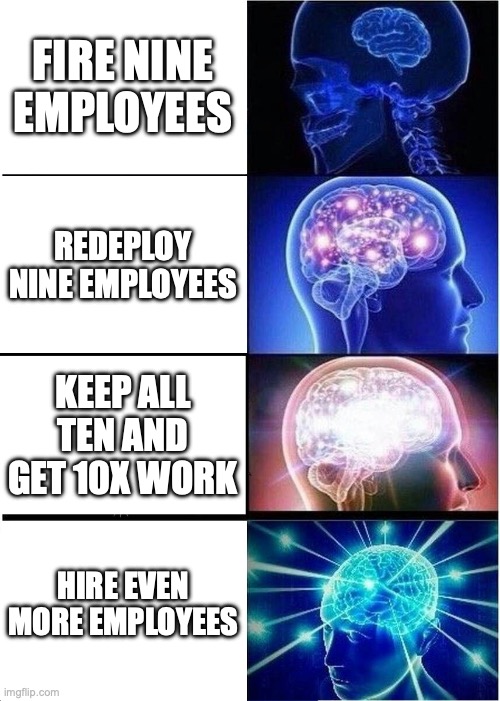
Rethinking the Luddites in the Age of A.I.
Brian Merchant’s new book, “Blood in the Machine,” argues that Luddism stood not against technology per se but for the rights of workers in the face of automation.

Pluralistic: “Rights for robots” and the AI slavery fantasy (10 Jul 2026) – Pluralistic: Daily links from Cory Doctorow
While the AI bubble is primarily a material phenomenon (driven by the calculation that bosses are easy marks for a sales pitch that sees them replacing workers with software), there is an inescapable ideological component to it: the desire for a world without people in it:
W Social is a textbook case for everything wrong with digital sovereignty
Insanity is doing the same thing over and over again, but expecting different results. This saying is attributed to the famous socialist (and theoretical physicist) Albert Einstein but actually traces back to novelist Rita Mae Brown. I have been thinking about this saying a lot lately. The reason is

Machines of Caring Grace
The goal should be to support humans, not to replace them.

The Future of AI
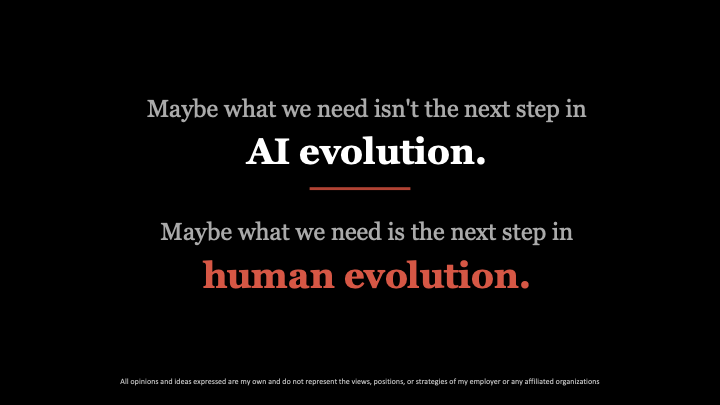
The Parents’ Paradox: AI, Ethics, and the Limits of Machine Morality This post is based on a talk I gave at The AI & Automation Conference in London on February 25, 2026, and my slides. A…
Are we offloading too much of our thinking to AI?
Reflections on autonomy and the value of thinking for ourselves
Convivial Computing
In 1973, Ivan Illich published Tools for Conviviality, a book about man's relation to tools 1. Illich pleaded for a pluralism of responsibly limited tools that guarantee an individual’s right to work with independent efficiency, the development of which is "as unpredictable, creative and lively as the people who use them" (Illich, 1973) 2. He pointed to overgrowth and overproduction threatening the right to a liveable environment, which unfortunately led him to ideas on gender and population control that are highly problematic 3. His ideas are included in the Catalog because of their influence on other practices, that picked up on his ideas about limited tools and turned a blind eye to the less appealing parts of his writing.
Myopic memory: Capitalism's new continuity in the age of AI
This article is a commentary on the relationship between artificial intelligence (AI), capitalism, and memory. The political policies of neoliberalism have reduced the capacity of individuals and groups to reflect on and change the social world, meanwhile applications of AI and algorithmic technologies, rooted in the profit-seeking objectives of global capitalism, deepen this deficit. In these conditions, memory in individuals and across society is at risk of becoming myopic. In this article, I develop the concept of myopic memory with two core claims. Firstly, I argue that AI is a technological development that cannot be divorced from the capitalist conditions from which it comes from and is implemented in service of. To this end, I reveal capitalism and colonialism's historical and contemporary use of surveillance as a way to control the populations it oppresses, imagining their pasts to determine their futures, disempowering them in the process. My second core claim emphasises that this process of disempowerment is undergoing an acute realisation four decades into the period of neoliberalism. Neoliberal policies have restructured society on the basis of being an individual consumer, leaving little time, space, and institutional capacity for citizens to reflect on their impact or challenge their dominance. As a result, with the growing role of AI and algorithmic technologies in shaping our engagement with society along similar lines of individualism, it is my conclusion that the scope of memory is being reduced and constrained within the prism of capitalism, reducing its potential, and rendering it myopic.
The genie knows, but doesn't care — LessWrong
Followup to: The Hidden Complexity of Wishes, Ghosts in the Machine, Truly Part of You …

The Irrational Decision
How the computer revolution shaped our conception of rationality—and why human problems require solutions rooted in human intuition, morality, and judgment

"[Man] aspires to make robots as one of the greatest achievements of his technical mind, and some specialists assure us that the robot will hardly be distinguished from living men. This achievement will not seem so astonishing when man himself is hardly distinguishable from a robot." - Erich Fromm


