

Ever thought we acquire generalizable knowledge by discarding details and compressing our experiences? In a new BBS paper, @sabinasloman.bsky.social and I argue otherwise, proposing a novel way of studying human learning inspired by double descent in ML. Disagree? Propose a commentary by May 15 :)
Apr 20, 2026 at 7:35 PM
Introducing Nested Learning: A new ML paradigm for continual learning
Ali Behrouz, Student Researcher, and Vahab Mirrokni, VP and Google Fellow, Google Research

Excess Capacity Learning
How do humans learn from experience? Traditionally, cognitive scientists have assumed that discovering generalizable patterns requires that humans compress rich and noisy experiences. However, recent computer science results suggest otherwise — systems can learn by ‘overfitting’ and expanding all the details of their experiences. We offer a new perspective on learning based on a cognitive system’s representational capacity, which can be constrained (forcing the system to compress details of past experiences), sufficient (to memorize past experiences), or excess (allowing the system to expand on the details of past experiences). This framework has implications for understanding learning across cognitive, clinical, and developmental contexts.
Not Learning from Others
We study social learning using experiments where two people independently learn relevant information and can share it to make accurate private decisions. Across three experiments, people are substantially less sensitive to information others discover than to equally-relevant information they discovered themselves. This holds when they must learn information from others through discussion; when the experimenter perfectly communicates the information; and even when participants observe others’ information with their own eyes. Our results therefore stem not from a failure to elicit information from others but a systematic tendency to underweight it relative to one’s own information. Our findings illustrate a powerful barrier to social learning that might underlie many documented cases of failure to learn from others.

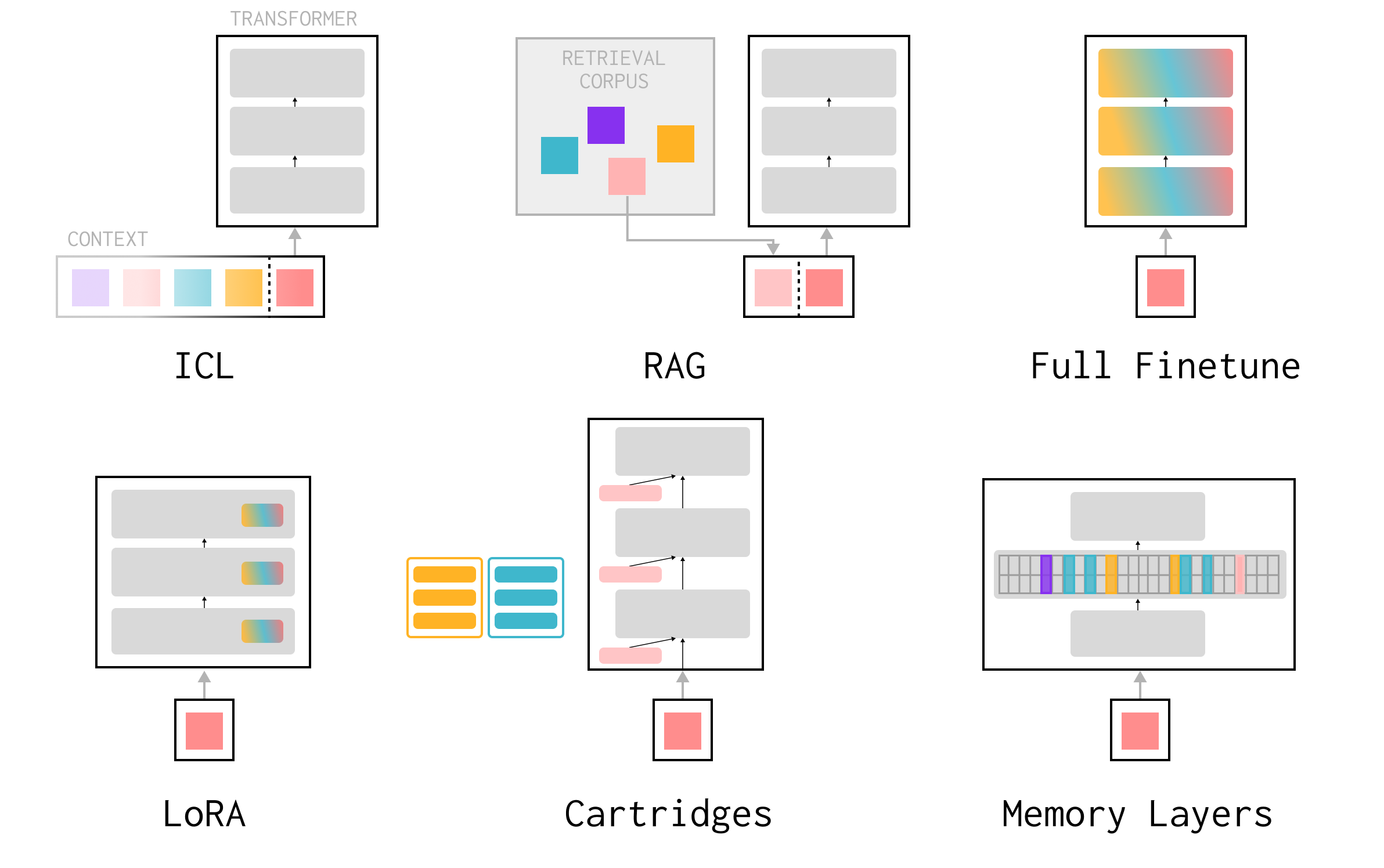
The Continual Learning Problem
A perspective on continual learning, motivating our paper on sparse memory finetuning
Social learning preserves both useful and useless theories by canalizing learners’ exploration
In many domains, learning from others is crucial for leveraging cumulative cultural knowledge, which encapsulates the efforts of successive generations of innovators. However, anecdotal and experimental evidence suggests that reliance on social information can reduce the exploration of the problem space. Here, we experimentally investigate the extent to which cultural transmission fosters the persistence of arbitrary solutions in a context where participants are incentivized to improve a physical system across multiple trials. Participants were exposed to various theories about the system, ranging from accurate to misleading. Our findings indicate that even under conditions conducive to exploration, the transmission of cultural knowledge canalizes learners’ focus, limiting their consideration of alternative solutions. This effect was observed in both the theories produced and the solutions attempted by participants, irrespective of the accuracy of the provided theories. These results challenge the notion that arbitrary solutions persist only when they are efficient or intuitive and underscore the significant role of cultural transmission in shaping human knowledge and technologies.

Large-Scale Study of Curiosity-Driven Learning
Burda*, Edwards*, Pathak* et.al. (* equal contribution, alphabetical order) Large-Scale Study of Curiosity-Driven Learning. 2018.

Iterated learning: Intergenerational knowledge transmission reveals inductive biases
Cultural transmission of information plays a central role in shaping human knowledge. Some of the most complex knowledge that people acquire, such as languages or cultural norms, can only be learned from other people, who themselves learned from previous generations. The prevalence of this process of “iterated learning” as a mode of cultural transmission raises the question of how it affects the information being transmitted. Analyses of iterated learning utilizing the assumption that the learners are Bayesian agents predict that this process should converge to an equilibrium that reflects the inductive biases of the learners. An experiment in iterated function learning with human participants confirmed this prediction, providing insight into the consequences of intergenerational knowledge transmission and a method for discovering the inductive biases that guide human inferences.
Let me remind me
Truly learning a lesson is deeper than simply knowing the lesson. It’s possible to know a whole lot more than you’re capable of acting on with regularity. And it’s the act, not the mere knowing, th…

AI, Human Cognition and Knowledge Collapse
We study how generative AI, and in particular agentic AI, shapes human learning incentives and the long-run evolution of society’s information ecosystem. We bui

AI, Human Cognition and Knowledge Collapse
We study how generative AI, and in particular agentic AI, shapes human learning incentives and the long-run evolution of society’s information ecosystem. We bui
Fleetwood on Twitter / X
Studying continual learning at the moment, best papers thus far:https://t.co/Y9oXBAiyj2https://t.co/ByWlaF3ncnhttps://t.co/hG0XIzq6cHhttps://t.co/5VSEnBIkX2— Fleetwood (@fleetwood___) April 11, 2026
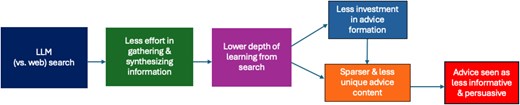
Experimental evidence of the effects of large language models versus web search on depth of learning
Abstract The effects of using large language models (LLMs) versus traditional web search on depth of learning are explored. A theory is proposed that when individuals learn about a topic from LLM syntheses, they risk developing shallower knowledge than when they learn through standard web search, even when the core facts in the results are the same. This shallower knowledge accrues from an inherent feature of LLMs—the presentation of results as summaries of vast arrays of information rather than individual search links—which inhibits users from actively discovering and synthesizing information sources themselves, as in traditional web search. Thus, when subsequently forming advice on the topic based on their search, those who learn from LLM syntheses (vs. traditional web links) feel less invested in forming their advice, and, more importantly, create advice that is sparser, less original, and ultimately less likely to be adopted by recipients. Results from seven online and laboratory experiments (n = 10,462) lend support for these predictions, and confirm, for example, that participants reported developing shallower knowledge from LLM summaries even when the results were augmented by real-time web links. Implications of the findings for recent research on the benefits and risks of LLMs, as well as limitations of the work, are discussed.
A World Unobserved
Humans have always generated knowledge and judged it. That's changing fast.

At today's #IC2S2 Methods and Measurement session, Linnea Gandhi @linneagandhi.bsky.social presented her study with Elizabeth Tipton and Duncan Watts, which tests whether research syntheses can predict the results of new studies and highlights the challenges of producing generalizable knowledge.
This entire grift relies on convincing people that they don't know how to do the things they have always known how to do, and ironically, if it works, we will, in a very short amount of time, forget how to do all the things we have always known how to do.

More Perfect Union
Jimmy Fallon: "And do you use ChatGPT when raising your baby?" Sam Altman: "I cannot imagine figuring out how to raise a newborn without ChatGPT."


