

The mistake seems to come from citing Cisek, who *does* say affordances are “represented”. But he’s using the neural meaning of representation which is much looser than the CTM definition. What Cisek says is compatible with neural resonance, which is a bona fide Gibsonian notion.
Jan 11, 2026 at 2:44 AM
Affordance
In psychology, affordance is what the environment offers the individual. In design, affordance has a narrower meaning; it refers to possible actions that an actor can readily perceive.

Mystified magicians of the mind
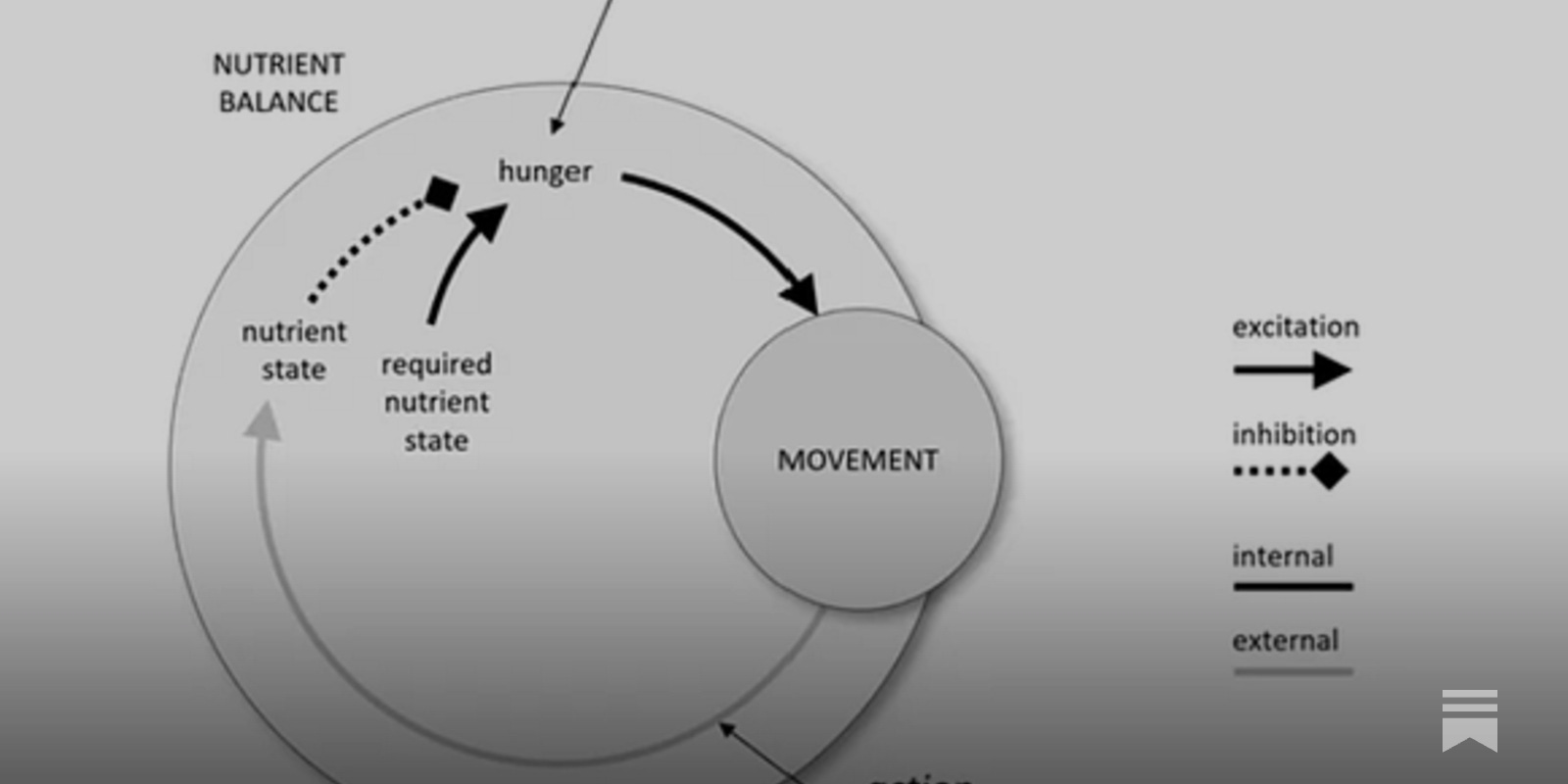
My conversation with neuroscientist Paul Cisek
10 Examples of Affordances - The Boffins Portal
Affordance is a concept in design that refers to the possible actions or uses that an object or environment offers a user. It is the relationship between an object and the person using it and what the person perceives they can do with the object based on its physical characteristics. In other words, affordance is ... Read more

Funding and Framing Impact in the Neuro Frontier
Representations 04: Philanthropy, FRO, Connectomes, ARIA
Towards Post-Interaction Computing: Addressing Immediacy, (un)Intentionality, Instability and Interaction Effects
We situate the debate on intentionality within the rise of cognitive neuroscience and argue that cognitive neuroscience can explain intentionality. We discuss the explanatory significance of ascribing intentionality to representations. At first, we ...

What are Affordances? — updated 2026
Affordances are the characteristics or properties of an object that suggest how it can be used. It shows a user that an object can be interacted with.

Understanding the Limits of Vision Language Models Through the Lens of the Binding Problem
Recent work has documented striking heterogeneity in the performance of state-of-the-art vision language models (VLMs), including both multimodal language models and text-to-image models. These models are able to describe and generate a diverse array of complex, naturalistic images, yet they exhibit surprising failures on basic multi-object reasoning tasks -- such as counting, localization, and simple forms of visual analogy -- that humans perform with near perfect accuracy. To better understand this puzzling pattern of successes and failures, we turn to theoretical accounts of the binding problem in cognitive science and neuroscience, a fundamental problem that arises when a shared set of representational resources must be used to represent distinct entities (e.g., to represent multiple objects in an image), necessitating the use of serial processing to avoid interference. We find that many of the puzzling failures of state-of-the-art VLMs can be explained as arising due to the binding problem, and that these failure modes are strikingly similar to the limitations exhibited by rapid, feedforward processing in the human brain.
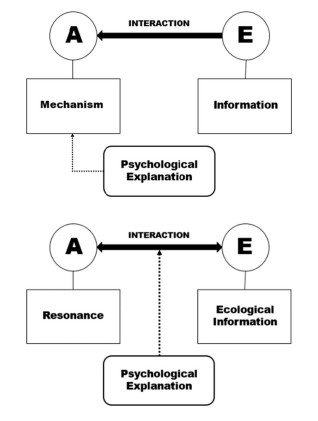
560 – Ecological Cognition II: Resonance
560 What the heck does the brain do in Ecological Dynamics, if it isn’t computing, processing, or representing? An introduction to the concept of Resonance.Download link
51 Ways to Spell the Image Giraffe: The Hidden Politics of Token Languages in Generative AI
Generative AI models don't operate on human languages – they speak in **tokens**. Tokens are computational fragments that deconstruct lan...

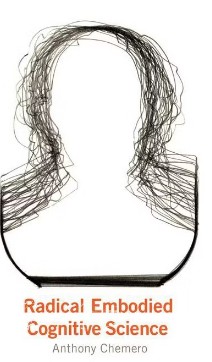
562 – Ecological Cognition III: Radical Embodied Cognitive Science (part 1)
562 Continuing the journey in understanding the Ecological approach to cognition by looking at Tony Chemero’s book: Radical Embodied Cognitive Science. Conceptualizing cognition in terms of agent-environment dynamics instead of computation and representation. What is RECS, and where did these ideas come from?Download link
A foundation model of vision, audition, and language for in-silico neuroscience | Research - AI at Meta
Cognitive neuroscience is fragmented into specialized models, each tailored to specific experimental paradigms, hence preventing a unified model of...
Horismos: Self-representation and the Derived Constitutional Boundary in Enriched Cognitive Systems
We present a theory of self-representing cognitive systems grounded in $$([0,\infty ],+)$$([0,∞],+)-enriched category theory and the Yoneda lemma. The central object is a self-representing $$([0,\infty ],+)$$([0,∞],+)-enriched category $$\mathcal{C}$$C—a Lawvere metric space whose objects are complete epistemic architectures, whose hom-values record directed informational upgrade costs, and which is separated, closed under internal homs, and bilaterally Cauchy complete—together with a contractive cognitive endofunctor $$F:\mathcal{C}\rightarrow \mathcal{C}$$F:C→Cmodelling iterative self-improvement. We establish eight results in a single logical arc. The Horizon Theorem shows that the Yoneda embedding $$\varphi (A)=\mathcal{C}(-,A)$$φ(A)=C(-,A)is never essentially surjective: $$\mathcal{C}$$C sits strictly inside its own free Cauchy completion $$\mathcal{P}(\mathcal{C})$$P(C), with the non-representable presheaves forming a topologically dense family, proved via a reflexivity argument. The Lawvere–Banach Attractor Theorem shows that every contractive endofunctor on a bilaterally complete, separated $$([0,\infty ],+)$$([0,∞],+)-enriched category converges to a unique fixed point $$\mathbf {\Omega }$$Ωat a geometric rate. The Boundary Derivation Theorem shows that $$\mathbf {\Omega }$$Ωis the minimal F-invariant substructure of $$\mathcal{C}$$C, with all of $$\mathcal{C}$$Cas its basin of attraction—the constitutional boundary, derived rather than postulated. The Horizon Expansion Theorem shows that each strictly ascending self-modification produces a new, quantitatively distinct non-representable witness. Beyond these four central results, we prove that Kleene and Bourbaki–Witt conditions yield only non-expansiveness when metrised, that contractive endofunctors form a monoid, and that the Yoneda horizon admits an observable diagnostic stabilising in finite time. The architectural section derives structural corrigibility and the alignment-incompleteness duality among five implications. The organising duality is exact: the non-surjectivity of $$\varphi $$φ and the existence of $$\mathbf {\Omega }$$Ωare two faces of the same $$([0,\infty ],+)$$([0,∞],+)-enriched structure. $$\mathbf {\Omega }$$Ωinhabits the space between them—not as a postulate, but as a proof. We argue that the eight theorems constitute universal laws of contractive cognitive systems: a stable constitutional boundary is not an engineering design choice but a topological inevitability for any reliably self-improving agent operating within a self-representing enriched metric space. The postulate becomes a theorem. The boundary is not imposed. It emerges.

Alexander Lerchner, The Abstraction Fallacy: Why AI Can Simulate But Not Instantiate Consciousness - PhilArchive
Computational functionalism dominates current debates on AI consciousness. This is the hypothesis that subjective experience emerges entirely from abstract causal topology, regardless of the underlying physical substrate. We argue this view ...

I’ve been working through the Turvey book on Rob Gray’s podcast and one key feature is the extended articulation of the argument that every attempt to handle perception other than direct perception is just an example of the same old Cartesian mistake with all the same problems. How accepted is this?

Reading Group: Turvey (2019), Lectures on Perception
psychsciencenotes.blogspot.comsense-making affordance design

Proposing Botwatch - 7hird Thoughts

Bycelium

Saving this one for when I need a slide about just how hard it is to make sense of reality in 2026
steamtags — rate how well each tag actually fits
It's working - Tynan's Leaflets
AI Tools for Trust: Community Notes, Rhetoric Detection & More

