I have always wanted to try this: people make pairs of songs, what follows what And then another layer picks a path through that, the dumbest one just being what people prefer the most, or whose turn it is, but the algorithm could be much more holistic and complex of course
Feb 20, 2026 at 7:02 PM
Everyone Plays the Same Song
A community music project where participants cover the same song in their own unique style
The Millions of Songs Mashed Into AI-Generated Music
Explore the astonishing amount of music available to AI developers.

HAIM: Human-AI Music Datasets for AI Music Production Tracking Benchmark
As generative platforms such as Suno and Udio reach human-grade audio quality, the scope of AI's utility has expanded across the entire music production workflow. Beyond simple track generation, these advancements have catalyzed the adoption of AI-driven methodologies in diverse forms. These include vocal synthesis, arrangement, and professional mastering. However, current detection research remains largely confined to a binary `AI-or-human' paradigm. It fails to reflect the realities of contemporary music production workflows. In real-world production, AI tools are increasingly used to refine or master human-produced tracks, and human engineers likewise post-process AI-generated material to ensure professional quality. Moreover, users often employ adversarial tactics to bypass AI detectors, such as applying human mastering to AI-generated tracks. This creates a grey area that a simple binary classification fails to capture. In this paper, we define and investigate ``AI Music Tracking'': the challenge of identifying specific AI integration across the multifaceted spectrum of music production. To this end, we introduce HAIM, a dataset with diverse labels for stages of music production. It is designed to isolate stages of AI intervention, including hybrid production and agent-level tracking. Our evaluation of state-of-the-art detectors reveals systemic flaws. By releasing HAIM, we propose a new benchmark that shifts the field beyond binary classification toward a granular, structured evaluation of AI music.

Cooperative playlists
I’m working on collaborative audio playlists and was wondering if this design makes sense for atproto. How it works Two lexicons of importance: sh.diffuse.output.collaboration sh.diffuse.output.playlistItem sh.diffuse.output.playlistItem has the following properties (besides the usual id, etc): criteria: which audio track to match with. playlist: the name of the playlist this item belongs to. positionedAfter: the id of the item to position this one after (none = start) The way we as...
Why We’re Taking a Human‑First Stand on AI‑Generated Music — Qobuz Community
Artificial intelligence is transforming the music industry at an unprecedented pace. Faced with the explosion of AI-generated content and the legitimate questions it raises, Qobuz has chosen transparency. This charter establishes our framework: how we use AI, where we draw our lines, and what commi

Malleable Music Ensembles
A framework using generalized algebraic theories and categorical lenses to enable interoperable, local-first networked music ensembles.
synopsis-04: lobe ui
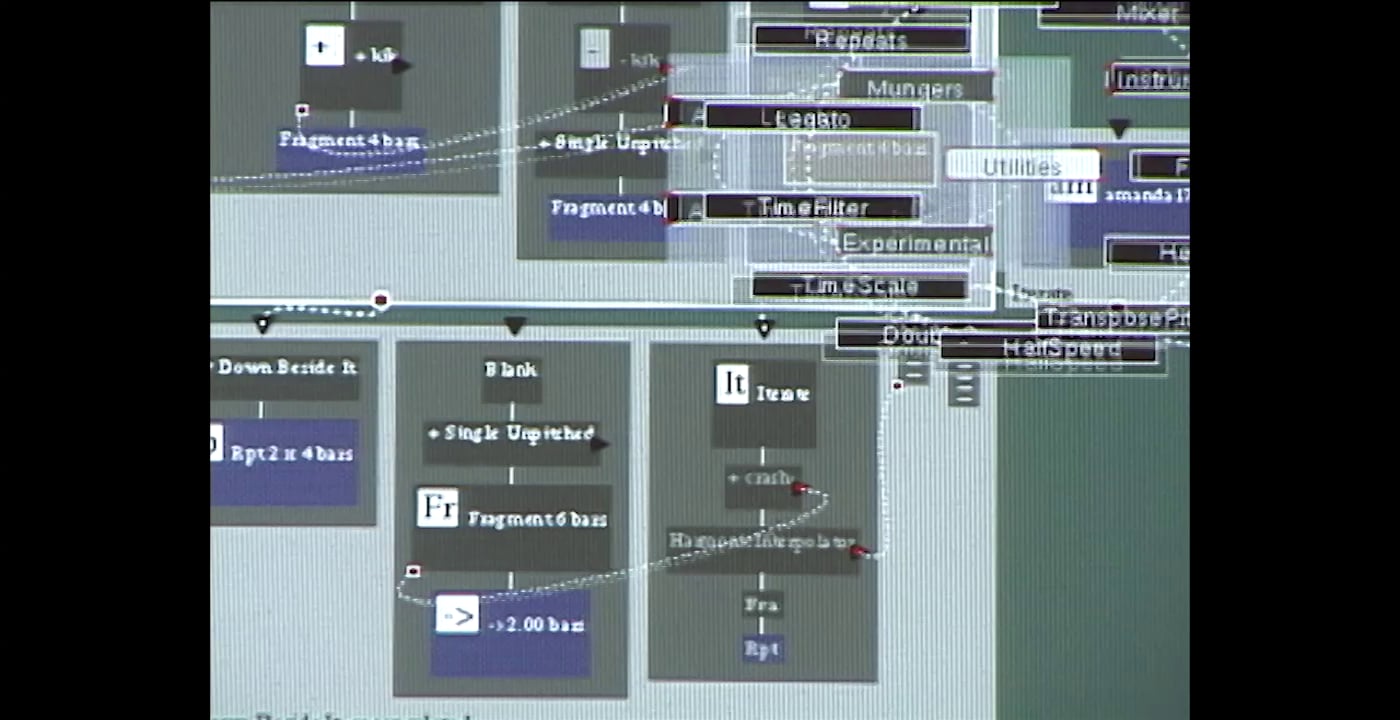
lobe ui // 2000 undulant interface for genetic music manipulation system. a tool for professional music synthesis, lobe needed a ui that would allow composers and producers to string together very large networks of processing nodes, each with some number of adjustable parameters and each with potential connections to one, two, or three other nodes. because depicting the node network at full detail would require thousands of times more screen space than is available, the ui invents a technique called "local quantized zooming" in which a single node can be caused to fold or unfold levels of detail, thus requiring more or less screen space. the work was also an opportunity to exercise two important interface design principles: (1) transitions between states -- animation -- can be information-bearing and context-preserving; (2) quiet, pseudoperiodic motion can disambiguate relationships that might otherwise be too dense or subtle to apprehend. designed and implemented for seminal music production studio 'tomandandy'. genetic music algorithms by jay hardesty and andy milburn.
AI music tools challenge Bay Area musicians
AI music tools challenge Bay Area musicians: As affordable AI platforms spread, artists debate creativity, copyright and survival.

metabrainz/troi-recommendation-playground
A recommendation engine playground that should hopefully make playing with music recommendations easy.
Alpaca Conference
Alpaca conference will feature 35 speakers and workshop leaders exploring algorithmic patterns in the creative arts, showcasing pattern-based work across music, textiles, dance and more.

Jordan Rudess and MIT’s jam_bot: A New Era of Human-AI Musical Collaboration
As We May Think Credit: Mostafa 'Neo' Mohsenvand

Cakewalk
Fueled by over 30 years in the relentless pursuit of innovation, we build the most intuitive, next-generation music production tools that empower all creators to push creative boundaries.
Barbershop Theory 8: The 5 Steps of Barbershop Arranging
How do we bridge two worlds of math?
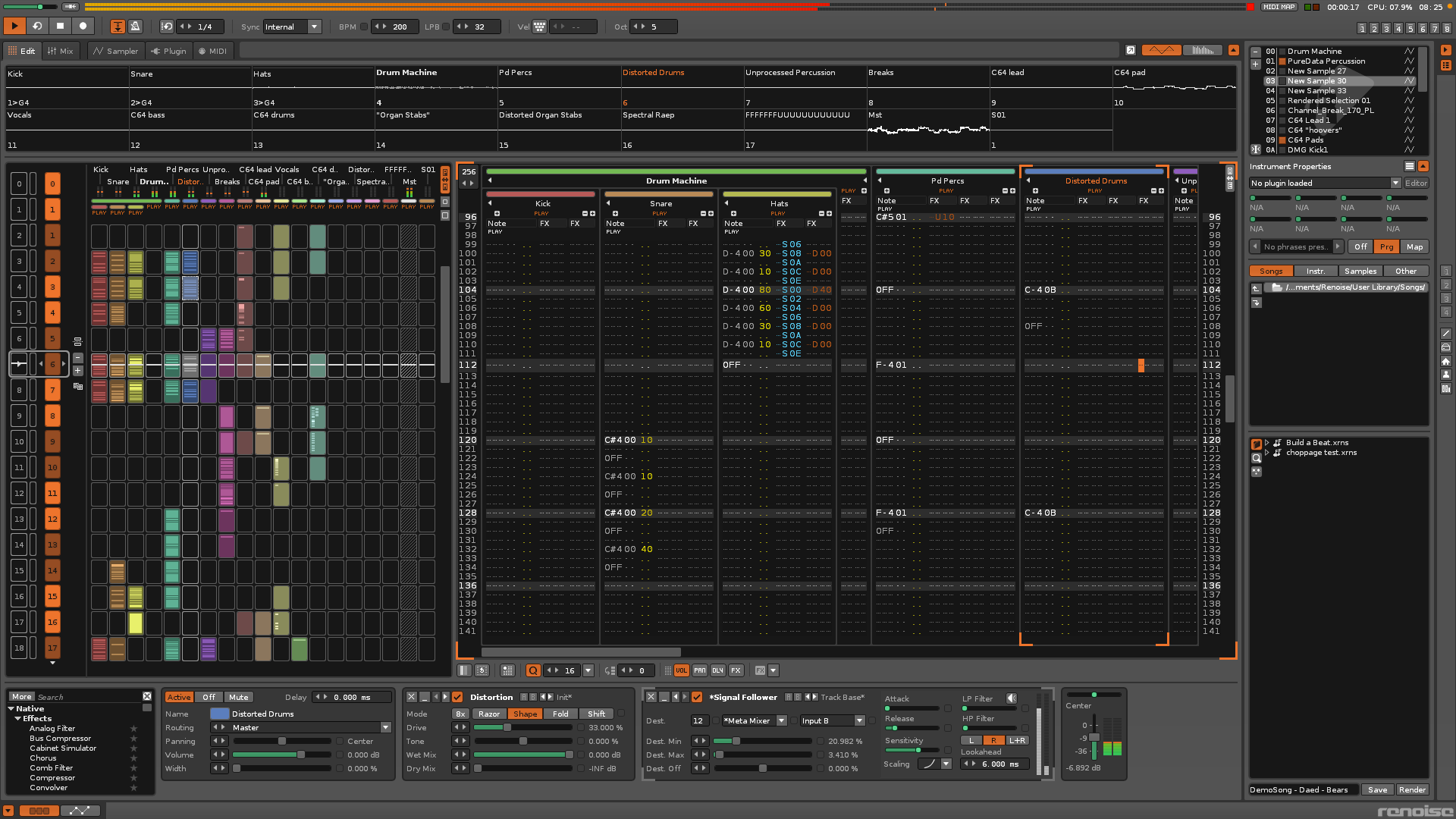
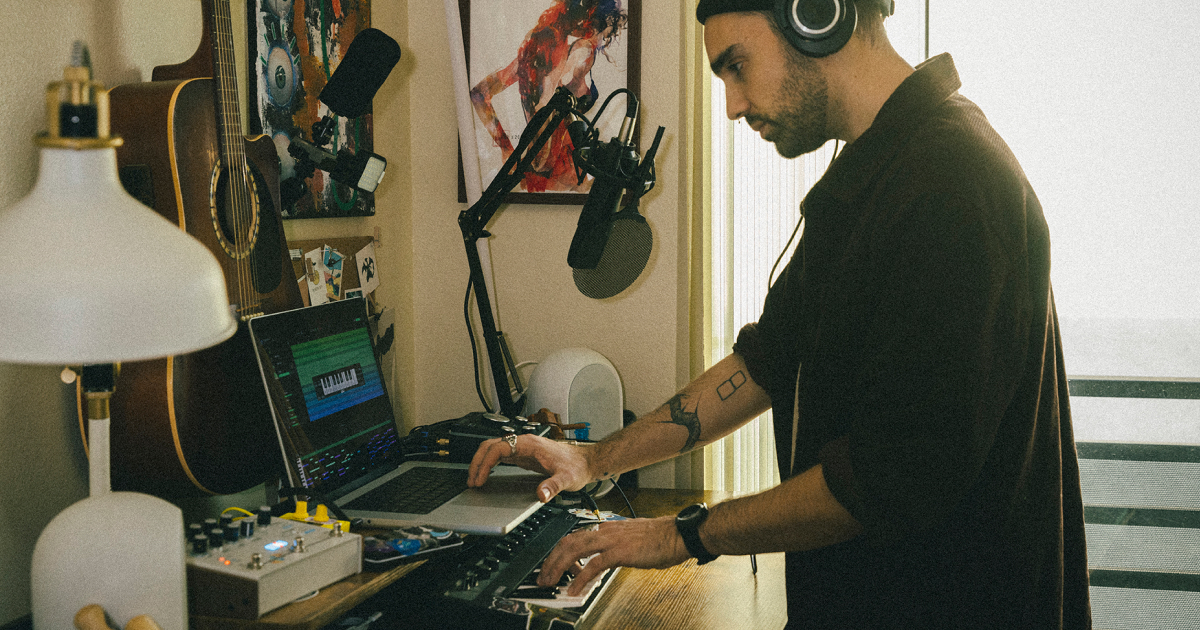
“It’s unfamiliar, intimidating, and seemingly impenetrable for producers raised on DAWs like Ableton Live - but it can unlock a whole new world of creativity”: I tried a music tracker and it rewired my brain (in a good way)
Beloved by artists from Aphex Twin to Deadmau5, trackers swap the trusty piano roll for a text-based, vertically-scrolling interface that looks like something out of The Matrix. Let's find out how deep the tracker rabbit hole goes