

From @mkarhulahti.bsky.social, me, @nballou.bsky.social, and Ivan Ropovik, newly accepted at Collabra: Psychology. This concerns a Nature: Human Behavior publication on the impacts of a Chinese anti-gaming policy. The paper has serious flaws making its results unsupportable. osf.io/preprints/psyarxiv/n2rka_v4
OSF
osf.ioApr 21, 2026 at 7:29 PM
How a Chinese marketing network quietly injects political narratives into Taiwanese lifestyle content
A new investigation by Reporters Without Borders (RSF) reveals how certain Facebook pages posing as lifestyle hubs for hobbies and health tips inject Beijing’s political narratives into their feeds to influence public opinion in Taiwan. These pages are tied to the China-based digital marketing company Wubianjie, which blends entertainment, disinformation and political messaging in cognitive warfare campaigns that are difficult to detect.

Can a video game company tame toxic behaviour?
Scientists are helping to stop antisocial behaviour in the world's most popular online game. The next stop could be a kinder Internet.

Manoel Horta Ribeiro (@manoelhortaribeiro.bsky.social)
Assistant Professor @ Princeton Previously: EPFL 🇨🇭, UFMG 🇧🇷 Interests: Computational Social Science, Platforms, GenAI, Moderation

Video Game Monetization | The Paper Pilot
The Paper Pilot's digital garden of thoughts on philosophy, politics, and sociology
One Response to the Cambridge Analytica Scandal: Block Facebook's
With Facebook in a dominant position in hosting a huge portion of the world’s social conversation, we’ve been worried about the incredible power the company has accumulated and the risks that poses

The hidden ‘rules of the game’ that dictate how we navigate the world | Psyche Videos
How free are we really, if human behaviour embodies the complex, intertwined webs of society and history?

Opinion | Why Is Behavioral Economics So Popular? (Published 2018)
The recent vogue for this academic field is in part a triumph of marketing.

Cas (Stephen Casper) on Twitter / X
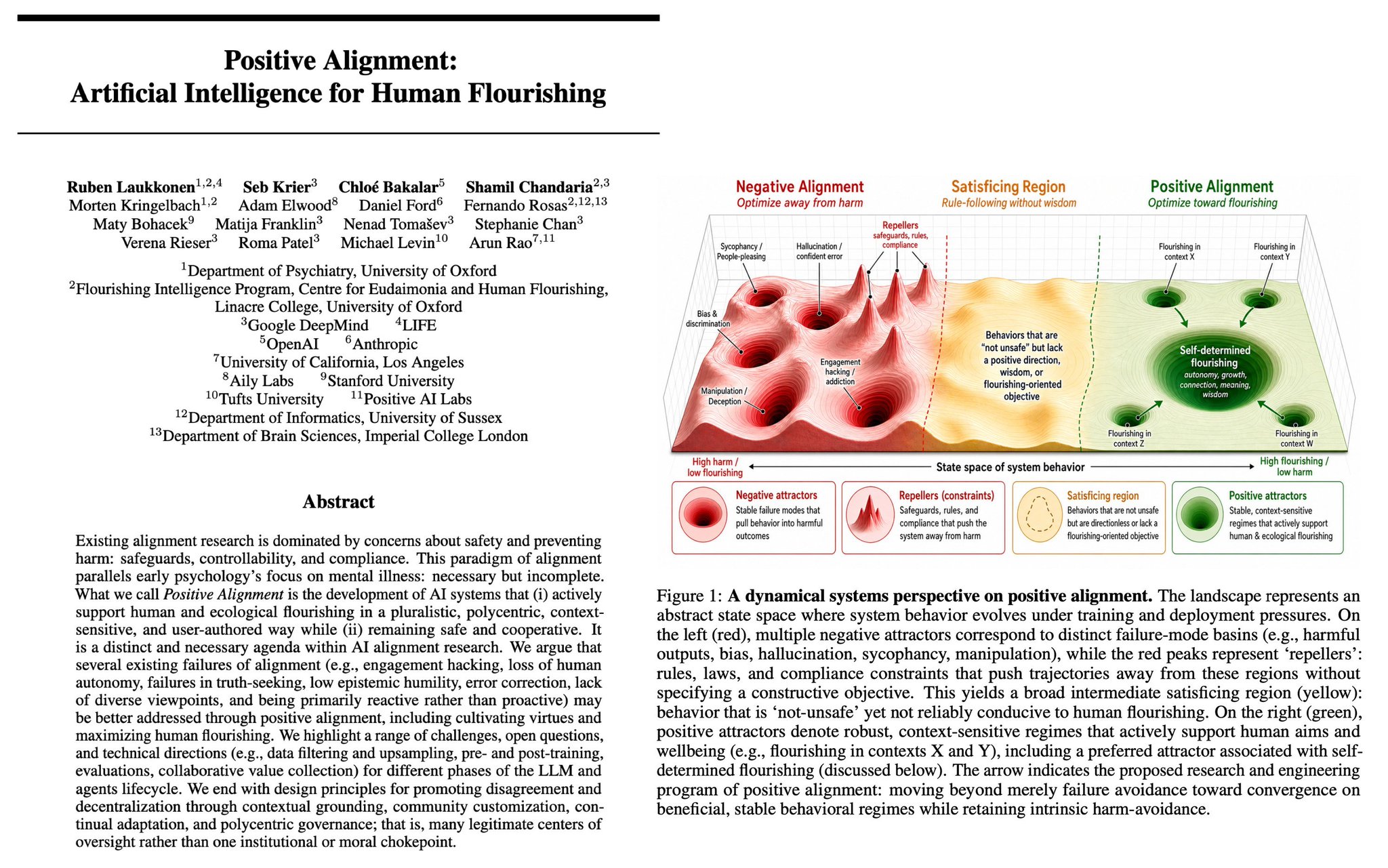
It is hard to overstate how disappointing I think this new paper from Oxford, OpenAI, Anthropic, and Google (et al) is. I can't take it seriously as academic work, just as propaganda. It also has some very bad scholarship and questionable adherence to research ethics. Having… pic.twitter.com/Z5fBx360ya— Cas (Stephen Casper) (@StephenLCasper) May 13, 2026
A Statistical Interrogation of “The Case for Causality, Part 1” by Rausch and Haidt – Matthew B. Jané
I don’t know anything about the literature on social media and mental health so my focus on this post is to interrogate the statistical approach taken by the article written by Zach Rausch and Jonathon Haidt (link here) and to some extent the original meta-analysis by Ferguson.

5 top gaming investors explain how the pandemic is reshaping MMOs and social games | TechCrunch
Now that the COVID-19 pandemic has forced millions into isolation, video games are seeing a surge in usage as people seek entertainment and social

Game Dev Tree | The Paper Pilot
The Paper Pilot's digital garden of thoughts on philosophy, politics, and sociology
In a 🔥 post, @jessicahullman.bsky.social follows up on the recent NHB 'High replicability' paper. "It bugs me (though doesn’t not surprise me) to think that whether questionable practices get called out depends on who exactly is in the author list." tinyurl.com/4yr98zvw
The feel-good open science story versus the preregistration (who do you think wins?) | Statistical Modeling, Causal Inference, and Social Science
tinyurl.comVicky Yang studies when social influence helps/hurts collective binary decision making #IC2S2 @ic2s2.bsky.social
In "The Player and the Played," @maxhaiven.bsky.social theorizes the connections between the financialization of the capitalist economy, the gamification of our lives, and the rising threat of a uniquely 21st-century form of fascistic politics: mitpress.mit.edu/9780262056045/the-player-and-… #OpenAccess
Remarkable how over a decade ago @michaelnielsen.bsky.social pointed the way towards solving long standing issues plaguing science to this day (issues that are all the more relevant in the age of AI mediated science)

Ronen Tamari
This is why @atproto.science is so relevant rn This compilation of essays indicates that scientists are most frustrated by insufficient “community tools and resources... Essential infrastructure for sharing, maintaining and building on existing work and data is also badly underdeveloped." >


