

In a significant win for smaller browsers, the open web, and the 🇪🇺EU’s Digital Markets Act (DMA), Google has agreed to place the browser selected through the EU browser choice screen directly in the Pixel homescreen hotseat (replacing Chrome). open-web-advocacy.org/blog/google-backs-down--will-… 🧵👇 (1/7)

Google Backs Down: Will Grant Hotseat in EU Browser Choice Screen - Open Web Advocacy
open-web-advocacy.orgMar 12, 2026 at 8:37 AM
Google Backs Down: Will Grant Hotseat in EU Browser Choice Screen - Open Web Advocacy
In a significant win for smaller browsers, the open web, and the EU’s Digital Markets Act (DMA), Google has agreed to place the browser selected through the EU…
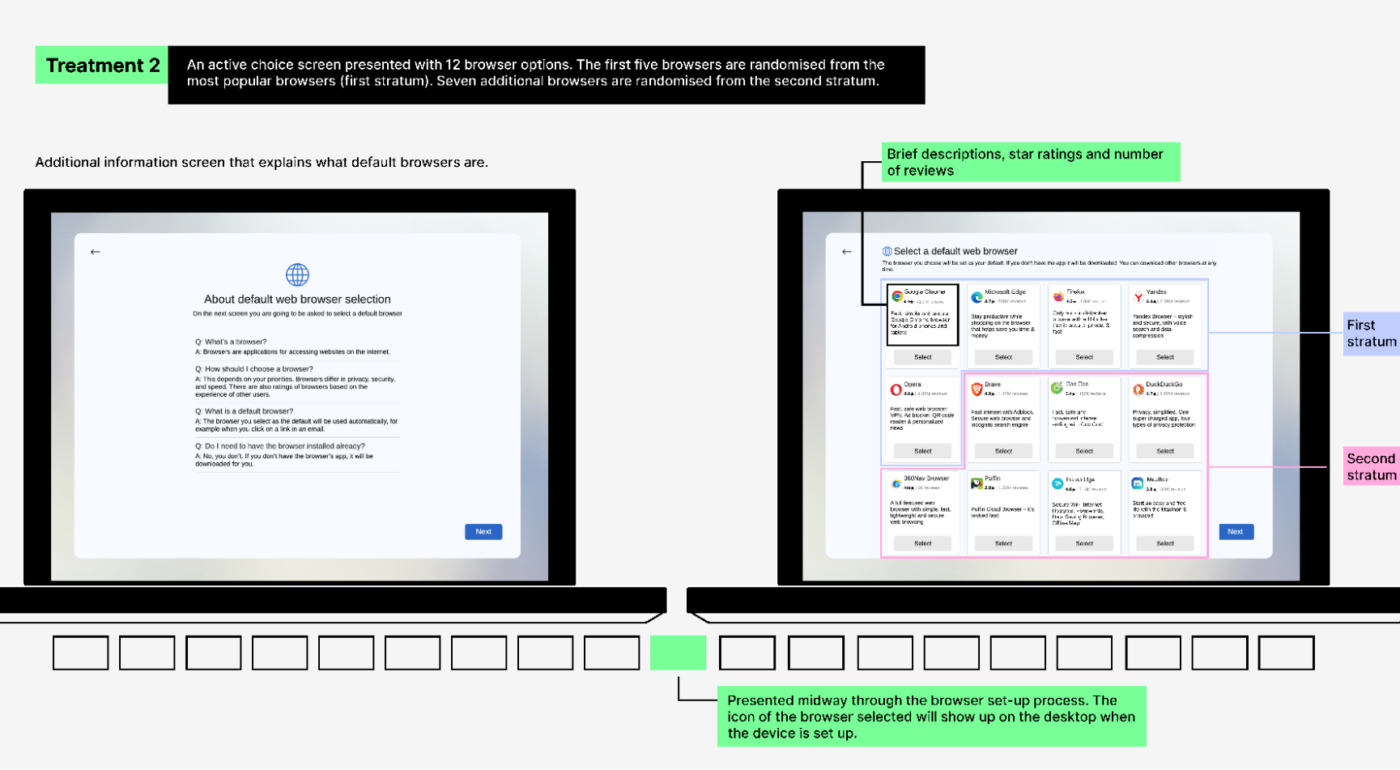
Can browser choice screens be effective?
Innovative new research from Mozilla shows that design is critical Browser choice screens are back on the menu. Most notably, the EU’s Digital Markets Act (DMA) will require them from ...
Google’s Chrome Antitrust Paradox
This Article examines Google’s dominance of the browser market, highlighting how Google’s Chrome browser plays a critical role in reinforcing Google’s dominance in other markets. While Google portrays Chrome as a neutral platform built on open-source technologies, this Article shows that Chrome is, in fact, instrumental in Google’s strategy to reinforce its dominance in the online advertising, publishing, and browser markets. The examination of Google’s strategic acquisitions, anticompetitive practices, and the implementation of so-called “privacy controls” underlines that Chrome is far from a neutral gateway to the web. Rather, it serves as a key tool for Google to maintain and extend its market power, often to the detriment of competition and innovation in the digital economy.This Article illustrates how Chrome not only bolsters Google’s position in online advertising and publishing through practices such as coercion and self-preferencing, but also leverages its advertising clout to engage in a “pay-to-play” paradigm—the cornerstone of Google’s larger strategy of market control. It also outlines potential regulatory interventions and remedies by drawing on historical antitrust precedents. Lastly, this Article proposes a triad of solutions motivated by an analysis of Google’s abuse of Chrome, including behavioral remedies targeting specific anticompetitive practices, structural remedies involving an internal separation of Google’s divisions, and divestiture of Chrome from Google into an independent organization.Despite Chrome’s dominance and its critical role in Google’s ecosystem, as well as its recent legal troubles with the Department of Justice, it so far has avoided significant antitrust action. A key reason for this inaction lies in the long-standing precedent supporting the hegemony of technology firms and the uncertainty surrounding Chrome’s viability as a standalone entity. This Article attempts to address these issues to enable antitrust actions that are essential in remedying current market imbalances. Such actions are also critical to mitigate future threats to competition from an increasingly monopolistic technology landscape, thereby fostering a competitive digital environment that promotes innovation and protects consumer interests.
About Browser Choice Allliance
The issue Microsoft’s deceptive tacticsimpede consumer choiceFor years, Microsoft has manipulated desktop browser choice, using deceptive tactics to push Edge onto users. Instead of competing on quality, it relies on forced resets, misleading prompts, and hidden settings to trap people into using its browser. Every time Microsoft forces, pushes or…
A Chrome-killing browser will be OpenAI's next big shot at Google, according to a new report
Is BrowserGPT in the cards? It’s a long way off, if it is…

The DOJ Still Wants Google to Sell Off Chrome
In its final proposed remedy filing in the Google antitrust case, the Department of Justice reiterated that Google should stop paying partners for search placement—and divest its dominant Chrome browser.

Atlassian Buys The Browser Company, Browser Wars, Why Atlassian
Atlassian bought The Browser Company, seeking to deliver an AI-enabled browser for work. It’s a reasonable bet, but I’m skeptical that browsers are the future.

Announcing Supporters of Chromium-based Browsers
Since Google announced the Chromium project in 2008, we have been excited to build on the great foundations of open-source web browsers and contribute to the continued d…

The Browser Choice Alliance
The Browser Choice Alliance is a coalition of browsers dedicated to the principle that consumers should have the right to use their browser of choice on Windows devices.
The True Cost of Browser Innovation: Why Chrome's Divestiture Wouldn't End the Open Web
It is crucial for the public to understand that the web’s growth and innovation need not depend on Google’s monopoly or control, writes Alissa Cooper.
Forget the Fate of Chrome, Focus on the Fate of the Browser
In debating what undoubtedly won't happen, we're looking past some key things that are -- and might...

Commission fines Google €890 million for breaches of the Digital Markets Act
Today, the European Commission took two decisions finding non-compliance by Google with the Digital Markets Act (DMA) for self-preferencing its own services on Google Search, and for putting in place restrictions on businesses to direct consumers to alternative, often cheaper, purchase channels on Google Play (steering). In this regard, the Commission issued Google a fine of €460 million and a fine of €430 million respectively.
Where Browsers Come From
In this post, I’ll talk about the evolution of the economics around browsers, and what we should think about as we move forward.
Google is building an experimental new browser and a new kind of web app
Meet the GenTab, nothing like the plain ol’ browser tab.

The EU's Digital Markets Act is delivering real wins for consumers in the EU, and in some cases globally. Apple and Google are opening up functionality that was previously reserved for their own products. But one glaring failure remains: browser engines on iOS. 🧵👇️ (1/23)

The Digital Markets Act Is Delivering Real Wins, But Not Yet for Browser Engines - Open Web Advocacy
open-web-advocacy.org