

code and tests aren't the moat. they never were. no need for agents to copy a project. forking was always an option. the moat of an oss project is its community, its governance, and its ecosystem connections. agents will never be able to replicate that. don't hide. let's build in the open, together
Feb 25, 2026 at 7:30 PM
Tests Are The New Moat | Daniel Saewitz
As AI becomes better at cloning people's open source work, what ends up becoming most valuable are software contracts, tests, and API surface area. This clashes the incentives of clearly defining your commercialized open source software with protecting it.
Agents Done Right: A Framework Vision for 2026
Agents choke on context, loop on failures, and dump walls of code for review. It's time to rethink the architecture.
Don't fork the ecosystem
Software can be rebuilt, because software is a machine. But a software ecosystem is not a machine. It is a living system.
Code Was Never the Asset - The Phoenix Architecture
Why AI makes the hidden economics of software unavoidable
Where Should the Agent(s) Live? – OpenComputer
Isolation models, agent placement tradeoffs, credential design, and sandbox lifecycle patterns for agentic systems.
Computers for agents
Sandboxes aren't enough. Give your agent a real computer and get back to building.
Infrastructure in the Age of AI Gatekeepers
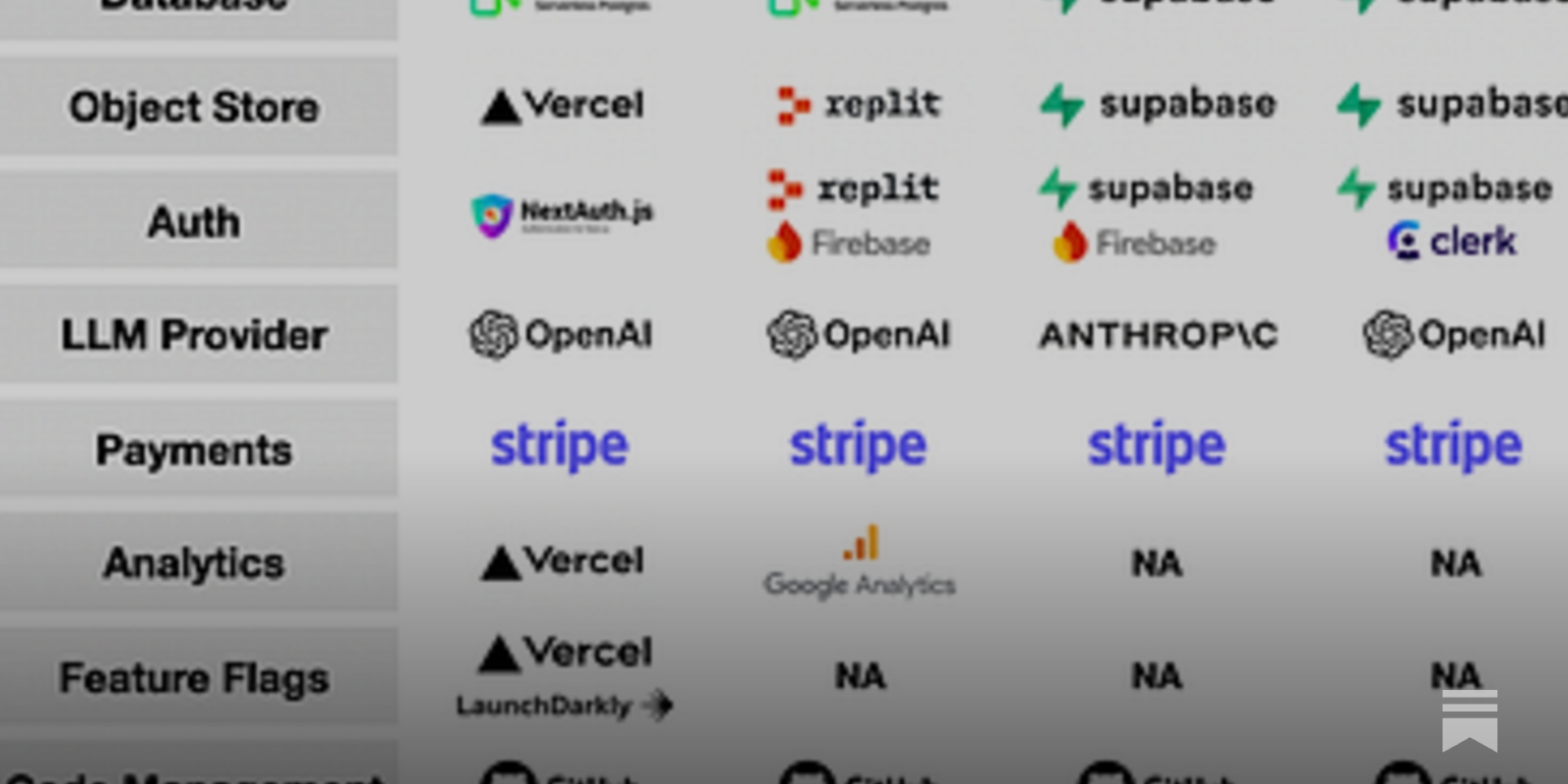
What happens when AI agents choose your stack
Fly · Computers for agents
Sandboxes aren't enough. Give your agent a real computer and get back to building.
Adoption and Impact of Command-Line AI Coding Agents: A Study of Microsoft's Early 2026 Rollout of Claude Code and GitHub Copilot CLI
Organizations rolling out agentic command line tools like Anthropic's Claude Code and GitHub's Copilot CLI need to know who will try them, who will keep using them, and whether the tools produce enough output to justify their cost. At organizational scale, token spend can run into millions of dollars annually, so misreading adoption, retention, or impact can make a rollout expensive without changing engineering velocity. Studying tens of thousands of engineers at Microsoft over its early-2026 rollout, we find that first use spread primarily through social networks, retention was associated more with engineers' coding activity than with demographics, and adopters merged roughly 24% more pull requests than they would have otherwise. We use merged pull requests as our proxy for output -- acknowledging that a merged PR is not the same as the value it delivers -- and the lift persists across our four-month window. These results suggest that CLI coding agents are neither uniformly adopted nor mere novelty effects and that organizations should treat visible peer use as central to rollout strategy.

Why AI agent startup /dev/agents commanded a massive $56M seed round at a $500M valuation | TechCrunch
/dev/agents, a new company by the developers of Android, believes a new operating system is needed to fully realize the potential of AI agents.

dagger/container-use
Development environments for coding agents. Enable multiple agents to work safely and independently with your preferred stack.
agentOS — A faster, lighter, cheaper alternative to sandboxes
A portable open-source operating system for agents. Stateful runtime, universal agent interface, and secure code execution. One SDK, deploy anywhere.

Ephemeral-AI-Lab/layerfs
LayerFS gives every agent an isolated, disposable filesystem fork without copying the shared base. Useful states become durable, deduplicated checkpoints with workspace-scoped tool history—ready to branch, rewind, or reuse across parallel development, environment experiments, and MCTS-style rollouts.
Contributions and the Latest Generation
Simon Phipps wrote a particularly interesting article on project governance in the “GITHUB generation.” The article is very good reading, and thought-provoking. In it, he articulates, …

Entire · A new developer platform is coming
Entire is a fast, distributed, Git-compatible network for mirroring GitHub repositories so agents can clone fast without hitting origin rate limits.
luca. ∆ИƉЯƐΛ on Twitter / X
People keep saying AI coding agents can only build basic, cookie-cutter apps. I decided to prove them wrong.For my first major public demo, I spent some time pushing @Replit 's AI agent to its absolute limit. The result? I rebuilt macOS entirely on the web. No templates. No… pic.twitter.com/0DNTDpp0aA— luca. ∆ИƉЯƐΛ (@agi2asi) March 4, 2026

