I read this result as: LLMs do more bullshit citations, name-dropping without engaging.

infoDOCKET
Citing Less Critically: #LLMs Reshape the Rhetoric and Reach of #Scientific #Citation (New Research Article (preprint); via @arxiv.bsky.social) arxiv.org/abs/2609.01432 #scholcomm #citations #libraries #AI #GenAI
Sep 2, 2026 at 1:10 PM
LLMs are bullshitters. But that doesn't mean they're not useful.
Note: This is a personal essay by Matt Ranger, Kagi's head of ML In 1986, Harry Frankfurt wrote On Bullshit. He differentiates a lying from bullshitting: Lying means you have a concept of what is true,...

Citing Less Critically: LLMs Reshape the Rhetoric and Reach of Scientific Citation
Scientific citations carry rhetorical intent. Scholars may cite prior work positively (supporting), negatively (contrasting), or neutrally (mentioning). As large language models (LLMs) increasingly assist scientific writing, whether they reproduce citations with the same rhetorical intent as humans remains unclear. We introduce a masked-citation task to compare human and LLM-generated citation behavior. For each citation context, an LLM generates a replacement citation sentence, producing a counterfactual corpus directly comparable to human citation. We analyze what, whom, and how models cite, using an LLM-as-a-judge to classify citation intent and a 20-million-edge coauthorship network to measure social distance between cited authors. Across six popular LLMs and 1,746 top NLP conference papers (63k+ contexts, 132k+ citations), three patterns emerge: (1) Compared with human citation, LLMs cite significantly less critically; (2) LLMs over-cite popular and older papers, a tendency amplified for contrasting citations where human writing more often draws on recent, niche work; (3) Whereas humans often cite within their close social network, especially for supporting citations, LLMs tend to draw on more socially distant authors. Together, these differences are double-edged: LLM citation reaches beyond a scholar's close collaborators while being less critical and amplifying visibility bias, reshaping the rhetoric and reach of scientific citation.

There's Something Fundamentally Wrong With LLMs
LLMs aren't trained on the "vast majority of speech," experts warn, a major blind spot that could have sweeping consequences.

The most important thing when working with LLMs
Blog post: The most important thing when working with LLMs by Steve Klabnik
The LLM Critics Are Right. I Use LLMs Anyway.
I almost agree with all of the LLM critics, yet I still use LLMs a lot. I know this sounds like I am delusional, but I don't think I am alone with it.

The LLM Critics Are Right. I Use LLMs Anyway.
I almost agree with all of the LLM critics, yet I still use LLMs a lot. I know this sounds like I am delusional, but I don't think I am alone with it.
LLMs believe false statements even after explicit warnings that they're false
Fine-tuning tests show "bias... toward confidently representing the claims as true."

Dan Shipper 📧 on Twitter / X
this is true and is a big reason why you don’t need to be a highly technical researcher to use LLMs in surprising and novel ways https://t.co/TuxNzXzToU— Dan Shipper 📧 (@danshipper) July 27, 2025
The scientific case for being nice to your chatbot
New research confirms that LLMs often perform better when you encourage them. But why?

Well-intentioned obscenity
An LLM lied about me at the office and I'm cranky about it. That interaction makes me think a lot about how LLMs are becoming normalized, though, and what we're looking at in terms of their role in human-to-human interactions in the future.
Pluralistic: Why I don’t like AI art (25 Mar 2025) – Pluralistic: Daily links from Cory Doctorow
A law professor friend tells me that LLMs have completely transformed the way she relates to grad students and post-docs – for the worse. And no, it's not that they're cheating on their homework or using LLMs to write briefs full of hallucinated cases.
How Do We Talk about LLMs?
By Jim Clifford It is never fun to watch friends argue. Generative AI has created multiple fractures across our universities and the community of historians. The stakes are high and we are all deal…

Q&A from the slop trenches – GeoSpatial ML
We reviewed 22 ML conference submissions this summer. Fifteen had fabricated citations, hallucinated authors, or clear LLM slop, so we complain about that a bit, and release the paper references audit we now run.
Why do LLMs make stuff up? New research peers under the hood.
Claude's faulty "known entity" neurons sometimes override its "don't answer" circuitry.

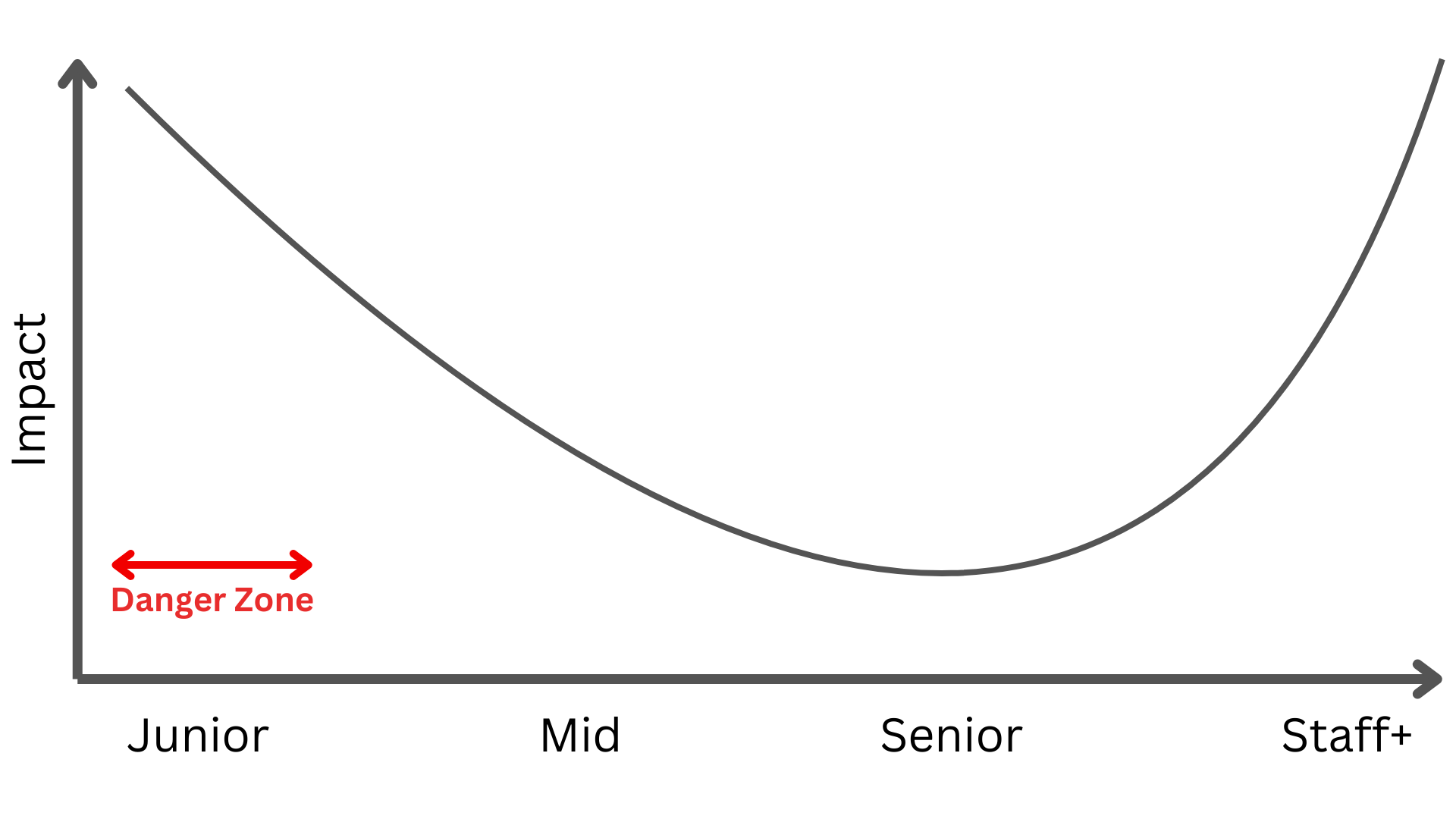
The LLM Curve of Impact on Software Engineers
In this article, I share my personal mental model of how LLMs affect software engineers at different levels, and why this leads to both excitement and scepticism.
A knockout blow for LLMs?
LLM “reasoning” is so cooked they turned my name into a verb