

The computer now has a natural language interface and a replicator for software You think I’m going to do anything other than ensure this technology gets into as many people’s hands as possible? The fight isn’t whether we use this. It’s whether we can self host these models

posts inspector
I am basically radicalized about this. We fight now for personal computing and personal agency or we lose another decade at best
Mar 31, 2026 at 2:42 AM
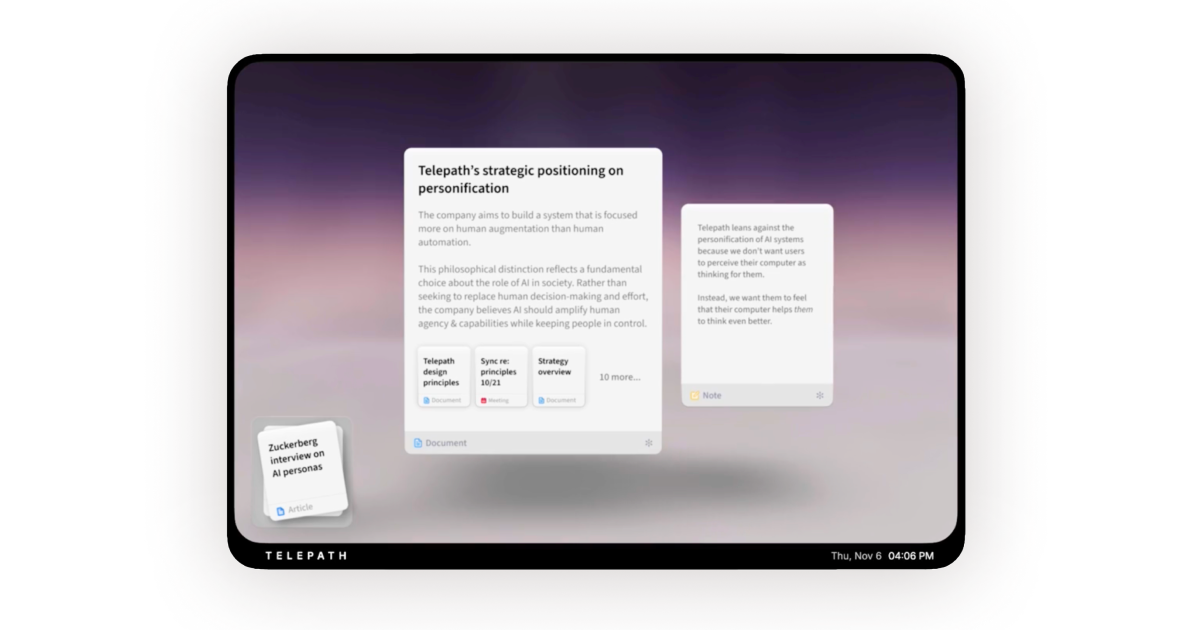
Demoing the AI computer that doesn't yet exist
A demo of what an AI-native personal computer could look like.
Introducing Web Applets, Rupert Manfredi
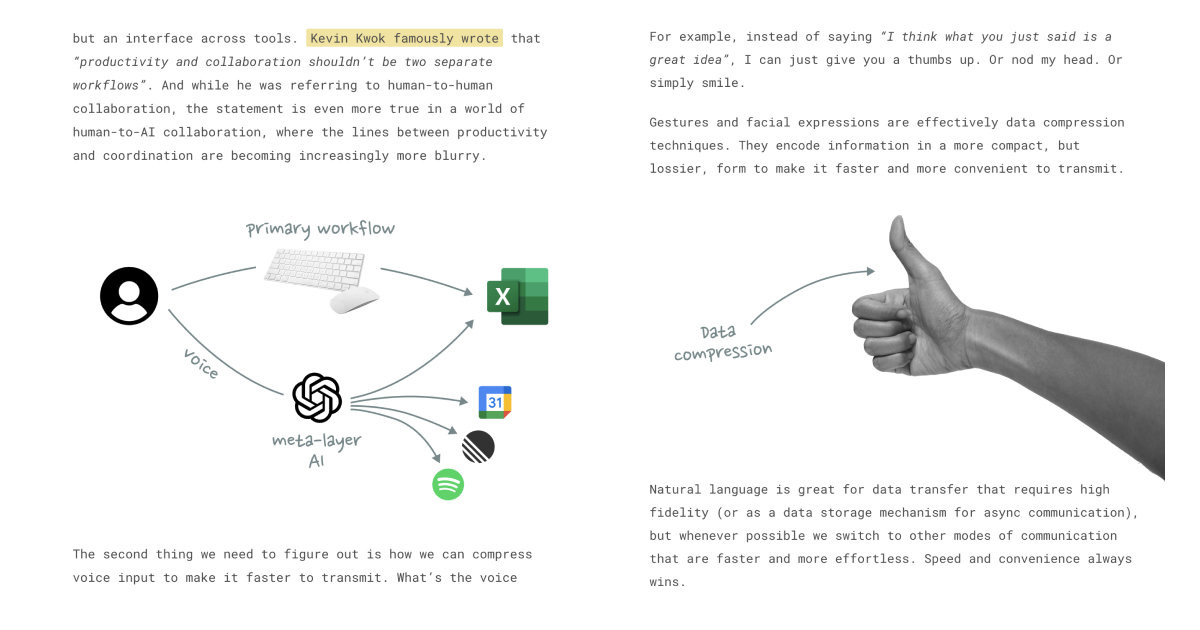
The case against conversational interfaces
Conversational interfaces are a bit of a meme. Every couple of years a shiny new AI development emerges and people in tech go "This is it! The next computing paradigm is here! We'll only use natural language going forward!". But then nothing actually changes and we continue using computers the way w
Michael R. Crusoe (@biocrusoe@fairpoints.social)
Oh, I like this part > No AI-generated text in human-to-human communication > When our maintainers volunteer their time to review your issue, PR, or proposal, they do not want to talk to a machine. This is a basic principle of respect. https://mastodon.gamedev.place/@godotengine/116839550229253906
Anthropomorphism Is Breaking Our Ability to Judge AI
Tech Policy Press fellow James Ball asks, how should we interact with a technology designed to ‘speak’ with us on what appear to be human terms?
How we use AI at Stalwart
It is difficult to have a conversation about software in 2026 without AI showing up in it. Two years ago the interesting question was…
What technology takes from us – and how to take it back | Rebecca Solnit
The long read: Decisions outsourced, chatbots for friends, the natural world an afterthought: Silicon Valley is giving us life void of connection. There is a way out – but it’s going to take collective effort

Build Agent Advocates, Not Platform Agents
Language model agents are poised to mediate how people navigate and act online. If the companies that already dominate internet search, communication, and commerce -- or the firms trying to unseat them -- control these agents, the resulting platform agents will likely deepen surveillance, tighten lock-in, and further entrench incumbents. To resist that trajectory, this position paper argues that we should promote agent advocates: user-controlled agents that safeguard individual autonomy and choice. Doing so demands three coordinated moves: broad public access to both compute and capable AI models that are not platform-owned, open interoperability and safety standards, and market regulation that prevents platforms from foreclosing competition.

Introducing interaction models | Thinking Machines Lab
SimPolitics
For more than six decades, the public has been promised that computers will revolutionize politics, both nationally and internationally. In SimPolitics, Fenw...

Something Big Is Happening
A personal note for non-tech friends and family on what AI is starting to change.

Desktop, Touch, Browser, Now AI? The Next OS in Computing
Explore how AI is reshaping human-computer interaction, from command lines to modern SaaS. Key insights on the next computing paradigm for startups and tech leaders.
What comes next with open models
Markets, capabilities, cope, and bewilderment in the industrialization of language models.
Nailed it, @komorama.bsky.social We have a huge opportunity here – there's no reason the future user interface for *all your computing* needs to be tied to OpenAI. We can build a new, uniquely personal computer that you own, without your entire digital life being locked to one company or provider.

