

Likely the most important thing I've ever written — if you're an academic and the AI mania unsettles you, here's my best shot at presenting some intellectual tools that might help you articulate why. arxiv.org/abs/2610.27251
Oct 21, 2026 at 12:27 AM
Wherein I Find Myself Writing About Writing
Most everyone finds writing to be challenging (especially those who say they enjoy it). This is because writing is an intentional, thoughtful act. This is as it should be, but “AI” has recently exacerbated the misbelief that writing is simply an output. In fact, it's a creative process that has merit in and of itself.

AI Mania Is Eviscerating Global Decisionmaking
The reality of how much damage AI mania is doing to our ability to run institutions effectively.
Presentations — Benedict Evans
Every year, I produce a big presentation exploring macro and strategic trends in the tech industry. New in May 2025, ‘AI eats the world’.

AI Mania Is Eviscerating Global Decision-Making — Ludicity
Note: This has been cross-posted to my company's blog, in case you think there is some use in sharing with someone in a format that looks more authoritative. Link here.
AI Safety Is a Narrative Problem · Special Issue 5: Grappling With the Generative AI Revolution
This op-ed explores power and narrative dynamics around AI. Drawing on pop-culture references, the professional experiences of the author and examples from 2023’s “Great AI Safety Hype Roadshow,” this piece draws on the literary criticism technique of practical criticism to consider how speeches and announcements from both Silicon Valley executives and research scientists to interrogate the media-friendly nature of p(doom) discourse—which focuses on the existential risks of AI (PauseAI, 2023)—and its likely consequences. The complexities of AI and its numerous social impacts can be difficult for even the most expert analyst to unpack. In spite of this, the potential of “existential threats” has successfully cut through to become a mainstay of mainstream media coverage over the last year. This piece will make the case that this is an effective narrative conceit that has achieved a number of ends that traditional science communication tends to find difficult, if not impossible, to achieve. Firstly, it is easy to understand. Simplification of this nature—that removes jargon and complexity and focuses on a single outcome—is much easier to fit on a TV rolling news ticker or on the cover of a tabloid newspaper than more well-balanced, representative opinions. Secondly, it inherits prior assumptions from well-known dramatic forms. P(doom) plays to stories familiar from Greek tragedy through to Marvel movies, in which lone male heroes battle ineluctable forces. Thirdly, it is imbued with urgency and so becomes difficult to ignore.
I pulled ~90,000 Reddit posts about what makes writing "sound like AI" to determine the biggest AI-slop giveaways (Part 2)
674 votes, 228 comments. The majority of people can instantly tell when writing is generated by AI. For those who don't intend to get into the weeds…
AI is not superhuman
What metaphor should drive the field of AI research?
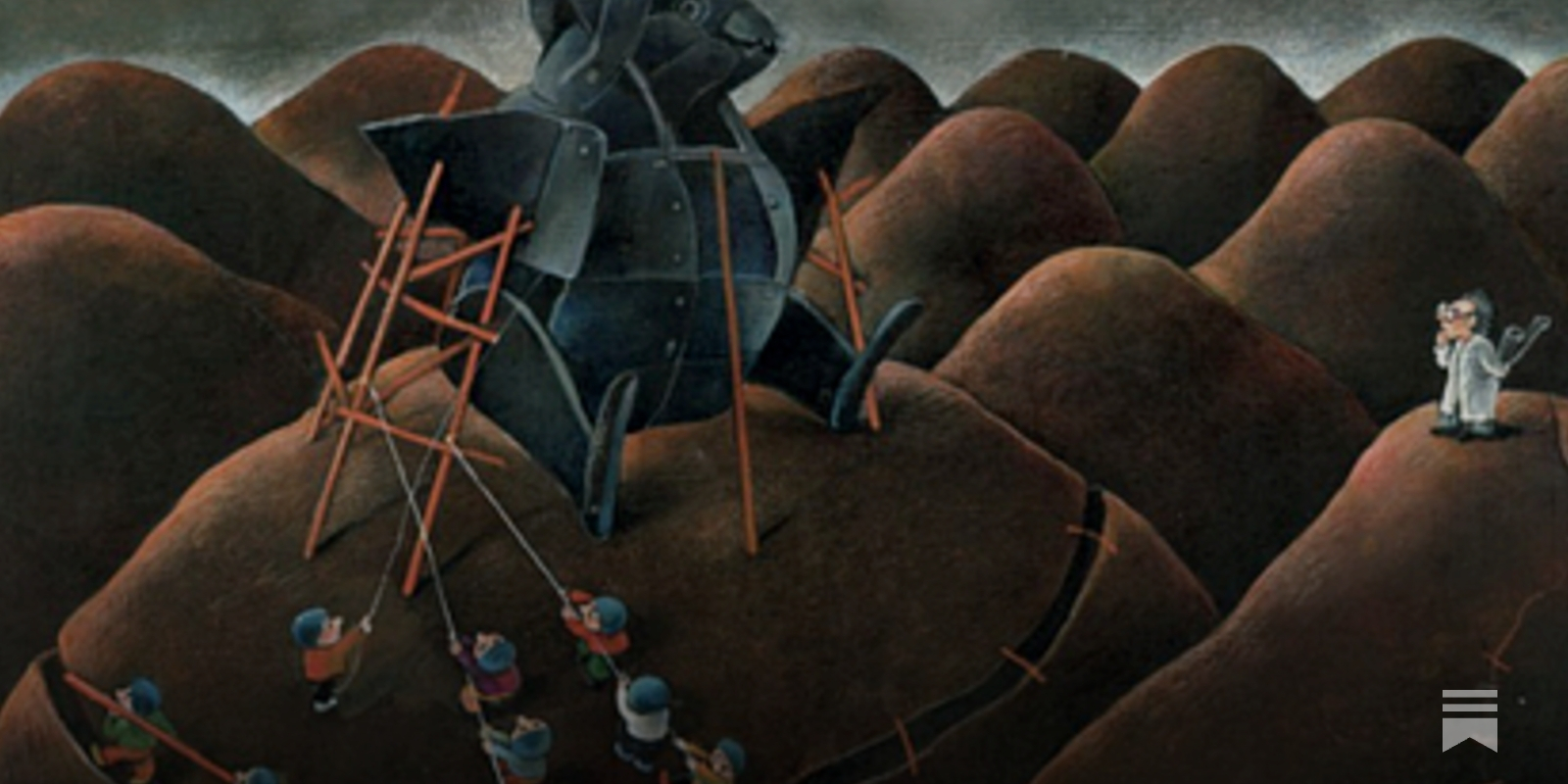
What the Studies Say About How AI Affects Your Brain: A (Very Big) Compilation
The entire literature clearly points to a single surprising finding
Ali Alkhatib: Defining AI
The main issue I have with a lot of work that tries to define AI is that the criteria they use to draw boundaries often turn out to be functionally useless for my needs; these definitions lead us to weird places, letting scholars fixate on strange, unworkable frameworks. Those pedantic fixations don’t really benefit the organizers, activists, regular people who are getting crushed by the systems they’re trying to work against. So I’m going to try to unpack how I think about AI; how I trace the boundaries of the term in a way that’s as useful as possible for me and my needs; and how I would encourage you to scope or define ideas that are important to your work.
The Breath of the Author
The palpable presence of someone else's mind in our best writing should give us pause about the encroachment of AI text

“The task that generative A.I. has been most successful at is lowering our expectations, both of the things we read and of ourselves when we write anything for others to read.” — Ted Chiang

Why A.I. Isn’t Going to Make Art
www.newyorker.comI had the honor of giving a keynote at the International Conference on Machine Learning last week. I addressed the widespread anxiety about how we should adapt as AI capabilities increase. I was thrilled by the talk’s reception, so I have made my slides available cs.princeton.edu/~arvindn/talks/icml-2026-anno…

What will be left for us to work on?
www.cs.princeton.eduI‘m far from an AI doomer, but it is amazing how many serious voices — on LinkedIn, no less! — are sharing stories about how AI slop is quickly becoming one of the top problems they see in academic writing and research “AI will 10x our research!” doesn’t seem to be surviving encounters with reality
I‘m far from an AI doomer, but it is amazing how many serious voices — on LinkedIn, no less! — are sharing stories about how AI slop is quickly becoming one of the top problems they see in academic writing and research “AI will 10x our research!” doesn’t seem to be surviving encounters with reality
trying to articulate what i hate about "AI writing"

dan
so it's like if we imagine a normal distribution but then we set super intense resonance at exactly the middle point. that's how it feels to be surrounded by AI writing every day. it's average *without* the normal distribution — just extreme dose of narrow average. this is what pushes my buttons


