

On the @projectliberty.io Substack, @audreyt.org makes the case that we need to think of data not like oil, which gets extracted, but rather like soil, which gets tilled.
May 29, 2026 at 3:28 PM
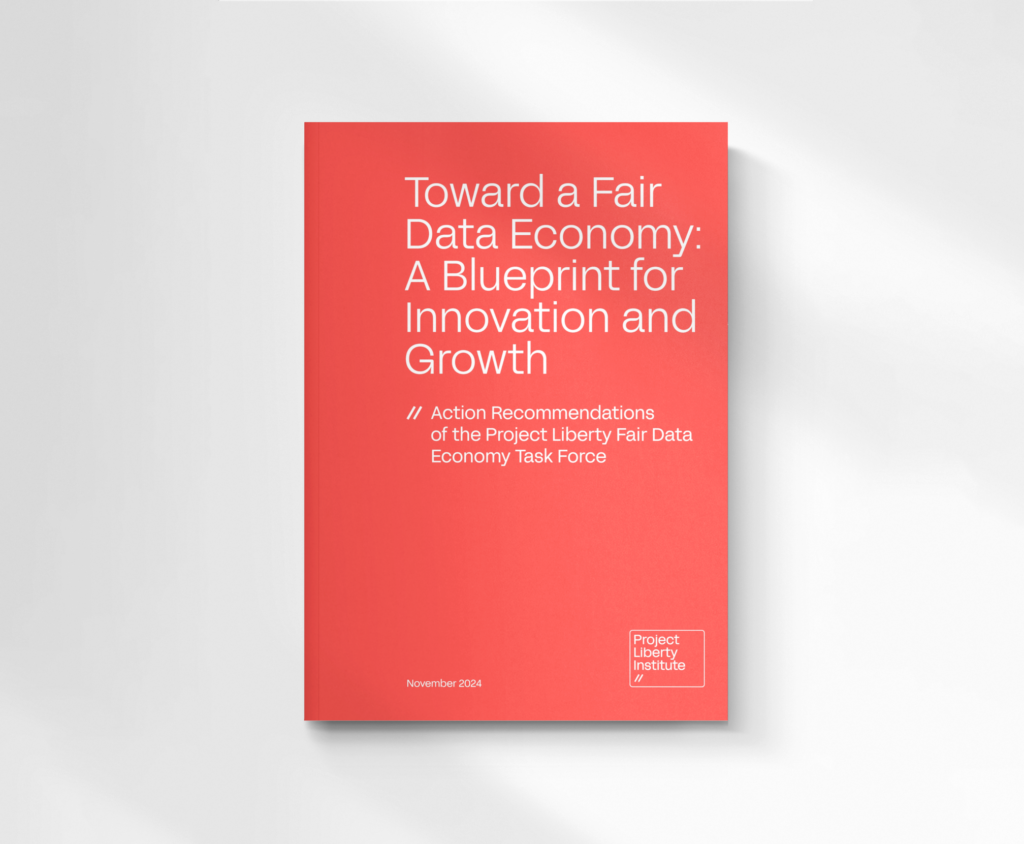
Project Liberty Institute Launches Landmark Recommendations of its Fair Data Economy Task Force - Project Liberty
“The digital revolution promised opportunity for all. Instead, we’ve witnessed the unprecedented concentration of our data and power in the hands of a few. At Project Liberty, we believe it’s time to start building the digital future we all deserve,” said Frank McCourt, Founder of Project Liberty. “This report is a call to action. Our […]
Data Supply Chains
Data is a critical resource. Like oil, gold, or lithium, both companies and countries covet data. Ultimately, like oil, data’s flow can enrich those that posses

Knowledge infrastructures for the Anthropocene
The technosphere metabolizes not only energy and materials, but information and knowledge as well. This article first examines the history of knowledge about large-scale, long-term, anthropogenic environmental change. In the 19th and 20th centuries, major systems were built for monitoring both the environment and human activity of all kinds, for modeling geophysical processes such as climate change, and for preserving and refining scientific memory, i.e. data about the planetary past. Despite many failures, these knowledge infrastructures also helped achieve notable successes such as the Limited Test Ban Treaty of 1963, the ozone depletion accords of the 1980s, and the Paris Agreement on climate change of 2015. The article’s second part proposes that knowledge infrastructures for the Anthropocene might not only monitor and model the technosphere’s metabolism of energy, materials and information, but also integrate those techniques with new accounting practices aimed at sustainability. Scientific examples include remarkable recent work on long-term socio-ecological research, and the assessment reports of the Intergovernmental Panel on Climate Change. In terms of practical knowledge, one key to effective accounting may be ‘recycling’ of the vast amounts of ‘waste’ data created by virtually all online systems today. Examples include dramatic environmental efficiency gains by Ikea and United Parcel Service, through improved logistics, self-provision of renewable energy, and feedback from close monitoring of delivery trucks. Blending social ‘data exhaust’ with physical and environmental information, an environmentally focused logistics might trim away excess energy and materials in production, find new ways to re-use or recycle waste, and generate new ideas for eliminating toxic byproducts, greenhouse gas emissions and other metabolites.

Knowledge infrastructures for the Anthropocene
The technosphere metabolizes not only energy and materials, but information and knowledge as well. This article first examines the history of knowledge about large-scale, long-term, anthropogenic environmental change. In the 19th and 20th centuries, major systems were built for monitoring both the environment and human activity of all kinds, for modeling geophysical processes such as climate change, and for preserving and refining scientific memory, i.e. data about the planetary past. Despite many failures, these knowledge infrastructures also helped achieve notable successes such as the Limited Test Ban Treaty of 1963, the ozone depletion accords of the 1980s, and the Paris Agreement on climate change of 2015. The article’s second part proposes that knowledge infrastructures for the Anthropocene might not only monitor and model the technosphere’s metabolism of energy, materials and information, but also integrate those techniques with new accounting practices aimed at sustainability. Scientific examples include remarkable recent work on long-term socio-ecological research, and the assessment reports of the Intergovernmental Panel on Climate Change. In terms of practical knowledge, one key to effective accounting may be ‘recycling’ of the vast amounts of ‘waste’ data created by virtually all online systems today. Examples include dramatic environmental efficiency gains by Ikea and United Parcel Service, through improved logistics, self-provision of renewable energy, and feedback from close monitoring of delivery trucks. Blending social ‘data exhaust’ with physical and environmental information, an environmentally focused logistics might trim away excess energy and materials in production, find new ways to re-use or recycle waste, and generate new ideas for eliminating toxic byproducts, greenhouse gas emissions and other metabolites.
The AI we want without the data centers we don't: It's possible | Op-Ed
We don’t need to burn our climate commitments or pave over fields and ranches to realize the benefits of artificial intelligence.
What does a sustainable open source project look like?
Over the past couple years, thanks in part to Nadia Eghbal’s Roads and Bridges report, the world is starting to see the need for long-term…

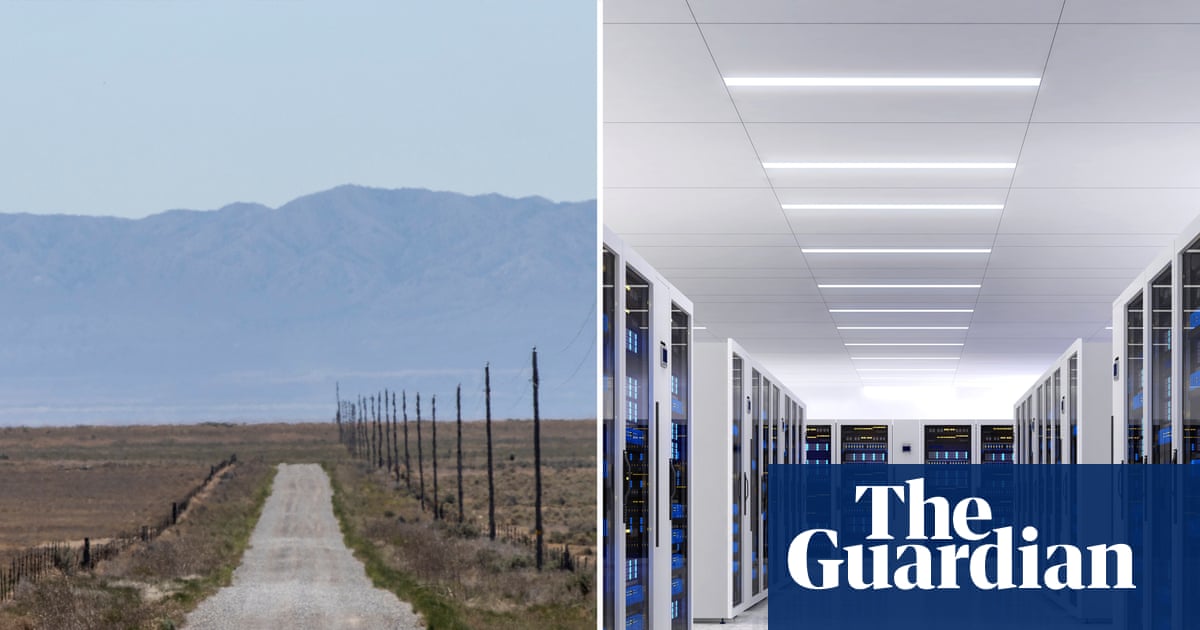
Majority of US’s new AI datacenters to be built on drought-hit land
Guardian analysis finds facilities to be built in some of the driest areas as outcry grows over water needed to power AI
The Garden, pt 2: Spoiled Soil | Paul Stephenson | Offprint
On platforms, community, and wankers down the pub.

‘Soil is more important than oil’: inside the perennial grain revolution
Scientists in Kansas believe Kernza could cut emissions, restore degraded soils and reshape the future of agriculture

Adopting Foundational Data Science Curriculum with Diverse Institutional Contexts
This summary was generated using automated tools and was not authored or reviewed by the article's author(s). It is provided to support discovery, help readers assess relevance, and assist readers from adjacent research areas in understanding the work. It is intended to complement the author-supplied abstract, which remains the primary summary of the paper. The full article remains the authoritative version of record. Click here to learn more.

Solid: Your data, your choice - Solid Project
Solid is an evolution of the web by its creator Sir Tim Berners-Lee. Solid realizes Tim's original vision for the Web as a medium for the secure, decentralized exchange of public and private data.

Digital Labor Platforms as Infrastructure of Extractivism
This chapter examines how digital platforms, as infrastructures of extractivism in contemporary artificial intelligence, enable corporations to appropriate data and labour while concentrating value in core regions such as Silicon Valley. It proposes platform extractivism as a framework linking commodification, epistemic dominance, and reproduction through territory. Drawing on digital labour studies, Latin American critical thought, and mixed-methods research with Venezuelan and Colombian data workers, the chapter discusses how AI depends on precarious platform labour to produce, clean, annotate, and maintain data. It further shows how annotation systems normalize culturally specific categories, especially US norms, as universal knowledge, reproducing colonial hierarchies. Finally, it highlights how data work is sustained by unpaid reproductive labour, community networks, and material conditions that make workers available for platform labour. Platform extractivism thus reveals AI as a labour-intensive and territorially embedded political-economic system under capitalism that perpetuates legacies of coloniality.

Solid: Your data, your choice - Solid Project
Solid is an evolution of the web by its creator Sir Tim Berners-Lee. Solid realizes Tim's original vision for the Web as a medium for the secure, decentralized exchange of public and private data.
Google’s exponential path to climate-wrecking digital bloat
Google’s latest report reveals a completely unprecedented rise in energy consumption – more than any of us expected. Generative AI is a climate carbon bomb.


