

The great German polymath Johann Wolfgang von Goethe was born #onthisday in 1749. As well as penning novels, poetry, criticism, and dramas, he also wrote various scientific treatises, including his 1810 book Zur Farbenlehre (Theory of Colours): publicdomainreview.org/essay/black-on-black #OTD
Aug 28, 2026 at 11:46 AM
Johannes Kepler
Johannes Kepler was a German polymath who was an astronomer, mathematician, astrologer, natural philosopher and music theorist. He is a key figure in the 17th-century Scientific Revolution, best known for his laws of planetary motion, and his books Astronomia nova, Harmonice Mundi, and Epitome Astronomiae Copernicanae. The variety and impact of his work made Kepler one of the founders and fathers of modern astronomy, the scientific method, natural science, and modern science. He has been described as the "father of science fiction" for his novel Somnium.

6 books recommended by Richard Thaler, Nobel Prize winner and a founding father of behavioral economics
Michael Lewis and Daniel Kahneman topped the list of his favorite authors.

Ernst Chladni
Ernst Florens Friedrich Chladni was a German physicist and musician. His most important work, for which he is sometimes labeled the father of acoustics, included research on vibrating plates and the calculation of the speed of sound for different gases. He also undertook pioneering work in the study of meteorites and is regarded by some as the father of meteoritics.

Niklaus Wirth
Niklaus Wirth (born 1934 in Switzerland) is one of the most prominent computer scientists, mostly known for creating Pascal and several other programming languages.
Benoit Mandelbrot
Benoit B. Mandelbrot was a Polish-born French-American mathematician and polymath with broad interests in the practical sciences, especially regarding what he labeled as "the art of roughness" of physical phenomena and "the uncontrolled element in life". He referred to himself as a "fractalist" and is recognized for his contribution to the field of fractal geometry, which included coining the word "fractal", as well as developing a theory of "roughness and self-similarity" in nature.

Katalog der Deutschen Nationalbibliothek
Übermensch
In his final years, already heavily plagued by mental decline, Nietzsche began to believe that he was in fact Polish, not German, and was quoted as saying, "I am a pure-blooded Polish nobleman, without a single drop of bad blood, certainly not German blood".[20][21] In defiance of nationalist doctrines, he claimed that he and Germany were great only because of "Polish blood in their veins",[22] and that he would "[have] all anti-semites shot." Nietzsche died long before Hitler's reign, and it was partly Nietzsche's sister Elisabeth Förster-Nietzsche who manipulated her brother's words to accommodate the worldview of herself and her husband, Bernhard Förster, a prominent German nationalist and antisemite.[23] Förster founded the Deutscher Volksverein (German People's League) in 1881 with Max Liebermann von Sonnenberg.[24]
Parmenides
Parmenides of Elea, active in the earlier part of the 5th c. BCE,authored a difficult metaphysical poem that has earned him areputation as early Greek philosophy’s most profound andchallenging thinker. His philosophical stance has typically beenunderstood as at once extremely paradoxical and yet crucial for thebroader development of Greek natural philosophy and metaphysics. Hehas been seen as a metaphysical monist (of one stripe or another) whoso challenged the naïve cosmological theories of his predecessorsthat his major successors among the Presocratics were all driven todevelop more sophisticated physical theories in response to hisarguments. The difficulties involved in the interpretation of his poemhave resulted in disagreement about many fundamental questionsconcerning his philosophical views, such as: whether he actually was amonist and, if so, what kind of monist he was; whether his systemreflects a critical attitude toward earlier thinkers such as theMilesians, Pythagoreans, and Heraclitus, or whether he was motivatedsimply by more strictly logical concerns, such as the paradox ofnegative existentials that Bertrand Russell detected at the heart ofhis thought; whether he considered the world of our everydayawareness, with its vast population of entities changing and affectingone another in all manner of ways, to be simply an illusion, and thuswhether the lengthy cosmological portion of his poem represented agenuine attempt to understand this world at all. This entry aims toprovide an overview of Parmenides’ work and of some of the majorinterpretive approaches advanced over the past few decades. Itconcludes by suggesting that understanding his thought and his placein the development of early Greek philosophy requires taking dueaccount of the fundamental modal distinctions that he was the first toarticulate and explore with any precision.
Plagiat et alors? Étienne Klein est atteint d'une « Fillonite aigüe »
Accusé de plagiat, dans son dernier livre dédié à Einstein, mais aussi dans pratiquement tous ses livres de vulgarisation scientifique, Étienne Klein a fait l'objet d'une enquête qui a été déclenchée…

Paul Feyerabend
Paul Feyerabend (b.1924, d.1994), having studied science at theUniversity of Vienna, moved into philosophy for his doctoral thesis,made a name for himself both as an expositor and (later) as a critic ofKarl Popper's “critical rationalism”, and went on to becomeone of the twentieth century's most famous philosophers of science. Animaginative maverick, he became a critic of philosophy of scienceitself, particularly of “rationalist” attempts to lay downor discover rules of scientific method.
Nadia Eghbal, Re: Writing Hypertext
My digichat with @nayafia---an essential writer (*imho*) of texts, notes and wonderful roundups.
Terence Tao – Kepler, Newton, and the true nature of mathematical discovery
“And what those stories teach us about how AI will revolutionize math”
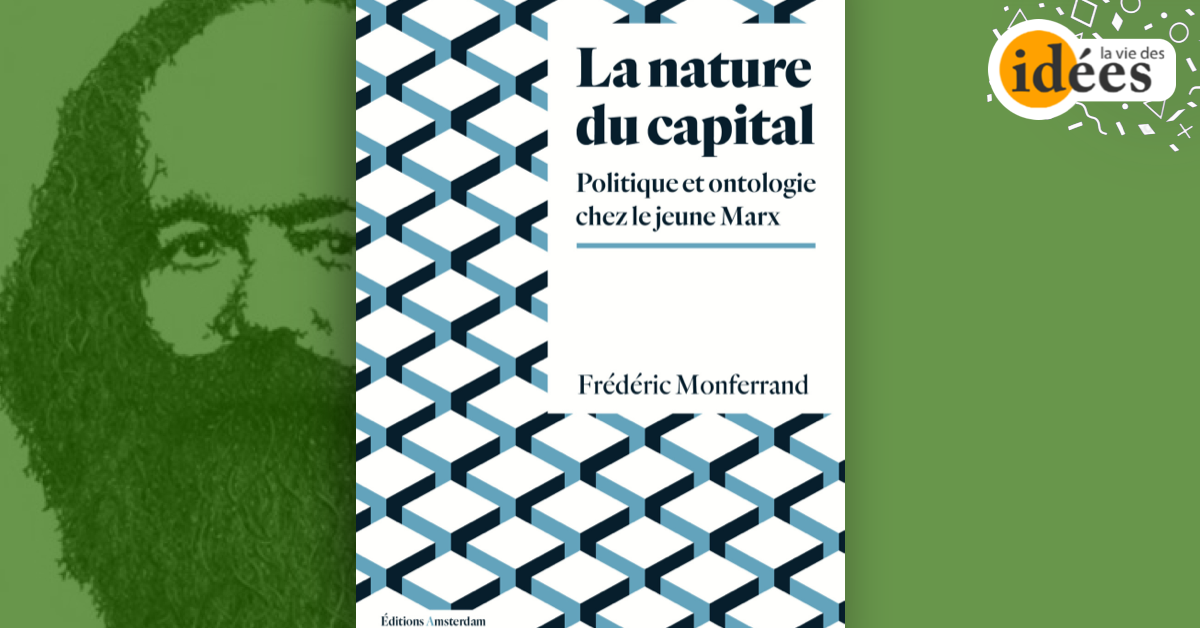
Marx et l’histoire de la nature
À propos de : Frédéric Monferrand, La nature du capital. Politique et ontologie chez le jeune Marx, Éditions Amsterdam
Toni Lijic, Designer
A software designer with a scientific background who loves building random whimsical things, books, art and anything orange.

Dennis Smuda - web developer based in Germany
I write about stuff I learn along the way and post about projects I release. Come find out more about me or my work, maybe get in touch

The great German polymath Johann Wolfgang von Goethe was born #onthisday in 1749. As well as penning novels, poetry, criticism, and dramas, he also wrote various scientific treatises, including his 1810 book Zur Farbenlehre (Theory of Colours): publicdomainreview.org/essay/black-on-black #OTD
