

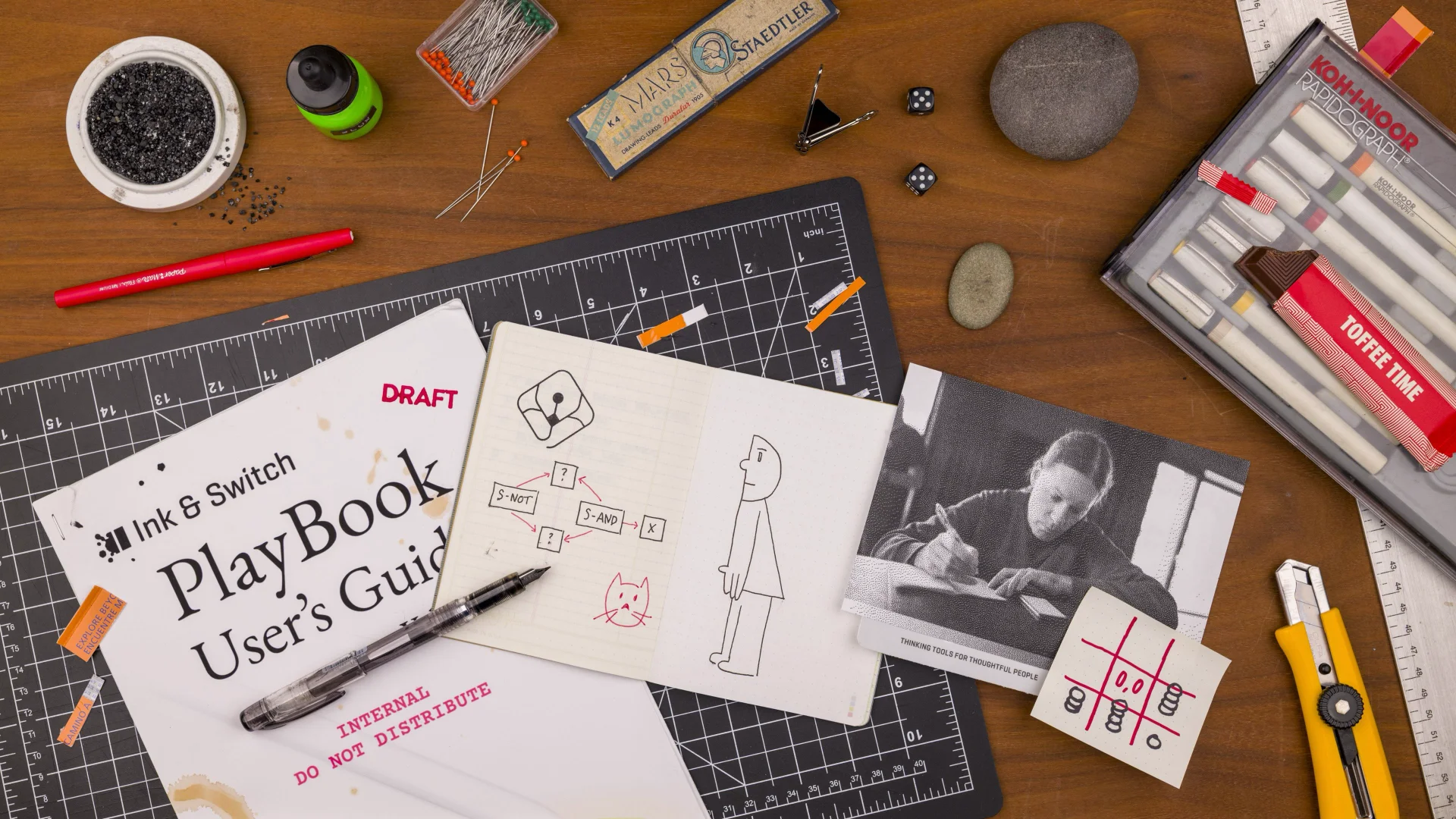
Still trying to figure out how to talk about our Patchwork project: it's a local-first malleable software system that builds on our past work. It's shadertoy and a markdown editor but it's also a minecraft clone and an ohmjs programming language workbench. It's also none of those things, or more?
Feb 27, 2025 at 4:27 AM
Steven Vandevelde (@tokono.ma)
Looks like what I've been building is quite similar to what the foundation of Patchwork-26 is. Lots of "tiny apps" (atomization of software, loosely coupled) + just the web. Local-first and where everything revolves around the content (data-first, can use preferred UI/view). Happy to see this! 🎉

patchwork-system/core at main · inkandswitch/patchwork-system
Patchwork system. Contribute to inkandswitch/patchwork-system development by creating an account on GitHub.
Introducing Patchwork-26
Local-first Software
Exploring software architecture that returns data to users and enables collaboration in every tool.
Local-first software: pragmatism vs idealism
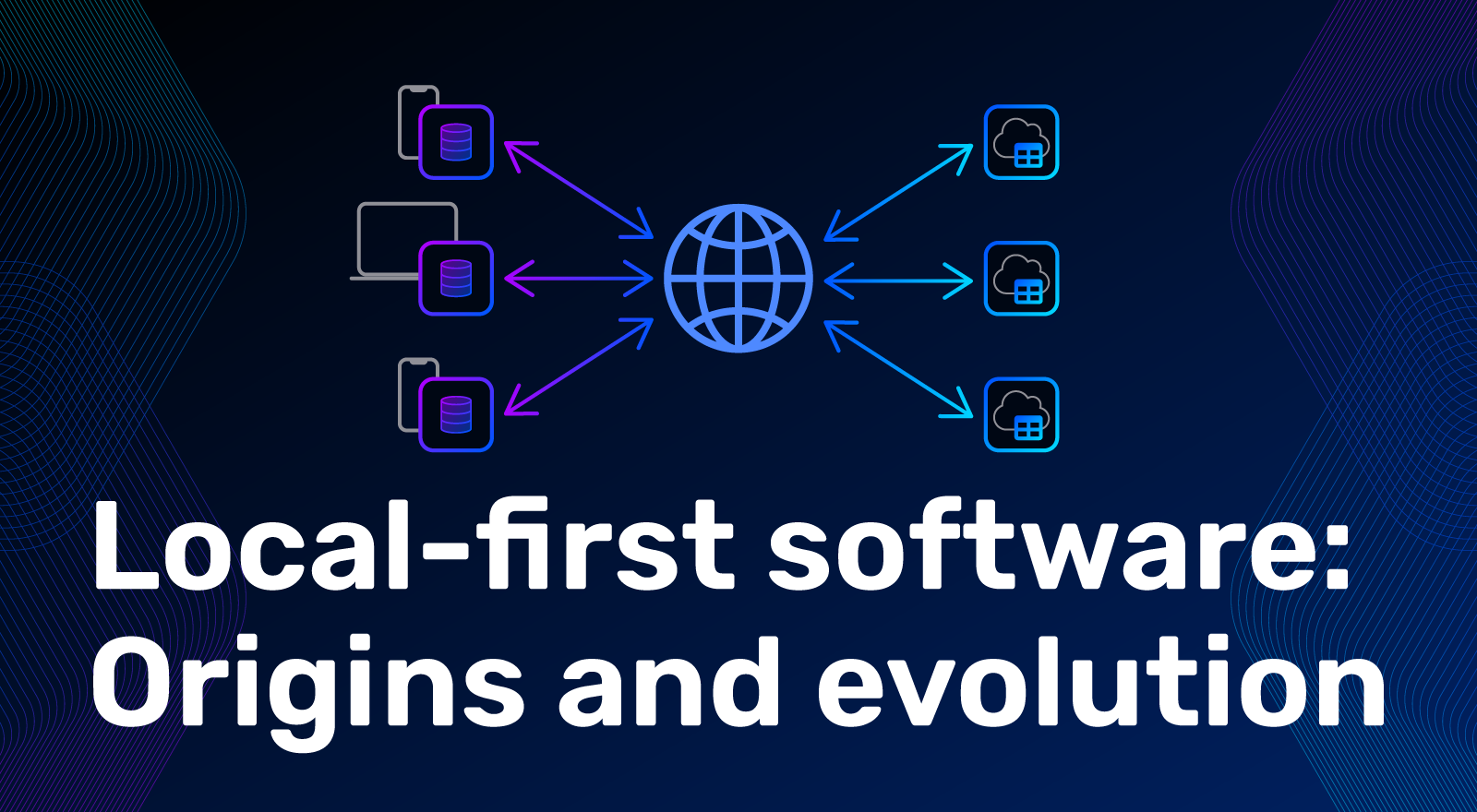
Local-First Software: Origins And Evolution
Developer interest in local-first software is continuing to grow rapidly in 2024. At the same time, it’s also apparent that developers currently have different views on what they consider to be ‘local-first software’, ranging from narrower to broader definitions. This prompted us to take a closer look at the origins and evolution of local-first.
The Architecture Of Local-First Web Development — Smashing Magazine
An honest perspective on building local-first web apps in 2026, written for developers who’ve been doing this long enough to be skeptical of silver bullets.
Nibble Stew: The Nine Phases of an Open Source Project Maintainer
There is more to running an open source project than writing code. In fact most of all work has to do with something else. This places addit...
Local-First Software Unconference · Luma
On Sat September 23, 2023, immediately following the Strange Loop conference, we are holding a community event for everybody interested in local-first software…

The League of Moveable Type
The first open-source foundry. And your spot to learn how to use, make, and work with type.
New thing! @jrcpl.us and I have been exploring home-made software. We made a prototype of a tool for making scrappy little apps for you and your friends. pontus.granstrom.me/scrappy/

Scrappy
pontus.granstrom.mebig milestone at the day job where we open sourced Resident, our low-level core tech aimed at hardware device developers: code sandboxes for microcontrollers idea is that end users can infinitely reprogram the products in their home info + GitHub over here... news.inanimate.tech/p/lab-notes-drum-loops-protot…


