

Does engaging with the arts help to slow the aging process? According to this new paper from Fancourt et al the answer is yes! Alas, the paper is actually unsuitable for such claims. Let’s examine by discussing how you'd establish whether arts engagement actually caused future health! 1/18 🧵

Does leisure activity matter for epigenetic ageing? Analyses of arts engagement and physical activity in the UK Household Longitudinal Study
academic.oup.comMay 12, 2026 at 8:32 PM
Why Your Brain Needs More Downtime
Research on naps, meditation, nature walks and the habits of exceptional artists and athletes reveals how mental breaks increase productivity, replenish attention, solidify memories and encourage creativity
No, Video Games Aren't Art. We're BETTER.
Do you think this should fill me with shame? Because it does not. "When I was twenty, I worried what everything thought of me. When I t...

Does adolescence really last until age 32?
Those “turning points” in brain aging aren’t quite what you think
Still Moon Arts Society – Inspired & Connected
Still Moon Arts Society inspires vibrant and connected communities by creating artistic experiences and nurturing a passion for nature.
Almost anything you give sustained attention to will begin to loop on itself and bloom
When people talk about the value of paying attention and slowing down, they often make it sound prudish and monk-like. But we shouldn’t forget how interesting and overpoweringly pleasurable sustained attention can be.
How to be more creative in seconds!
Use it or lose it: How cognitive skills change with age
Cognitive skills are commonly assumed to begin deteriorating from the age of 30, which could pose a significant challenge for rapidly ageing populations. But this assumption relies largely on cross-sectional data that cannot distinguish between ageing patterns and cohort differences. Using German longitudinal data, this column finds that skills, on average, increase markedly into one’s 40s before decreasing slightly in literacy and more severely in numeracy. In addition, skills decline at older ages only for those with below-average skill usage, outlining a clear policy pathway for avoiding skill declines.

Ratioed — dame.is
I began this social art experiment in June 2025 and have “performed” it periodically since. My intent was to explore what it would look like to use a social media post as a medium for art (not for sharing art). Because I used Bluesky, the social data underlying this art projec…
Read The Work of Art in the Age of Mechanical Reproduction
1935 essay by Walter Benjamin; proposes that mechanical reproduction devalues the aura of an artwork, that—in the age of mechanical reproduction and traditional ritualistic value’s absence—art production would be inherently based on political praxis
The Best Exercise for Aging Muscles (Published 2017)
Certain kinds of exercise may mitigate the effects of aging at the cellular level.

Arts & Deeptech, A Codependency
Deeptech, and the arts are stunted because, in my opinion, we don’t have enough ‘shots on goal’. If the 80/20 rule is true, then tech and…

What if Age Is Nothing but a Mind-Set? (Published 2014)
Ellen Langer’s experiments have shown that mental attitudes might reverse some ravages of old age. Now she wants to test that same radical principle on cancer.

How to gain more from reading by taking it all in more slowly | Psyche Guides
There’s more to words than meets the eye. Deepen your appreciation of literature through the art of slow, attentive reading
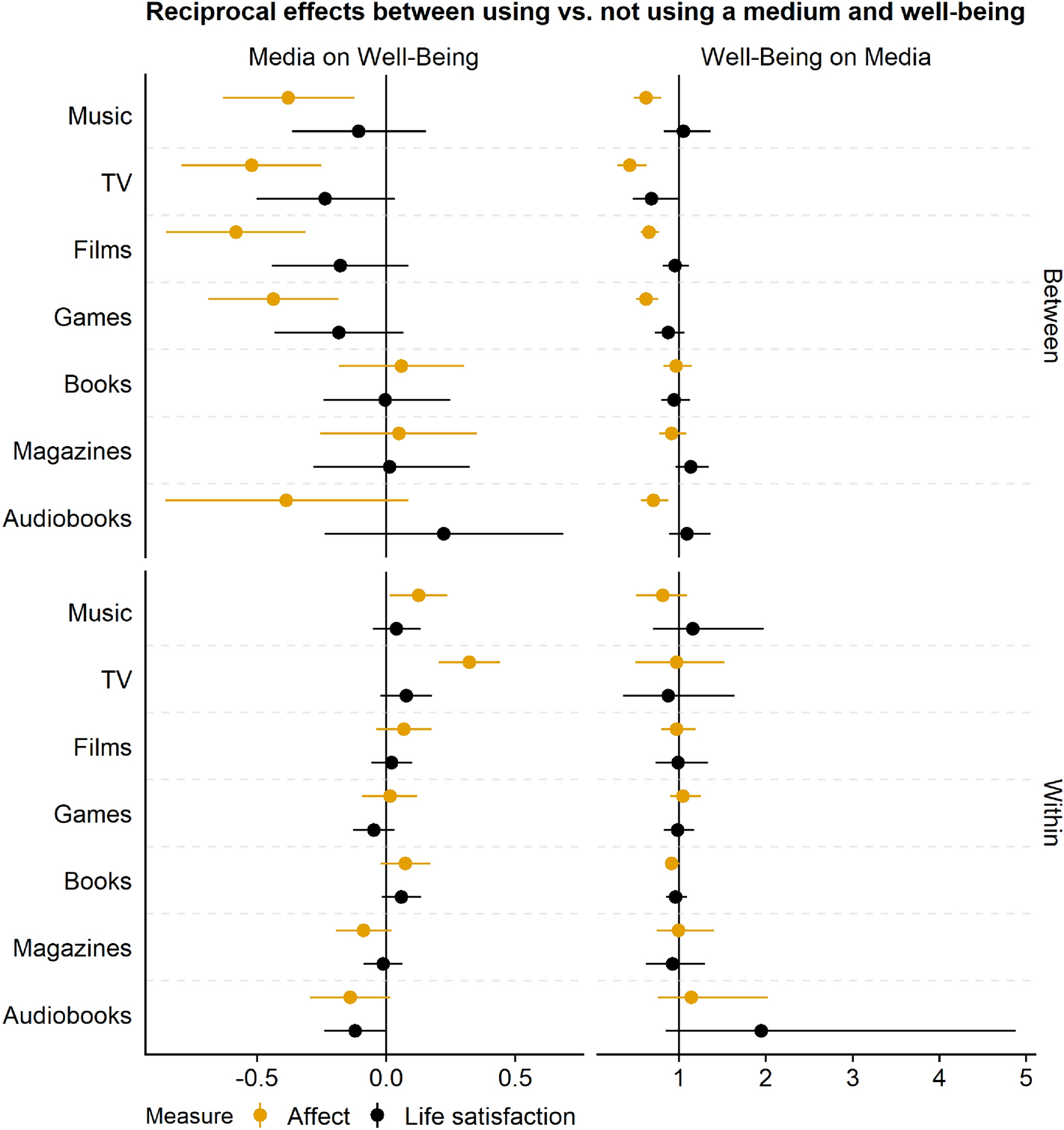
No effect of different types of media on well-being
It is often assumed that traditional forms of media such as books enhance well-being, whereas new media do not. However, we lack evidence for such claims and media research is mainly focused on how much time people spend with a medium, but not whether someone used a medium or not. We explored the effect of media use during one week on well-being at the end of the week, differentiating time spent with a medium and use versus nonuse, over a wide range of different media types: music, TV, films, video games, (e-)books, (digital) magazines, and audiobooks. Results from a six-week longitudinal study representative of the UK population 16 years and older (N = 2159) showed that effects were generally small; between-person relations but rarely within-person effects; mostly for use versus nonuse and not time spent with a medium; and on affective well-being, not life satisfaction.
Do you mean “can the arts business model survive monopolies?” Half of the story here is of concentration of power in a quasi-monopsony (eg Spotify) and a de facto monopoly (LiveNation). That’s what’s actually killing the arts.

Joey Politano🏳️🌈
Can the arts business model survive AI? Perhaps the best guide is to look at how the arts survived past tech revolutions Take music—internet piracy and then streaming killed the lucrative CD market, but musicians mostly saved their jobs by focusing much more on live concerts
There is starting to be some genuinely interesting AI-created film stuff (among a flood of slop), and I suspect this will only accelerate. The “is it art?” debate will grow Benjamin’s 1935 essay “The Work of Art in the Age of Mechanical Reproduction” already argued it’s likely the wrong question.


