Please consult the official Bloomberg estimate of Scope 1+2+3 combined total GHG emissions for the 500 largest public companies in the US, which I have annotated for helpful context. Microsoft emits slightly more GHG than a toothpaste manufacturer (much more than NFLX), but far less than Pepsi.

Ketan Joshi
For some reason "AI is just like watching Netflix" is back in my feeds so I took that as a sign to update my data tracking for Netflix. The company's energy use rose 1% from 2021 to 2024. Compare that to: Google: 71% Nvidia: 88% Meta: 96% Microsoft: 119%
May 5, 2026 at 7:02 PM
New Gas-Powered Data Centers Could Emit More Greenhouse Gases Than Entire Nations
A WIRED review of permits for data center projects using natural gas and linked to OpenAI, Meta, Microsoft, and xAI shows they could emit more than 129 million tons of greenhouse gases per year.

In Deep
The numbers are simply mind-blowing: up to £264 billion for a climate “solution” that will increase emissions. Has the government lost its mind?

We did the math on AI’s energy footprint. Here’s the story you haven’t heard.
The emissions from individual AI text, image, and video queries seem small—until you add up what the industry isn’t tracking and consider where it’s heading next.

Les émissions de CO₂ de Google et d’Amazon bondissent, propulsées par l’essor de l’IA
Les émissions totales de Google ont augmenté de 82 % depuis 2019 alors que le groupe s’était engagé à les réduire de moitié d’ici à 2030. Celles d’Amazon ont grimpé de 58 % au cours de la même période, malgré une neutralité carbone promise pour 2040.
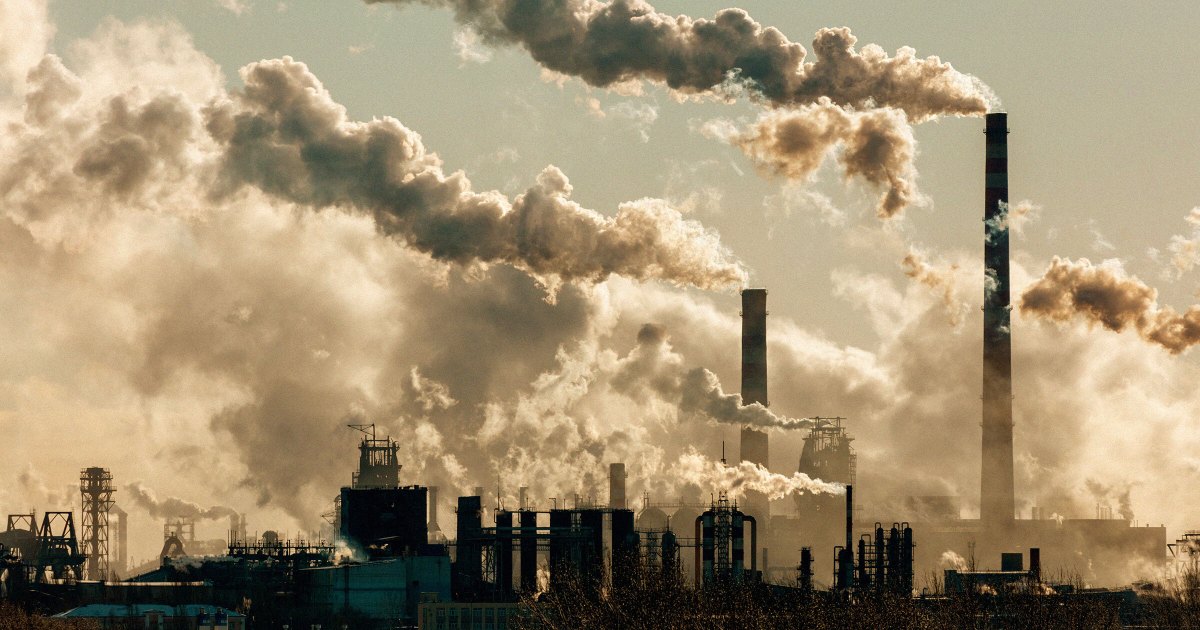
Trump’s EPA Will Let Power Companies Unleash Unlimited Greenhouse Gas Pollution
Trump's EPA announced new changes that will eliminate federal limits on greenhouse gas emissions produced by power plants.
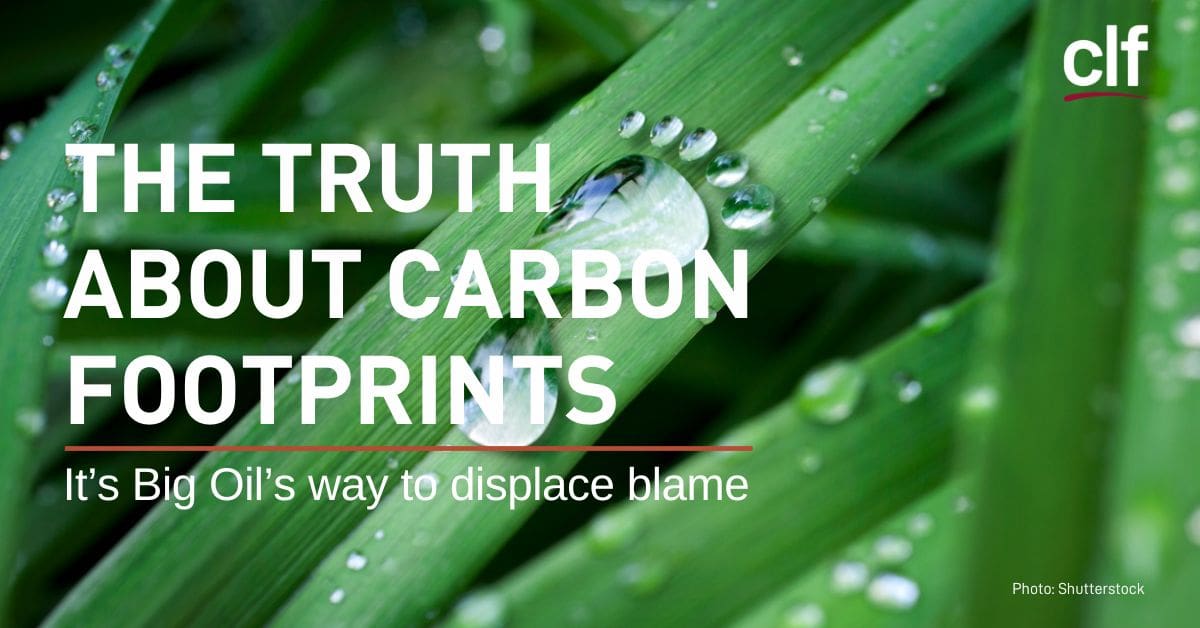
The Truth About Carbon Footprints
Carbon footprints & carbon footprint calculators are a marketing tool to make individuals feel guilty for Big Oil's pollution. See how the oil industry is blaming you and me.
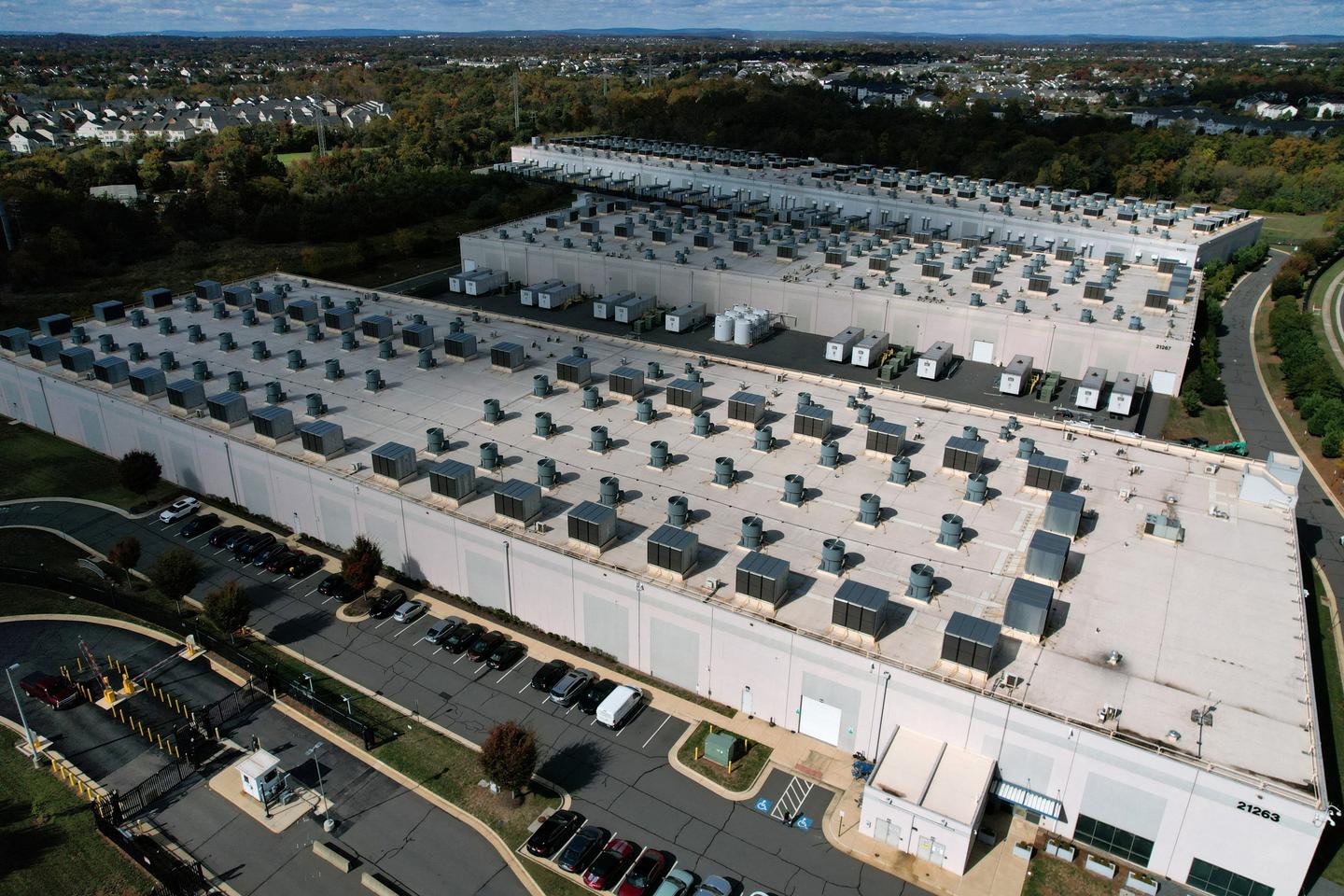
Health-Informed Computing: Estimating and Addressing the Public Health Impact of Data Centers
The surging demand for artificial intelligence (AI) has led to a rapid expansion of energy-intensive data centers, contributing to criteria air pollutant emissions and raising public health concerns that have received comparatively limited attention in sustainability assessments. This paper introduces a principled methodology to model air pollutant emissions for data centers and estimate the public health impacts. Our findings reveal that the growing demand for AI and computing technologies is projected to push the total annual public health burden of U.S. data centers up to more than $20 billion in 2028. Although national-level impacts remain modest, data center health costs are unevenly distributed: in the most affected counties, the estimated per-household health burden can reach about seven times the national average. Next, we propose a health-informed computing framework that explicitly incorporates public health impacts into data center resource management across space and time, mitigating public health costs while supporting environmental sustainability. More broadly, we recommend extended energy reporting to include public health impact of data centers and paying attention to all impacted communities.

Health-Informed Computing: Estimating and Addressing the Public Health Impact of Data Centers
The surging demand for artificial intelligence (AI) has led to a rapid expansion of energy-intensive data centers, contributing to criteria air pollutant emissions and raising public health concerns that have received comparatively limited attention in sustainability assessments. This paper introduces a principled methodology to model air pollutant emissions for data centers and estimate the public health impacts. Our findings reveal that the growing demand for AI and computing technologies is projected to push the total annual public health burden of U.S. data centers up to more than $20 billion in 2028. Although national-level impacts remain modest, data center health costs are unevenly distributed: in the most affected counties, the estimated per-household health burden can reach about seven times the national average. Next, we propose a health-informed computing framework that explicitly incorporates public health impacts into data center resource management across space and time, mitigating public health costs while supporting environmental sustainability. More broadly, we recommend extended energy reporting to include public health impact of data centers and paying attention to all impacted communities.
Does that use a lot of energy?
Compare the daily energy consumption of different products and activities
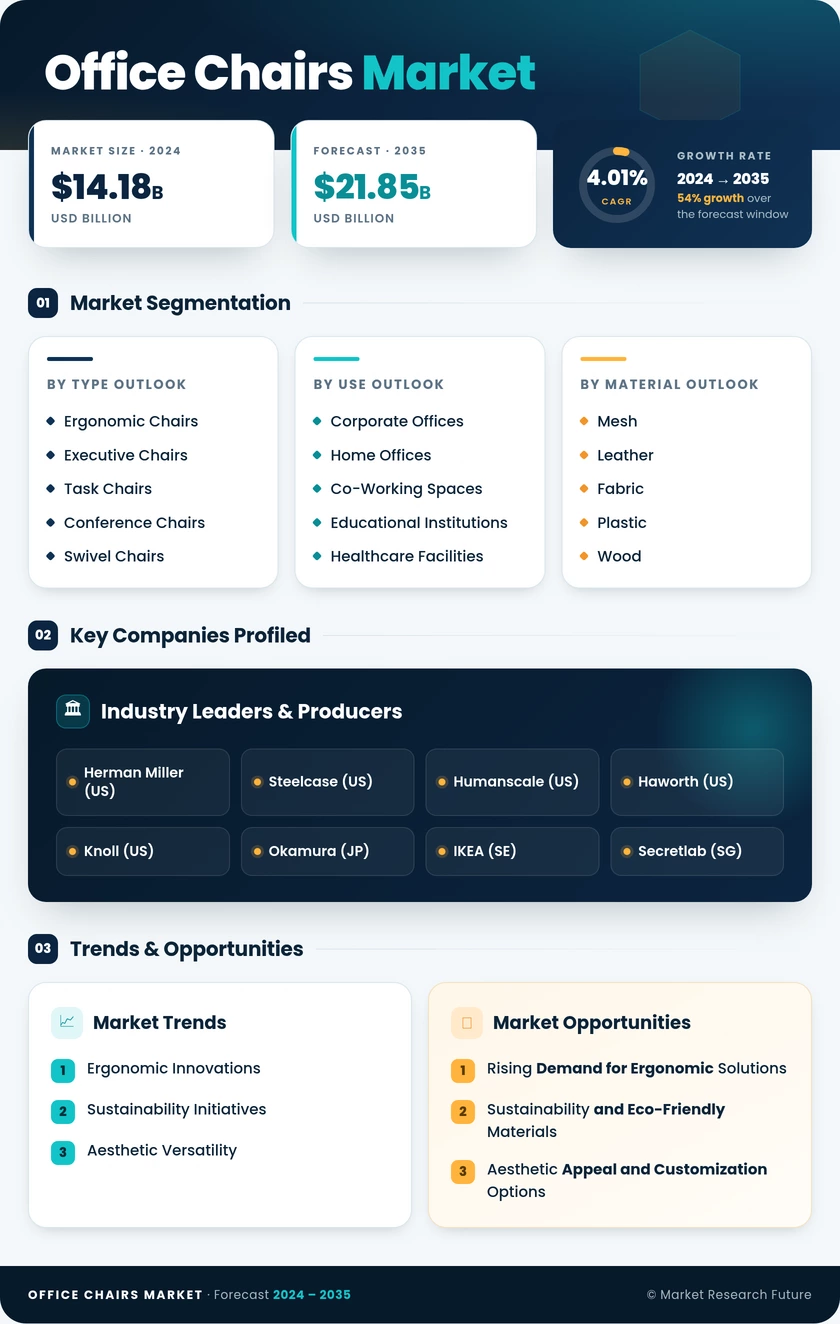
Office Chairs Market Size, Share, Trends And Growth Report 2035
Office Chairs Market Size is Anticipated to Reach at 21.85 USD Billion With CAGR 4.01 % By 2025 to 2035,Due To to Increasing Workspace Ergonomics Awareness
Quantifying the Carbon Emissions of Machine Learning
From an environmental standpoint, there are a few crucial aspects of training a neural network that have a major impact on the quantity of carbon that it emits. These factors include: the location of the server used for training and the energy grid that it uses, the length of the training procedure, and even the make and model of hardware on which the training takes place. In order to approximate these emissions, we present our Machine Learning Emissions Calculator, a tool for our community to better understand the environmental impact of training ML models. We accompany this tool with an explanation of the factors cited above, as well as concrete actions that individual practitioners and organizations can take to mitigate their carbon emissions.
AI boom has caused same CO2 emissions in 2025 as New York City, report claims
Study author says tech companies are reaping benefits of artificial intelligence age but society is left to pay cost

Improving and Expanding Estimates of the Global Burden of Disease Due to Environmental Health Risk Factors
Abstract Background: The Global Burden of Disease (GBD) study, coordinated by the Institute for Health Metrics and Evaluation (IHME), produces influential, data-driven estimates of the burden of disease and premature death due to major risk factors. Expanded quantification of disease due to environmental health (EH) risk factors, including climate change, will enhance accuracy of GBD estimates, which will contribute to developing cost-effective policies that promote prevention and achieving Sustainable Development Goals. Objectives: We review key aspects of the GBD for the EH community and introduce the Global Burden of Disease–Pollution and Health Initiative (GBD-PHI), which aims to work with IHME and the GBD study to improve estimates of disease burden attributable to EH risk factors and to develop an innovative approach to estimating climate-related disease burden—both current and projected. Methods: We discuss strategies for improving GBD quantification of specific EH risk factors, including air pollution, lead, and climate change. We highlight key methodological challenges, including new EH risk factors, notably evidence rating and global exposure assessment. Discussion: A number of issues present challenges to the scope and accuracy of current GBD estimates for EH risk factors. For air pollution, minimal data exist on the exposure–risk relationships associated with high levels of pollution; epidemiological studies in high pollution regions should be a research priority. For lead, the GBD’s current methods do not fully account for lead’s impact on neurodevelopment; innovative methods to account for subclinical effects are needed. Decisions on inclusion of additional EH risk–outcome pairs need to be guided by findings of systematic reviews, the size of exposed populations, feasibility of global exposure estimates, and predicted trends in exposures and diseases. Neurotoxicants, endocrine-disrupting chemicals, and climate-related factors should be high priorities for incorporation into upcoming iterations of the GBD study. Enhancing the scope and methods will improve the GBD’s estimates and better guide prevention policy. https://doi.org/10.1289/EHP5496
Air Pollution and the Public Health Costs of AI
A new study by Caltech and UC Riverside uncovers the hidden toll that AI exacts on health throughout its lifecycle, from chip manufacturing to data center operation.

Best of times, worst of times: record fossil-fuel profits, inflation and inequality
The 2022 oil and gas crisis resulted in record fossil-fuel profits globally that rehabilitated the oil and gas industry, obstructed the energy transition and contributed to inflation, but their magnitude and beneficiaries have been insufficiently understood. Here we show the size of profits across countries and their distribution across socio-economic groups within the United States, using company income statements, comprehensive ownership data and a network model for propagating profits via shareholdings. We estimate that globally, net income in publicly listed oil and gas companies alone reached US$916 billion in 2022, with the United States the biggest beneficiary with claims on US$301 billion, more than U.S. investments of US$267 billion in the low carbon economy that year. In a network of U.S. shareholdings with 252,433 nodes including privately held U.S. companies, 50 % of profits went to the wealthiest 1 % of individuals, predominantly through direct shareholdings and private company ownership. In contrast the bottom 50 % only received 1 %. The incremental U.S. fossil-fuel profits in 2022 relative to 2021 were enough to increase the disposable income of the wealthiest Americans by several percent and compensate a substantial part of their purchasing power loss from inflation that year, thereby exacerbating inflation inequality. These profits also reinforced existing racial and ethnic inequalities and inequalities between groups with different educational attainments. We discuss how an excess profit tax could be used to both lower inequality and accelerate the energy transition as increasing geopolitical tensions and climate impacts threaten continued volatility in oil and gas markets.
A clean break꞉ leaving fossil volatility for clean tech security
Shifting from the vulnerability of fossil fuel dependency toward home-grown manufacturing and more resilient clean tech imports