

No one wants to own their data until the platform where their data lives enshittifies to the point of unusability and/or starts selling their data in ways they didn't expect. Like, 99% of ppl are here because Elon owns Twitter. I get why people don't care, but they tend to eventually every time.
Jul 30, 2026 at 5:01 PM
Who Even Cares About Data Ownership Anyway? - What The Function!?
Taking a look at a concept that's been talked a lot over the last few years, especially in the context of social media
Nonrivalry and the Economics of Data
(September 2020) - Data is nonrival: a person's location history, medical records, and driving data can be used by many firms simultaneously. Nonrivalry leads to increasing returns. As a result, there may be social gains to data being used broadly across firms, even in the presence of privacy considerations. Fearing creative destruction, firms may choose to hoard their data, leading to the inefficient use of nonrival data. Giving data property rights to consumers can generate allocations that are close to optimal. Consumers balance their concerns for privacy against the economic gains that come from selling data broadly.
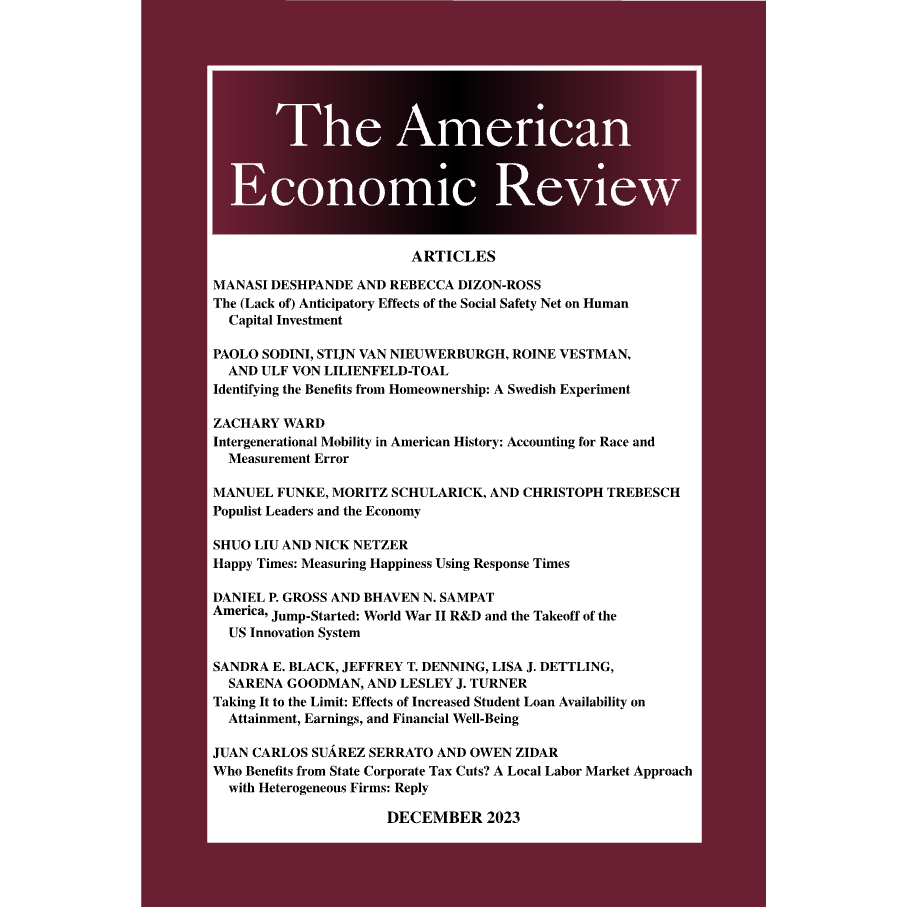
Personal data storage is an idea whose time has come
Data Ownership as a conversation changes when data resides primarily with people-governed institutions rather than corporations.
Free Our Feeds
Social media is broken: controlled by a handful of billionaires who shape what people see, say, and believe. These platforms profit from division, exploit user data, and lock people into closed systems.
Implicit Feudalism — Rushkoff Archive
Too many of us think it doesn’t matter when a platform like X/Twitter has a single, all-powerful owner. Most of our online worlds are simply run by what we hope are benevolent dictators. After all, we figure, if we don’t like what they’re doing or allowing, we can just leave, right? But in most cases we’re just jumping from one rich dude’s idea for how the world should be to another rich dude’s idea for how the world should be.
Should We Treat Data as Labor? Moving Beyond “Free”
Should We Treat Data as Labor? Moving beyond "Free" by Imanol Arrieta-Ibarra, Leonard Goff, Diego Jiménez-Hernández, Jaron Lanier and E. Glen Weyl. Published in volume 108, pages 38-42 of AEA Papers and Proceedings, May 2018, Abstract: In the digital economy, user data is typically treated as capi...
Fed up with Big Tech, communities turn to data collectives for control
Data collectives and cooperatives, which let creators control the collection and distribution of their data, are emerging as preferred alternatives to big tech companies.

Can “Conscious Data Contribution” Help Users to Exert “Data Leverage” Against Technology Companies?
Tech users currently have limited ability to act on concerns regarding the negative societal impacts of large tech companies. However, recent work suggests that users can exert leverage using their role in the generation of valuable data, for instance by withholding their data contributions to intelligent technologies. We propose and evaluate a new means to exert this type of leverage against tech companies: "conscious data contribution" (CDC).
The Future is NOT Self-Hosted
In a world where corporations have detached buying from owning, one man attempts to do something radical: build his own cloud.

A Duty of Loyalty for Privacy Law
Data privacy law fails to stop companies from engaging in self-serving, opportunistic behavior at the expense of those who trust them with their data. This is a

Local-first software: You own your data, in spite of the cloud
A new generation of collaborative software that allows users to retain ownership of their data.
Local-first software: You own your data, in spite of the cloud
A new generation of collaborative software that allows users to retain ownership of their data.

Your data is everywhere. The government is buying it without a warrant
Data brokers buy up huge amounts of information from cell phones and browsers to sell for targeted advertising. But the government, including ICE, also buys the data.

Aye > Data Ownership as a conversation changes when data resides primarily with people (..). > Instead of arguing for what kinds of data we ought to be able to download from the corporate silos, the platforms should be asking us what kinds of data they may copy from *our* servers.

Erlend Sogge Heggen
The web can be made personal again. blog.muni.town/personal-data-storage-idea/


