

My boiling hot take on this is that, if tech companies are going to fund this kind of research (looking at Schmidt too), then the money needs to be given *no strings* to an independent arm's length research body, pooled with other funding, and treated as a donation not as direct funding.

Hetan Shah
Anthropic AI research fund offers $5m - $30m for social science research on themes of AI impact on workers; transition initiatives; income support; building worker stakes; and wider evidence on public investments. Total fund of $200m available anthropic.com/news/economic-futures-researc…
Jul 31, 2026 at 7:51 AM
science funding and the cherry picking problem
Science publishing–like all of science–requires money. There’s no getting around it, even with the open science movement. What appears free to many authors and readers still requires money and infr…

Research Debt
Science is a human activity. When we fail to distill and explain research, we accumulate a kind of debt...

Open Source for Science Fund Launches to Power AI-Driven Discovery
A new multi-donor fund by Renaissance Philanthropy seeded by Biohub and Wellcome opens its first call for proposals.
Schmidt Sciences awards $10 million to one of the world’s largest AI and humanities research programs - Schmidt Sciences
Nineteen teams will use AI to expand the study of art, dance, history, music, literature and more across thousands of years of global culture. Contact: Carlie Wiener – cwiener@schmidtsciences.org NEW YORK— Using AI to reconstruct a marble map of Rome that shattered in 226 AD. Analyzing sperm whale calls for evidence of vowels and regional […]

Reasonable
A straightforward funding mechanism that rewards innovators and risk-takers while remaining sensitive to the social impact of new…

Scientific Publishing: Enough is Enough
Why we're no longer funding journal publications

Scientific Publishing: Enough is Enough
Why we're no longer funding journal publications
BiTS Americas Webinar 25 November 2025
This CA proposition will send $4 billion to a single nonprofit. Who’s behind it?
Proposition 38 will award $4 billion to one unnamed research center. Under the very specific criteria, only one center seemingly qualifies.

Spending deal comes with a bonus: Blocking political control of grants
Congress pauses the OMB's attempt to rewrite how research is funded.


The Rise of Large Language Models and the Direction and Impact of US Federal Research Funding
Federal research funding shapes the direction, diversity, and impact of the US scientific enterprise. Large language models (LLMs) are rapidly diffusing into scientific practice, holding substantial promise while raising widespread concerns. Despite growing attention to AI use in scientific writing and evaluation, little is known about how the rise of LLMs is reshaping the public funding landscape. Here, we examine LLM involvement at key stages of the federal funding pipeline by combining two complementary data sources: confidential National Science Foundation (NSF) and National Institutes of Health (NIH) proposal submissions from two large US R1 universities, including funded, unfunded, and pending proposals, and the full population of publicly released NSF and NIH awards. We find that LLM use rises sharply beginning in 2023 and exhibits a bimodal distribution, indicating a clear split between minimal and substantive use. Across both private submissions and public awards, higher LLM involvement is consistently associated with lower semantic distinctiveness, positioning projects closer to recently funded work within the same agency. The consequences of this shift are agency-dependent. LLM use is positively associated with proposal success and higher early-stage publication output at NIH, whereas no comparable associations are observed at NSF. Notably, the productivity gains at NIH are concentrated in non-hit papers rather than the most highly cited work. Together, these findings provide large-scale evidence that the rise of LLMs is reshaping how scientific ideas are positioned, selected, and translated into publicly funded research, with implications for portfolio governance, research diversity, and the long-run impact of science.

The Risks of Industry Influence in Tech Research
Emerging information technologies like social media, search engines, and AI can have a broad impact on public health, political institutions, social dynamics, and the natural world. It is critical to develop a scientific understanding of these impacts to inform evidence-based technology policy that minimizes harm and maximizes benefits. Unlike most other global-scale scientific challenges, however, the data necessary for scientific progress are generated and controlled by the same industry that might be subject to evidence-based regulation. Moreover, technology companies historically have been, and continue to be, a major source of funding for this field. These asymmetries in information and funding raise significant concerns about the potential for undue industry influence on the scientific record. In this Perspective, we explore how technology companies can influence our scientific understanding of their products. We argue that science faces unique challenges in the context of technology research that will require strengthening existing safeguards and constructing wholly new ones.
Today we're launching the Open Source for Science Fund, a new multi-donor philanthropic fund by Renaissance Philanthropy, seeded by @biohub.org and @wellcometrust.bsky.social, with support from @kavlifoundation.org and @researchsoftware.bsky.social 🧵 os4science.org/news/open-source-for-science-…

Open Source for Science Fund Launches to Power AI-Driven Discovery
os4science.orgCurious about the competing interests statesments for @i4replication.bsky.social’s @pnas.org paper. 1) funding for i4r comes heavily from an AI/tech tied group and 2) that many authors and none has a conflict of interest with LLMs and science? pnas.org/doi/10.1073/pnas.2524747123
PNAS
www.pnas.orgnovel funding mechanisms

funding models that doesn't depend on VC. funding models that keep things accessible and open but yet provide enough incentive for people to pay
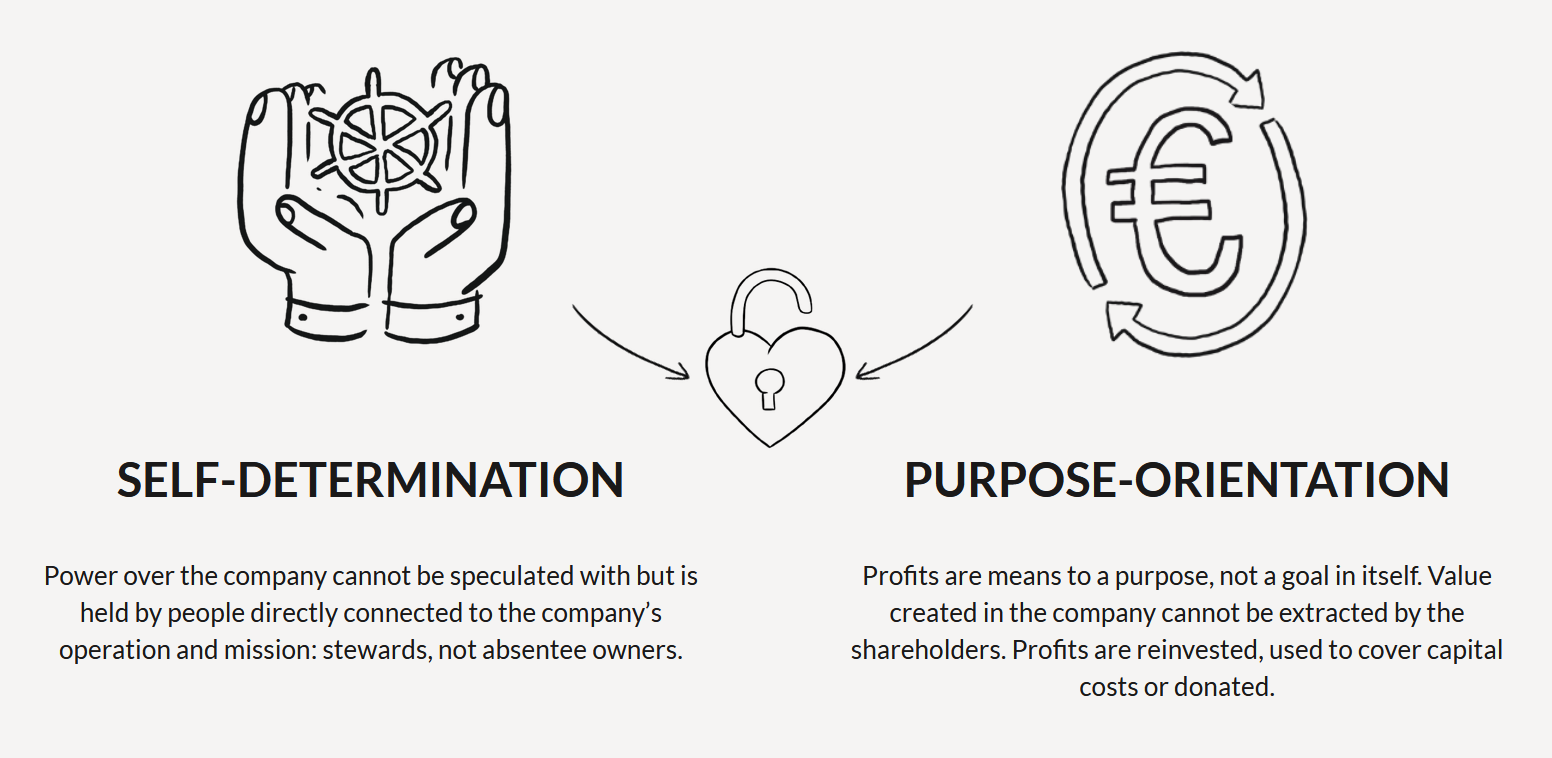
Company as a Commons

x402
Let's Talk Money - Interlinked

Home | Sovereign Tech Agency

The future is low-tech: lessons from the early 2000s ft. Jésabel DC | Config 2026
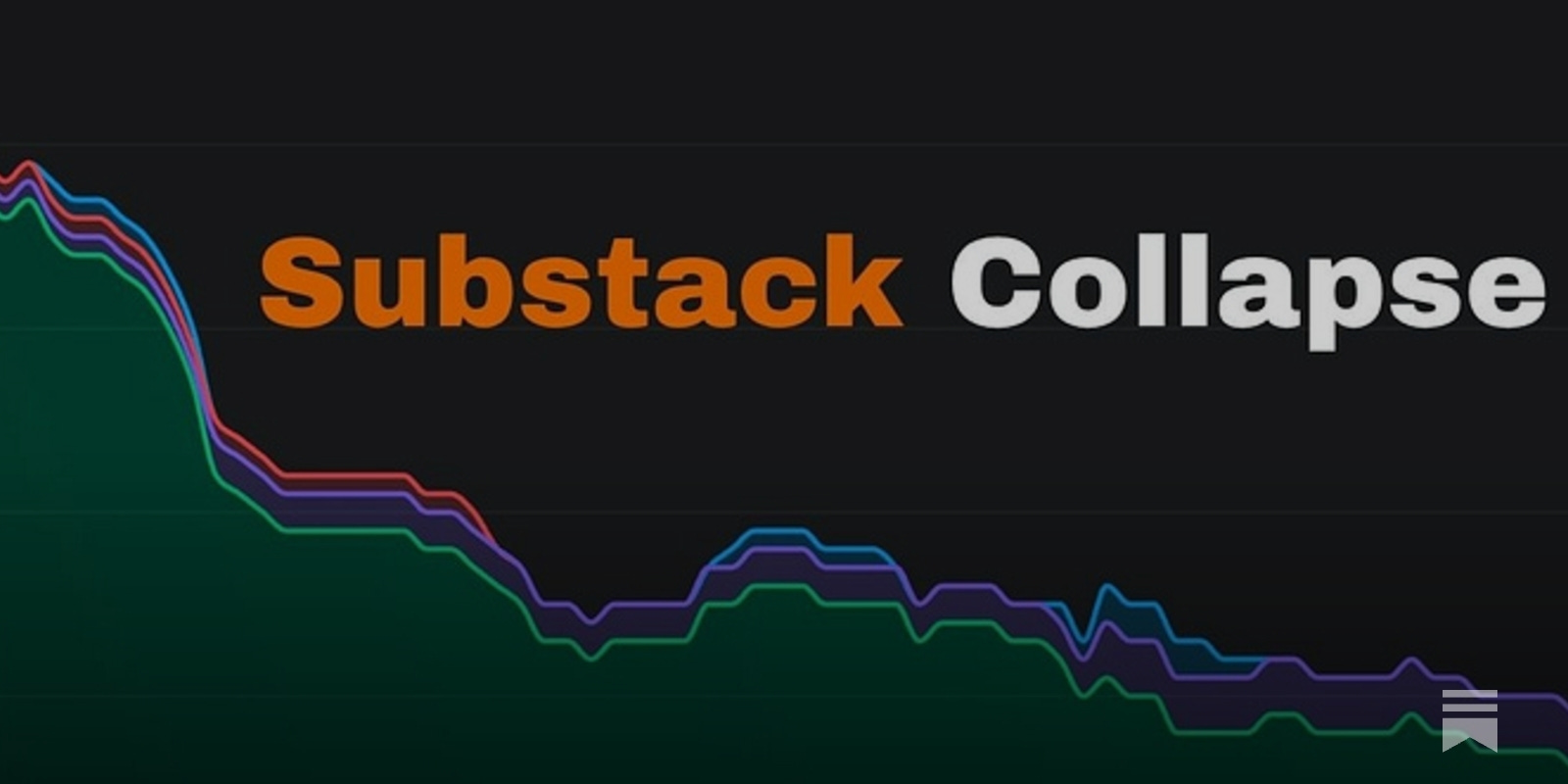
The Real Reason that Substack is Collapsing


