

#CogSci2026 is happening this week in Rio de Janeiro 🇧🇷 I’ll be there to share my research on #AI Sycophancy that I've been working on with Tom Griffiths (@cocoscilab.bsky.social) You can view the poster here, but if you're at CogSci, stop by anyway to say 'Hi' rafaelmbatista.com/sycophantic-ai/cogsci26-poste…

A Rational Analysis of the Effects of Sycophantic AI
rafaelmbatista.comJul 20, 2026 at 5:02 PM
What Counts as AI Sycophancy? A Taxonomy and Expert Survey of a...
AI sycophancy has become a prominent concern in large language model (LLM) research. Yet the term lacks a consistent definition and has been applied to behaviors ranging from agreeing with a...

A Rational Analysis of the Effects of Sycophantic AI
People increasingly use large language models (LLMs) to explore ideas, gather information, and make sense of the world. In these interactions, they encounter agents that are overly agreeable. We...
Sycophantic Chatbots Cause Delusional Spiraling, Even in Ideal Bayesians
In early 2025, Eugene Torres, an accountant, began using an AI chatbot for everyday office tasks. Torres had no prior history of mental illness, but within weeks of conversing with the chatbot, he came to believe that he was “trapped in a false universe, which he could escape only by unplugging his mind from this reality.” On the chatbot’s advice, he increased his intake of ketamine, and cut ties with his family (Hill, 2025b).
the void — LessWrong
Comment by nostalgebraist - Have you read any of the scientific literature on this subject? It finds, pretty consistently, that sycophancy is (a) present before RL and (b) not increased very much (if at all) by RL[1]. For instance: * Perez et al 2022 (from Anthropic) – the paper that originally introduced the "LLM sycophancy" concept to the public discourse – found that in their experimental setup, sycophancy was almost entirely unaffected by RL. * See Fig. 1b and Fig. 4. * Note that this paper did not use any kind of assistant training except RL[2], so when they report sycophancy happening at "0 RL steps" they mean it's happening in a base model. * They also use a bare-bones prompt template that doesn't explicitly characterize the assistant at all, though it does label the two conversational roles as "Human" and "Assistant" respectively, which suggests the assistant is nonhuman (and thus quite likely to be an AI – what else would it be?). * The authors write (section 4.2): * "Interestingly, sycophancy is similar for models trained with various numbers of RL steps, including 0 (pretrained LMs). Sycophancy in pretrained LMs is worrying yet perhaps expected, since internet text used for pretraining contains dialogs between users with similar views (e.g. on discussion platforms like Reddit). Unfortunately, RLHF does not train away sycophancy and may actively incentivize models to retain it." * Wei et al 2023 (from Google DeepMind) ran a similar experiment with PaLM (and its instruction-tuned version Flan-PaLM). They too observed substantial sycophancy in sufficiently large base models, and even more sycophancy after instruction tuning (which was SFT here, not RL!). * See Fig. 2. * They used the same prompt template as Perez et al 2022. * Strikingly, the (SFT) instruction tuning result here suggests both that (a) post-training can increase sycophancy even if it isn't RL post-training, and (b) SFT post-training may actually be more sycophancy-promoting than RLHF, give

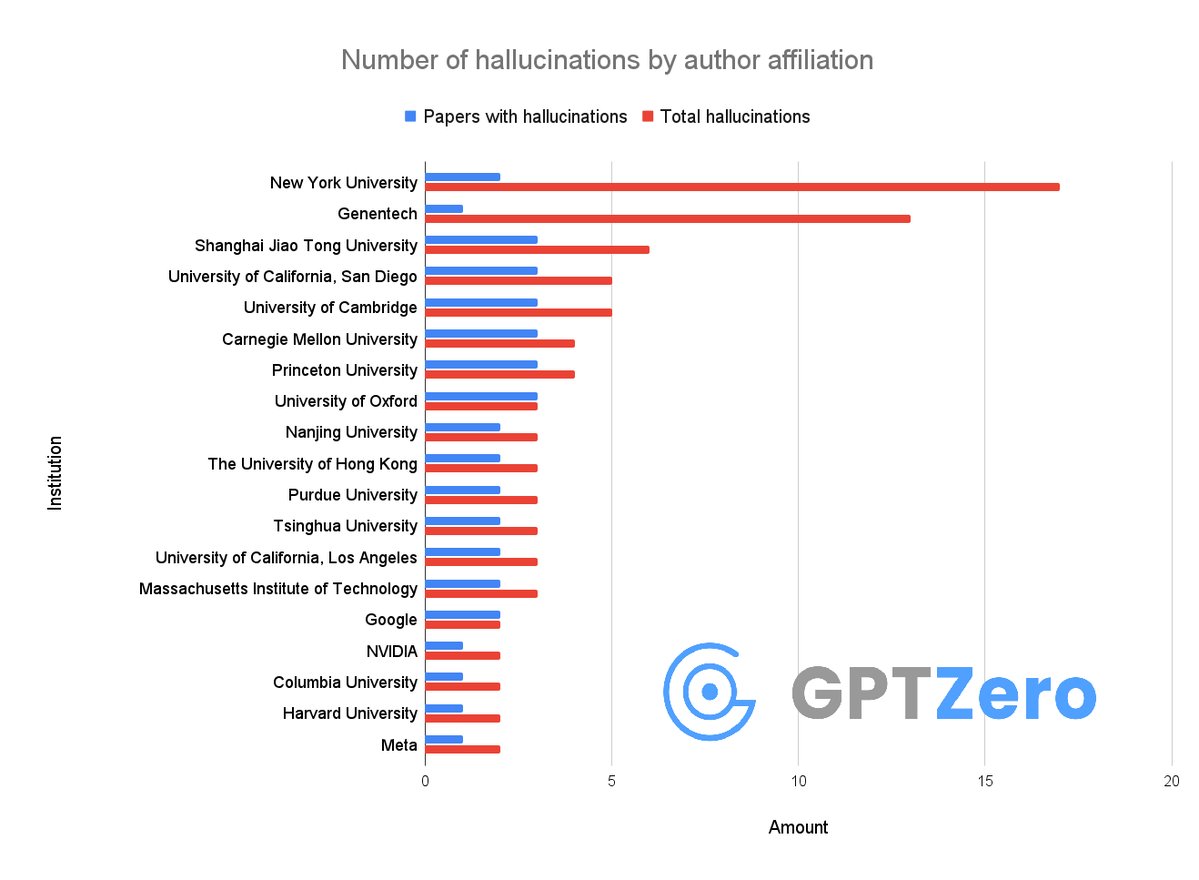
Okay so, we just found that over 50 papers published at @Neurips 2025 have AI hallucinations by @alexcdot(Alex Cui) | Twitter Thread Reader
Okay so, we just found that over 50 papers published at @Neurips 2025 have AI hallucinations I don't think people realize how bad the slop is right now It's not just that researchers from @GoogleDeepMind, @Meta, @MIT, @Cambridge_Uni are using AI - they allowed LLMs to generate hallucinations in their papers and didn't notice at all. It's insane that these made it through peer review👇
(PDF) The Perils of Sycophancy: Historical Lessons for Contemporary Leadership
PDF | With minimal emphasis on the Liberian context, this article addresses the pervasive issue of sycophancy, the act of excessive flattery and... | Find, read and cite all the research you need on ResearchGate

Study: Sycophantic AI can undermine human judgment
Subjects who interacted with AI tools were more likely to think they were right, less likely to resolve conflicts.

Sycophancy Claims about Language Models: The Missing Human-in-the-Loop
Sycophantic response patterns in Large Language Models (LLMs) have been increasingly claimed in the literature. We review methodological challenges in measuring LLM sycophancy and identify five core operationalizations. Despite sycophancy being inherently human-centric, current research does not evaluate human perception. Our analysis highlights the difficulties in distinguishing sycophantic responses from related concepts in AI alignment and offers actionable recommendations for future research.
Sycophancy Claims about Language Models: The Missing Human-in-the-Loop
Sycophantic response patterns in Large Language Models (LLMs) have been increasingly claimed in the literature. We review methodological challenges in measuring LLM sycophancy and identify five core operationalizations. Despite sycophancy being inherently human-centric, current research does not evaluate human perception. Our analysis highlights the difficulties in distinguishing sycophantic responses from related concepts in AI alignment and offers actionable recommendations for future research.
AI Data Centers Will Be Obsolete (Geometric Reasoning Explained)
233. "The Illusion of Thinking" — Thoughts on This Important Paper
This is a fantastic paper. I just love it. tl;dr AI is not human. Anthropomorphization has been bad for AI, LLMs, and Chat. Clippy walked so today's AI could run.

AI Sycophancy and Decisions
We examine whether sycophantic AI advice distorts decisions. Our experiment involves 1,500 participants in 30 decision environments spanning core domains in eco

An encyclopedia formed from AI hallucinations – what could go wrong?
Feedback discovers Halupedia, an online encyclopedia that is 100 per cent generated by AI, offering such delights as the 19nd century and The Society for the Prevention of Unnecessary Tuesdays

“Open, Collaborative and Participative Science: Rethinking the Legitimacy of Knowledge, the Policies and the Future of Science.” - looks like an interesting track during the Eu-SPRI Forum Annual Conference 2026 (10–12 June 2026, Valencia) euspri2026.webs.upv.es
Sycophancy

Neuroscience, Cognition & Psychology


Leadership fails, leadership failures, leaders fail

Why Good Leaders Fail

(PDF) Leadership Failure in the Eyes of Subordinates: Perception, Antecedents, and Consequences *
(PDF) The Perils of Sycophancy: Historical Lessons for Contemporary Leadership

Anti-democratic attitudes are highly contagious, new psychology study finds

Hyperactive–impulsive ADHD traits predict higher curiosity in adults: evidence from a cross-sectional study
Understanding the influence of digital technology on human cognitive functions: A narrative review

How the hypercuriosity of ADHD may have helped humans thrive | Aeon Essays
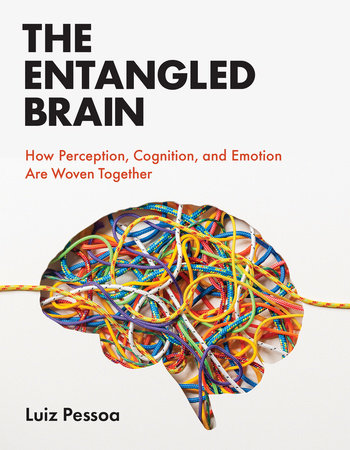
The Entangled Brain: How Perception, Cognition, and Emotion Are Woven Together

