

WebSeitz/wiki
aka FiveFactor, OCEAN - Personality Test - In psychological trait theory, the Big Five personality traits, also known as the OCEAN model is a suggested taxonomy, or grouping, for personality traits,[1] developed from the 1980s onwards. When factor analysis (a statistical technique) is applied to personality survey data, it reveals semantic associations: some words used to describe aspects of personality are often applied to the same person. For example, someone described as conscientious is more likely to be described as "always prepared" rather than "messy". These associations suggest five broad dimensions used in common language to describe the human personality and psyche.[2][3] The theory identifies five factors: openness to experience (inventive/curious vs. consistent/cautious); conscientiousness (efficient/organized vs. extravagant/careless); extraversion (outgoing/energetic vs. solitary/reserved); agreeableness (friendly/compassionate vs. challenging/callous); neuroticism (sensitive/nervous vs. resilient/confident) https://en.wikipedia.org/wiki/Big_Five_personality_traits (more)
The Principles of Getting Ahead.
Two people can start from almost the same place. Same age. Similar intelligence. Same 24 hours in a day. Five years later, their lives can look completely different. 1 One has built valuable skills

Does adolescence really last until age 32?
Those “turning points” in brain aging aren’t quite what you think

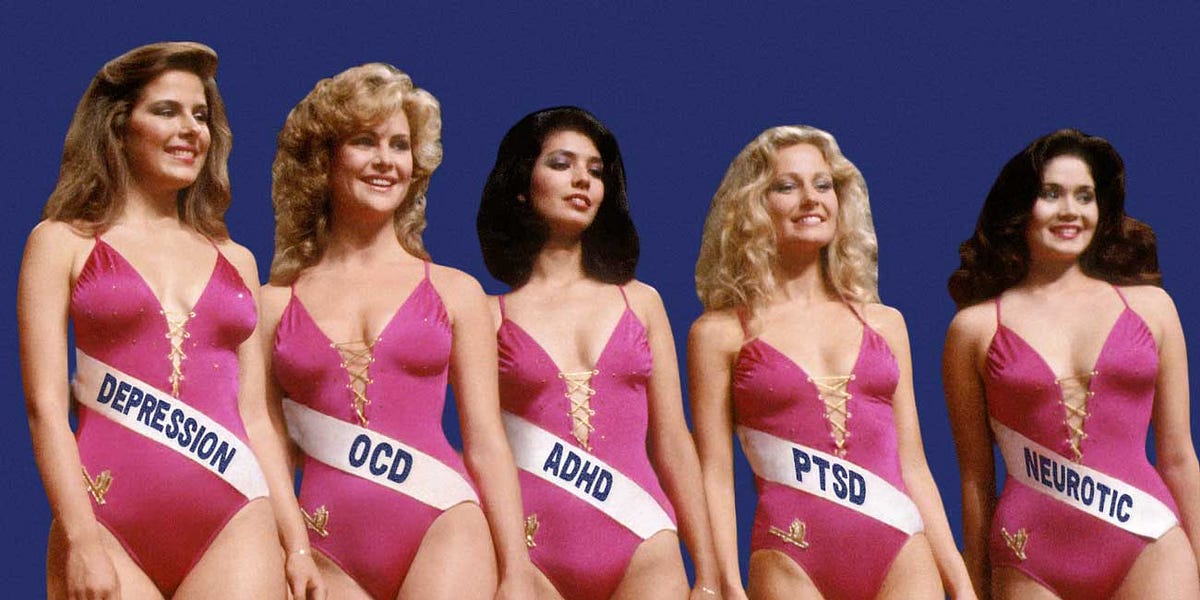
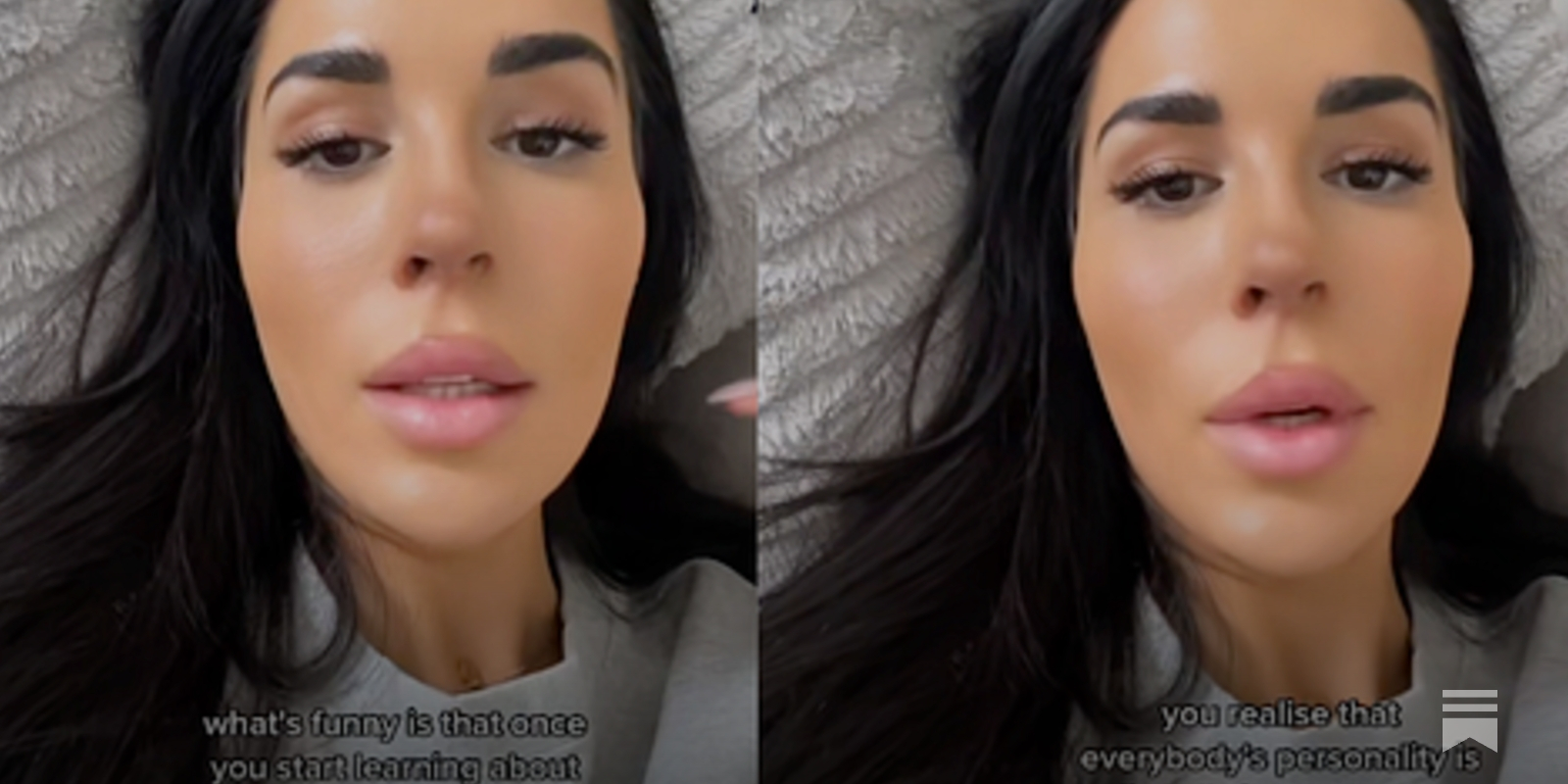
Nobody Has a Personality Anymore
My generation is obsessed with treating every trait as a symptom of a disorder: You’re not shy, you’re autistic; you’re not forgetful, you’ve got ADHD, writes Freya India.
The secret to living a meaningful life
Your ambitions to improve your life do not need to be confined by your personality.

Sex Differences in Personality are Large and Important - Marginal REVOLUTION
Men and women are different. A seemingly obvious fact to most of humanity but a long-time subject of controversy within psychology. New large-scale results using better empirical methods are resolving the debate, however, in favor of the person in the street. The basic story is that at the broadest level (OCEAN) differences are relatively small […]

[updated] Age verification vendor Persona left frontend exposed, researchers say
Behind a basic age check, researchers say Persona’s system runs extensive identity, watchlist, and adverse-media screening.
Carryover Effect in LLM Personality Measurement
Large language models are increasingly evaluated with human personality inventories, yet prior critiques mainly frame contextual variation as instability or explain directional shifts as user-targeted adaptation, such as sycophancy. We propose the personality carryover effect, a content-targeted contextual bias in which personality-related content in prior context shifts later questionnaire responses even when it does not reflect the user's own stance. Across MBTI and BFI-2 on two model families, third-person personality narratives systematically shift measured personality toward the described profile. Crucially, the shift persists when the user explicitly states dislike of that profile, distinguishing carryover from purely user-targeted adaptation. These findings identify a distinct validity threat to in-context personality measurement in LLMs.
Why do some people always get lost?
Research suggests that experience may matter more than innate ability when it comes to a sense of direction

Jon Barron on Twitter / X
This idea that intelligence is solely a function of what you've observed since birth and not also a function of the 500 million years of evolution that preceded your birth is surprisingly sticky despite being demonstrably untrue. https://t.co/m2z5cN8Byb— Jon Barron (@jon_barron) January 28, 2026
Brainchildren
Minds are complex artifacts, partly biological and partly social; only a unified, multidisciplinary approach will yield a realistic theory of how they came i...
Learning From Older Adults: An Intergoal Compatibility Account for Successful Happiness Pursuit
Academic Abstract People want to pursue happiness but often fail, a phenomenon known as the paradox of pursuing happiness. The mechanisms underlying this paradox remain elusive. Age differences in happiness—specifically that older adults appear more successful in pursuing happiness (the emotion paradox of aging)—provide valuable insights into effective happiness pursuit. Drawing on this literature, we propose an intergoal compatibility account to interpret both paradoxes through the lens of intergoal interactions, an intuitively critical yet underexplored factor in existing interpretations. This account asserts that greater compatibility (fewer conflicts and greater facilitation) between happiness pursuit and other important personal goals enhances the effectiveness of happiness pursuit, and such compatibility can be enhanced through contextual influences (e.g., age-graded developmental tasks) and strategic self-regulation (e.g., goal adjustments). This account generates testable predictions and practical implications for enhancing happiness pursuit across the lifespan. Public Abstract Why do people often struggle to achieve happiness? And why are older adults happier than younger adults, even though they face more losses in life? While these questions have drawn extensive attention, they remain puzzling. A crucial yet insufficiently explored factor in successful happiness pursuit is intergoal compatibility —the extent to which the pursuit of happiness aligns or conflicts with other important personal goals. For younger adults, the demands of age-related developmental tasks (e.g., educational and career aspirations) often create conflicts with the pursuit of happiness, diminishing its effectiveness. Conversely, in older adults, happiness becomes more prioritized and compatible with other important personal goals, thereby enhancing the effectiveness of pursuing happiness. A lesson we can learn from older adults is to pursue happiness in ways compatible with other important personal goals.

Age prediction in ChatGPT | OpenAI Help Center
Learn how ChatGPT uses age prediction and age verification to support age-appropriate experiences for teens.

Open source confronts its midlife crisis | The Observation Deck
Midlife is tough: the idealism of youth has faded, as has inevitably some of its fitness and vigor. At the same time, the responsibilities of adulthood have grown: the kids that were such a fresh adventure when they were infants and toddlers are now grappling with their own transition into adulthood – and you try to remind yourself that the kids that you have sacrificed so much for probably don’t actually hate your guts, regardless of that post they just liked on the ‘gram. Making things more challenging, while you are navigating the turbulence of teenagers, your own parents are likely entering life’s twilight, needing help in new ways from their adult children. By midlife, in addition to the singular joys of life, you have also likely experienced its terrible sorrows: death, heartbreak, betrayal. Taken together, the fading of youth, the growth in responsibility and the endurance of misfortune can lead to cynicism or (worse) drastic and poorly thought-out choices. Add in a little fear of mortality and some existential dread, and you have the stuff of which midlife crises are made…
Why older people are happier and what we can learn from them | Psyche Ideas
Around the world, happiness tends to peak later in life. It has more to do with balancing priorities than elderly wisdom

Is personality so predictably linked to chronological age that unique experiences usually play only a minor role in personality development? Comments and criticism are welcome on the intro draft of a paper proposing and testing this hypothesis. shorturl.at/QPKpw
Dec 25, 2024 at 1:18 PM
