Politics is the defining aspect of networked technology. AT corresponds best to the kind of institutional structure that is key to large scale democracy. AP is a better match for smaller, village-style governance, which is very valid but not the problem I care about.

Ronen Tamari
Can everyone building on atproto please answer this question? 😇
Feb 27, 2026 at 8:35 PM
Why Online Democracies Fail - Eclectic Corvine Muses
A compendium to my upcoming proposal for community infrastructure within the AT Protocol
AT Protocol - AT Protocol
The AT Protocol is an open, decentralized, and high-performance network for building social applications.

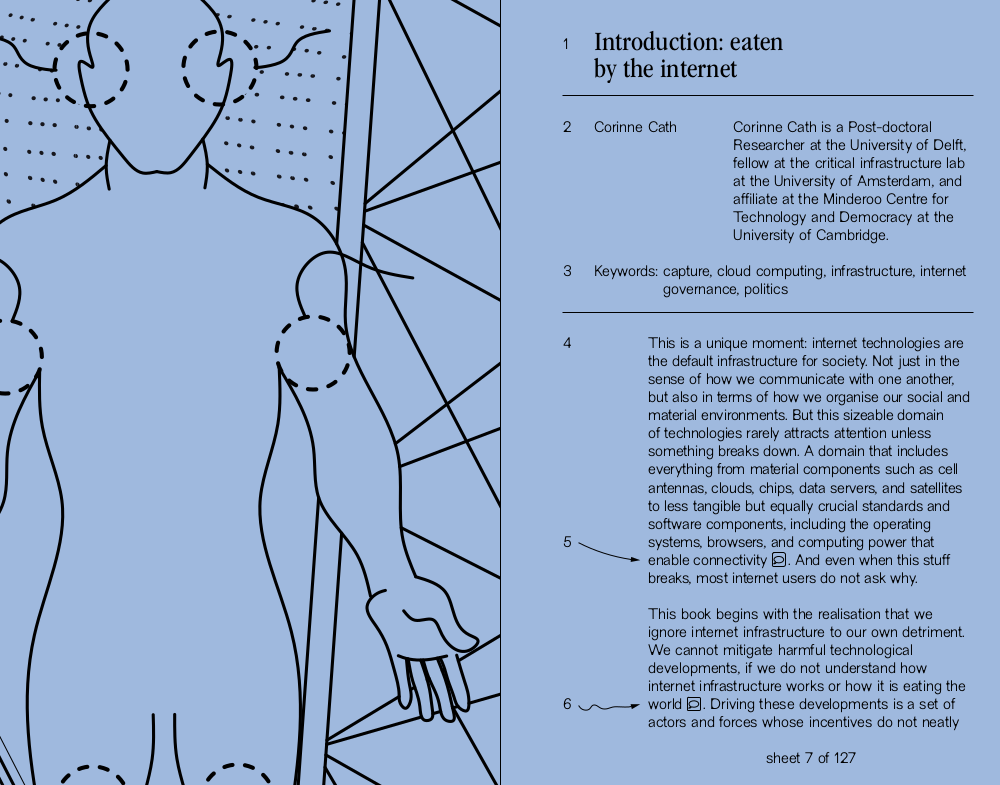
Eaten by the Internet
This book makes internet infrastructure visible as a force of political power, which is transforming the social world, from the bottom up—through fifteen chapters contributed by a global set of researchers, activists, and techies. We are living a unique moment: internet technologies are the default infrastructure for society, not just how we communicate but also how we organise our social life, politics, and economy, all the way down to our material environments, like cities. Our world is eaten by the internet. This means that those who control the internet control the bounds of public speech, economic production, social cohesion, and politics, making its infrastructure a core political terrain in the networked age. The book’s chapters cover a wide set of topics, spanning from the global politics of content moderation by internet infrastructure to the colonialism inherent in the race to plug the moon, from the harms wrought by blockchain companies in rural America to the particularities of online censorship across Asia. The chapters take on thorny topics, discussing power consolidation in the advertisement and cloud industry, the role of internet infrastructure in the war in Ukraine, and tech’s environmental impact—amongst others. In doing so, this book roots contemporary technology debates in the politics of internet infrastructure and urges us to ask how can we ensure our infrastructures sustain us, rather than consume us?
Plurality
A book by E. Glen Weyl, Audrey Tang and the Plurality Community exploring how technology can support and strengthen democracy.

Institute of Network Cultures | Ben Grosser: Planning the Exodus from Platform Realism
Thinking about the current state of platforms, I’m reminded of Mark Fisher’s articulation of capitalist realism, the idea that we don’t imagine or build alternatives to capitalism because we can no longer envision a world without it. Big tech, in a few short years, has managed to instill within the public a similar state of platform realism. So many are unable to imagine how global communication, media, search, etc. could ever function without the platforms. Despite a growing malaise, it’s become difficult for many to consider a world without big tech platforms as a viable conception of the future.

The politics of purely client-side apps - Paul's Leaflets
There's a surprisingly nuanced discussion in development about the political economy of clients and servers in the Atmosphere
The politics of purely client-side apps - Paul's Leaflets
There's a surprisingly nuanced discussion in development about the political economy of clients and servers in the Atmosphere
SimPolitics
For more than six decades, the public has been promised that computers will revolutionize politics, both nationally and internationally. In SimPolitics, Fenw...

How Technology Is Shaping Modern Politics
Discover how technology is reshaping politics, from digital campaigns to AI, and the challenges of misinformation and election security.

Decentralization enables permissionless innovation
I’ve just started reading Inventing the Internet by Janet Abbate. The opening chapters are great, narrating Paul Baran’s efforts at RAND to design a nationwide communication network. Baran had one design goal for this network—survivability. Specifically, survivability in the face of nuclear catastrophe.

@proto @fosdem · Luma
The AT Protocol is an open, decentralized network for building social applications. https://atproto.com/ Start your FOSDEM with a convivial evening of casual…


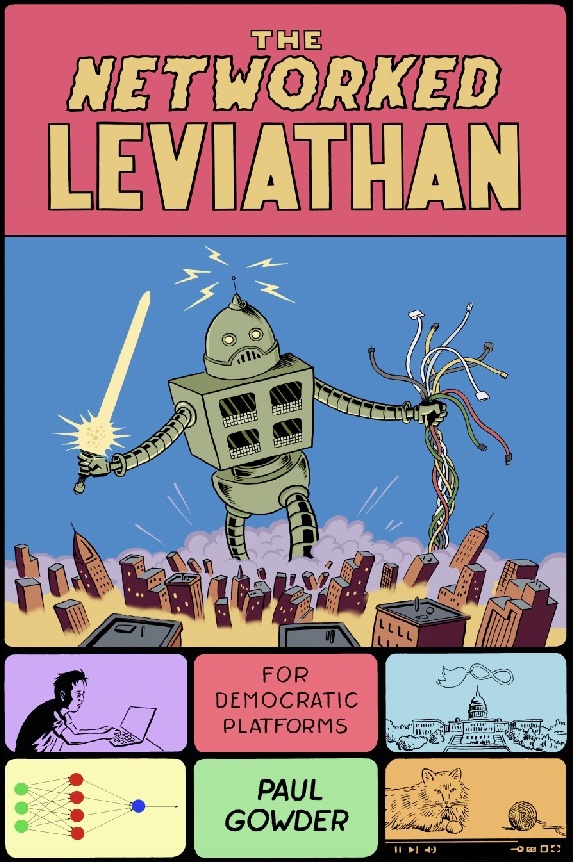
The Networked Leviathan: For Democratic Platforms
The Networked Leviathan is a book by Paul Gowder, Professor of Law at Northwestern University, which offers a case and a roadmap for democratizing major internet platforms.
Minimum viable decentralization – John Backus – Medium
If you want people to use your product, decentralize the bare minimum. Lessons from Freenet, I2P, Darknet markets, and Reddit.


Social Networking Utopia — Matt
In discussing the network topology of social networks — whether centralized like Facebook or federated like ActivityPub — I think the ult...