Technology is part of the humanities. People who work in tech-adjacent fields but do not understand that will plateau very fast in their careers. The parts of the job that vibecoding eliminates aren't the political ones.

Hetan Shah
It’s 25 years since we lost Douglas Adams. I am happy to have been able to get a reference to him into this piece in the FT about why the humanities are essential ft.com/content/fbde3d46-0e53-47cb-8f…
Jul 16, 2026 at 7:05 PM
tech isn’t the future it’s just capitalism faster
responding with slowness in relations

Calm Technology
The most profound technologies are those that disappear. They weave themselves into the fabric of everyday life until they are indistinguishable from it.
A Real Political Economy of Technology - The Ideas Letter
Two technological futures are competing for political and material priority: generative AI and the green transition. Benanav argues that while AI is marketed as a world-reordering breakthrough, its productivity gains…
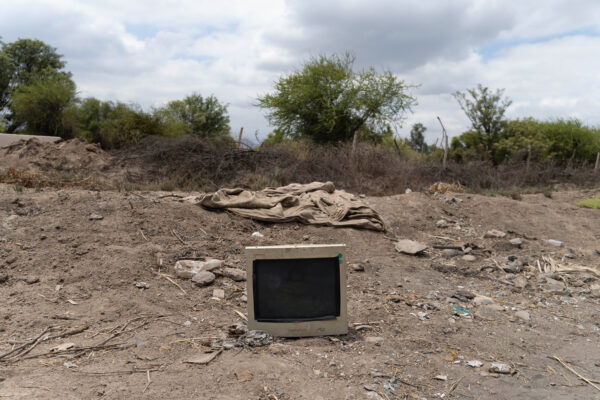
Deep research requires a slower pace than tech industry work
Anyone working in an industry for a while will become accustomed to that culture—its processes, its norms, its values, its tacit knowledge. Much of this is incredibly valuable, of course, but these ideas can also represent constraints. There are some important impedances here between tech industry culture and research culture. In particular, tech culture is calibrated to a much faster pace. This can lead to impatience or early abandonment when confronting problems which require a researcher’s pace.
Deep research requires a slower pace than tech industry work
Anyone working in an industry for a while will become accustomed to that culture—its processes, its norms, its values, its tacit knowledge. Much of this is incredibly valuable, of course, but these ideas can also represent constraints. There are some important impedances here between tech industry culture and research culture. In particular, tech culture is calibrated to a much faster pace. This can lead to impatience or early abandonment when confronting problems which require a researcher’s pace.
Technocracy References
References and Revisions “Should Scientists and Engineers Run Society?” References [1] Wikipedia: “Technocracy.” [2] Academic Paper: Gunnell, John G. "The technocratic image and the theory of technocracy." Technology and culture 23.3 (1982): 392-416. [3] Academic Paper: Oh, Kyunghwan. "A non-co...

Silicon Valley, disruption, and the end of uncertainty
This paper reflects on the relationship between high-tech disruption narratives and uncertainty. My main argument is that an economic sociology of the future is incomplete without addressing the ‘d...

A new middle-class fraction with a distinct subjectivity: Tech workers and the transformation of the entrepreneurial self
With the rise of digital capitalism, a novel occupational segment has emerged: so-called ‘tech workers’. Members of this grouping render and encode the digital technologies that permeate contemporary social life. While there are many studies about highly precarious digital labourers, research on these digital professionals remains scarce. Based on 40 original interviews, the article explores the subjectivity of tech workers. Specifically, it asks whether understandings of middle-class employees as entrepreneurial selves with a holistic market orientation hold true for this grouping, or whether new cultures of subjectivation are emerging. The key finding from these interviews is that tech workers show contours of a post-neoliberal subjectivity. While the figure of the entrepreneurial self remains an alluring force, this study detected four transformative cultures of subjectivation: (1) a return of the critique of economic inequality; (2) a concern for diversity; (3) an ethic of mindfulness; and (4) a lifestyle that signals ordinariness. These distinct forms of subjectivity point to the formation of a new middle-class fraction. However, drawing on the sociology of critique, this article also considers how this transformation of subjectivity can be appropriated as yet another new spirit of capitalism.

How tech workers are feeling in 2026: a workforce splitting in two
Results from our second annual tech worker sentiment survey
The Social Construction of Facts and Artefacts: or How the Sociology of Science and the Sociology of Technology might Benefit Each Other
The need for an integrated social constructivist approach towards the study of science and technology is outlined. Within such a programme both scientific facts and technological artefacts are to be understood as social constructs. Literature on the sociology of science, the science-technology relationship, and technology studies is reviewed. The empirical programme of relativism within the sociology of scientific knowledge and a recent study of the social construction of technological artefacts are combined to produce the new approach. The concepts of `interpretative flexibility' and `closure mechanism', and the notion of `social group' are developed and illustrated by reference to a study of solar physics and a study of the development of the bicycle. The paper concludes by setting out some of the terrain to be explored in future studies.
Technopoly: The Surrender of Culture to Technology
A witty, often terrifying that chronicles our transform…

I'm an American software developer and the "broligarchs" don't speak for me - ratfactor
Here I am, a software developer in the year 2025. I look around at "tech" in the news and in culture and I don’t like what I see. Something has gone very, very wrong with the Big Tech bros. I can no longer keep silent because it pains me to imagine these people representing ME.
Techno-solutionism
“techno-solutionism,” the simplification of complex societal problems into apps and algorithms. Ed-Tech’s Inequalities “Technological solutionism” is the related tendency to identify simple answers — in all domains, not just the tech sector — “before the questions have been fully asked” or the problems fully articulated. Take, for example: “the Internet has changed everything about how […]

The Future Is Not Tech-Forward
On artificial intelligence, data centers, technological politics, and who gets to build the future.