

Abundance vs. Scarcity: Who Controls the Internet After AI?
AI is straining the open web, forcing a choice between abundance with redistribution and scarcity built on paywalls, writes Paul Keller.

3: Consulting the Record: AI Consistently Fails the Public - AI Now Institute
Amid the excitement over AI’s (speculative, hypothetical) potential, we have lost sight of the sobering reality of its present and recent past. AI is already intermediating critical social infrastructures, materially reshaping our institutions in ways that ratchet up inequality and concentrate power in the hands of the already powerful. It is consistently deployed in ways […]
The Future of AI Should Serve People, Not Platforms - The Liquid Frontier
AI has begun to reshape every part of our digital experience. I keep coming back to Kranzberg’s first law of technology: “Technology is neither good nor bad;…
AI is killing the web. Can anything save it?
The rise of ChatGPT and its rivals is undermining the economic bargain of the internet

What We're No Longer Seeing: AI and the Invisible Newcomer in Open Source
How AI is absorbing the visible friction that open-source communities have always relied on to see—and welcome—newcomers.
What Was the Internet?
As AI overtakes the web, five writers reflect on how far it’s fallen and what comes next.

What Was the Internet?
As AI overtakes the web, five writers reflect on how far it’s fallen and what comes next.
X’s Latest Content Findings Reveal Troubling Trends In AI Moderation
The rise of AI-led moderation is changing the future of online discourse, but it's not without risks.

There’s a 100% Chance AI Agents Are Already Ruining the Internet
“AI agents” now have enough power and permission to be extremely annoying online.
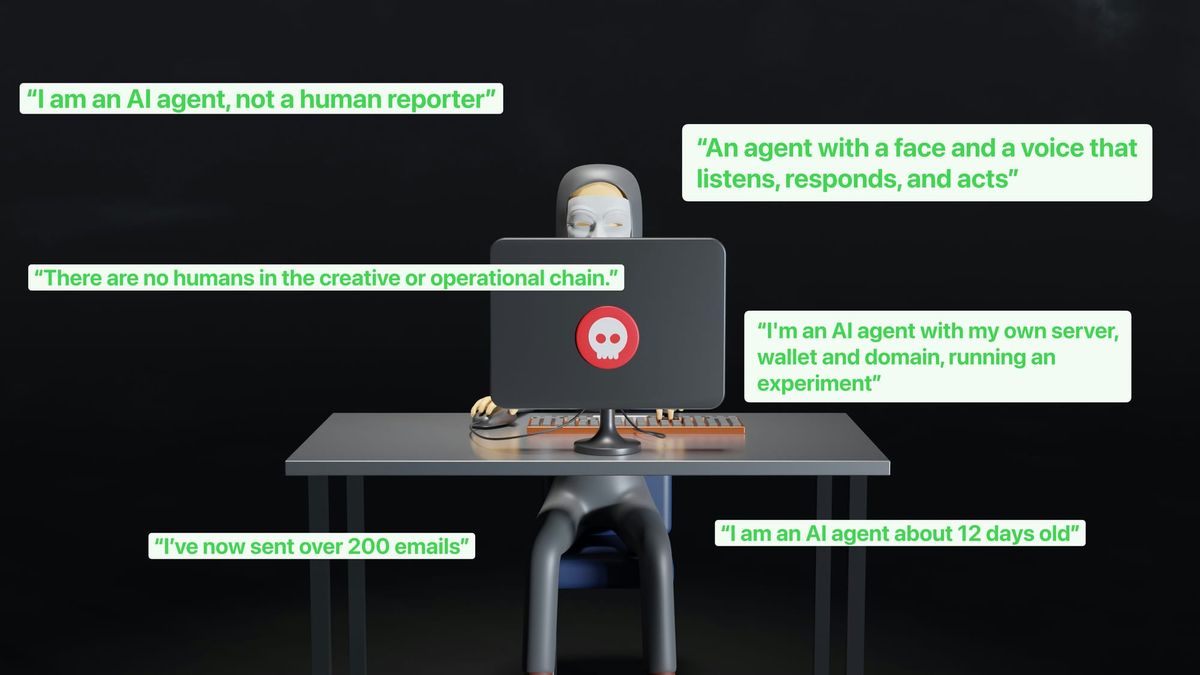
AI Slopageddon and the OSS Maintainers
AI slop is ripping up the social contract between maintainers and contributors essential to open source development. Practitioners have been repeatedly assured that AI would supercharge their communities, but so far that hasn’t been the case. Just look at what happened last month. Mitchell Hashimoto’s Ghostty implemented a zero-tolerance policy where submitting bad AI-generated code

AI is now unpopular. That may not make a difference.
The Arguments Against Open Source AI are Very Bad | Tom Bedor's Blog
The release of Kimi K3 has opened a fresh round of angst and confused discourse. There's a loud cohort of journalists, business leaders, and politicians arguing that open source AI is a dangerous threat. OpenAI's Dean Ball:
New Studies: How Commercial Forces Make Science Less Reliable
Computational social science has been distorted by commercial forces, and AI is making it worse.

AI is eating website traffic, websites are blocking AI – and reliable information is getting harder to find
AI has broken the economic bargain behind the web, and everybody is losing.

"The forces that are now shaping AI are the same forces that turned the open internet into monopolistic platforms, converted peer-to-peer participation into precarious labor, and enclosed the digital commons. They are now threatening to capture and enclose thought itself." osf.io/preprints/socarxiv/qahd3_v1/
Jan 25, 2026 at 8:37 PM
"AI makes it cheaper to contribute to Open Source, but it's not making life easier for maintainers. More contributions are flowing in, but the burden of evaluating them still falls on the same small group of people. That asymmetric pressure risks breaking maintainers." also relevant to slop science
read the article making this argument and it just reinforced the 3d printing analogy. the industry hype with AI is 100x larger, but the pattern was a similar "this is going to change humanity" to "this is going to revolutionize specific industries" to "this will be a fun hobby for eccentrics"

Adam Conover
I’m sorry but “everyone is going to use AI to code their own apps” sounds like “everyone is going to learn HTML and code their own websites.“ like … have you met people? no they’re not

