

America is Mine, and it Owes Me a Living
But ask me why and I'll spit in your eye

America, América: a new history of the New World
"The story of how the United States' identity was formed is almost invariably told by looking east to Europe. But as Greg Grandin vividly demonstrates, the nation's unique sense of itself was in fact forged facing south-no less than Latin America's was indelibly stamped by the looming colossus to the north. In this stunningly original reinterpretation of the New World Grandin reveals how North and South emerged from a constant, turbulent engagement with each other. America, América traverses half a millennium, from the Spanish Conquest-the greatest mortality event in human history-through the eighteenth-century wars for independence, the Monroe Doctrine, the coups and revolutions of the twentieth century, and beyond. Grandin shows, among other things, how royalist Spanish America, by sending troops and supplies, helped save the republican American Revolution; how in response to U.S. interventions, Latin Americans remade the rules, leading directly to the founding of the United Nations; and how the Good Neighbor Policy allowed FDR to assume the moral authority to lead the fight against world fascism. Grandin's book sheds new light on well-known historical figures like Bartolomé de las Casas, Simón Bolívar, and Woodrow Wilson, as well as lesser-known actors such as the Venezuelan Francisco de Miranda, who almost lost his head in the French Revolution and conspired with Alexander Hamilton to free America from Spain; the Colombian Jorge Gaitán, whose unsolved murder inaugurated the rise of Cold War political terror, death squads, and disappearances; and the radical journalist Ernest Gruening, who in championing non-interventionism in Latin America, helped broker the most spectacularly successful policy reversal in United State history. This is a monumental work of scholarship that will fundamentally change the way we think of slavery and racism, the rise of universal humanism, and the role of social democracy in staving off extremism. At once comprehensive and accessible, America, América shows that centuries of bloodshed and diplomacy not only helped shape the political identities of the United States and Latin America but also the laws, institutions, and ideals that govern the modern world. A culmination of a decades-long engagement with hemispheric history, drawing on a vast array of sources, and told with authority and flair, this is a genuinely new history of the New World"-- Provided by publisher


Pluralistic: America and “national capitalism” (18 Feb 2025) – Pluralistic: Daily links from Cory Doctorow
Thomas Piketty's 2013 unexpected bestseller (a 750 page economics book translated from French!) Capital in the 21st Century, offers a very convincing explanation of our political decay, and it continues to serve this purpose as the decay undergoes alarming acceleration:
How The US Took Over The World

Inégalités : à la recherche des racines de l'exceptionnalisme américain
Traduction française de « A la recherche of the roots of US inequality “exceptionalism”» de Branko Milanovic

Book Review of Making All the World America
Steven T. Newcomb reviews Timothy Bowers Vasko’s Making All the World America: Native Information and the Doctrine of Discovery (University of Pennsylvania Press, 2026).
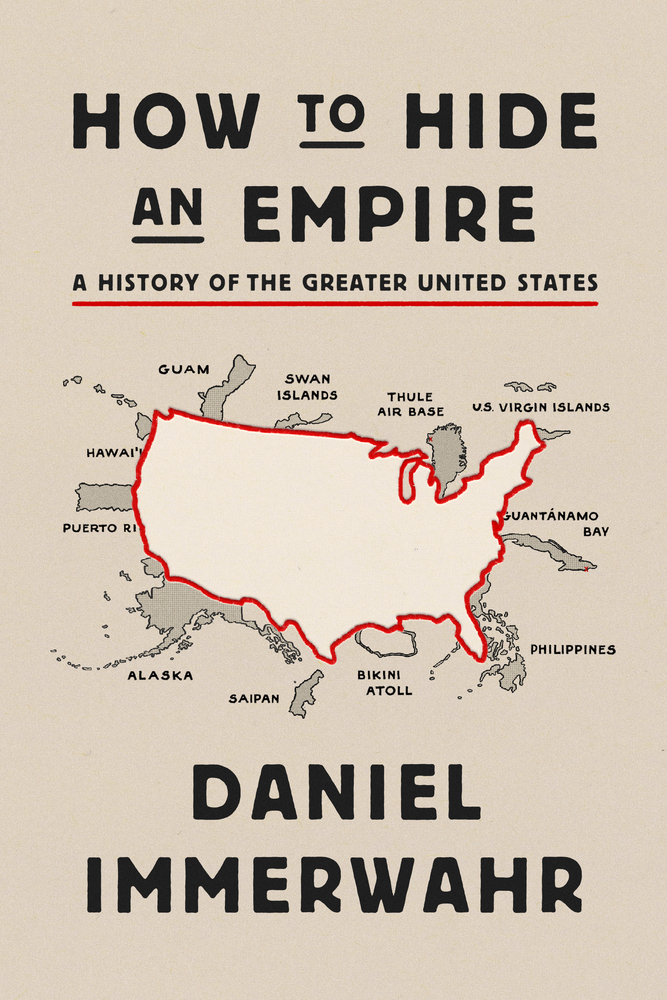
How to Hide an Empire: A History of the Greater United …
A pathbreaking history of the United States' overseas p…
The Freedom to Write
PEN America stands at the intersection of literature and human rights to protect free expression in the United States and worldwide.

The Imperial History Behind the Raid on Venezuela
Peter Beinart interviews scholar Greg Grandin on the history of US intervention in Latin America and what Trump’s new “doctrine” may portend.

How Paul Graham Is Wrong
I love Paul Graham’s essays and his latest is no exception: Let the Other 95% of Great Programmers In. I agree that the US deserves dramatically better immigration policies, but in the meantime I’m…

Adam Shatz · Another Country: Visions of America
Is America a dream or a nightmare, a democratic paradise or a bastion of white supremacy and religious intolerance? Is...
Hello I'm an American living in a red state. I wrote a little thing for Europeans explaining the current the moment in the US. It's important that people understand why this is happening, because a similar thing is coming for most democracies. docs.google.com/document/d/e/2PACX-1vRPrDiXk2…


