

Self-organizing systems: what, how, and why?
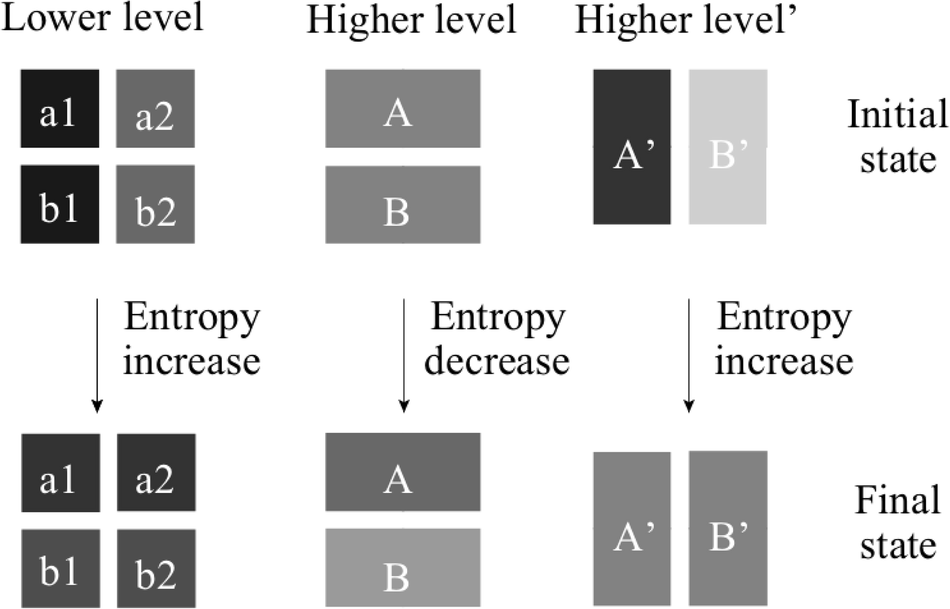
I present a personal account of self-organizing systems, framing relevant questions to better understand self-organization, information, complexity, and emergence. With this aim, I start with a notion and examples of self-organizing systems (what?), continue with their properties and related concepts (how?), and close with applications (why?) in physics, chemistry, biology, collective behavior, ecology, communication networks, robotics, artificial intelligence, linguistics, social science, urbanism, philosophy, and engineering.
Infoenon — Where Information Meets Phenomenon
Search publisher-controlled information, public knowledge, and the open social web.

your long-form atmosphere · pub search
what you publish, who reads it, your semantic neighborhoods, and what you recommend
‘How Google Works,’ by Eric Schmidt and Jonathan Rosenberg (Published 2014)
Two technology executives explain the business methods behind Google’s groundbreaking success.

The State of the Web at Google I/O 2018
The web is a global treasure, and has many strengths we all enjoy. It is a distribution platform like no other, providing people around the ...

Landslide / Holdfast
Notes on what’s happening to our ability to collectively know things, and a look ahead to what this community is especially well positioned to do to support and revitalize our info ecosystems and the humans inside them.
Google Is Building an A.I. Fence Around the Internet It Once Championed
As Google incorporates more artificial intelligence into search, people are spending more time on Google. Some website operators are crying foul.

Google Is Building an A.I. Fence Around the Internet It Once Championed
As Google incorporates more artificial intelligence into search, people are spending more time on Google. Some website operators are crying foul.
Harnessing Crowds: Mapping the Genome of Collective Intelligence
Over the past decade, the rise of the Internet has enabled the emergence of surprising new forms of collective intelligence. Examples include Google, Wikipedia,

Everything is miscellaneous : the power of the new digital disorder
Includes bibliographical references (p. [235]-257) and index; Prologue : information in space -- The new order of order -- Alphabetization and its discontents -- The geography of knowledge -- Lumps and splits -- The laws of the jungle -- Smart leaves -- Social knowing -- What nothing says -- Messiness as a virtue -- The work of knowledge -- Coda : misc; Philosopher Weinberger shows how the digital revolution is radically changing the way we make sense of our lives. Human beings constantly collect, label, and organize data--but today, the shift from the physical to the digital is mixing, burning, and ripping our lives apart. In the past, everything had its one place--the physical world demanded it--but now everything has its places: multiple categories, multiple shelves. Everything is suddenly miscellaneous. Weinberger charts the new principles of digital order that are remaking business, education, politics, science, and culture. He examines how Rand McNally decides what information not to include in a physical map (and why Google Earth is winning that battle), how Staples stores emulate online shopping to increase sales, why your children's teachers will stop having them memorize facts, and how the shift to digital music stands as the model for the future.--From publisher description; From A to Z, Everything Is Miscellaneous will completely reshape the way you think - and what you know - about the world. Includes information on alphabetical order, Amaxon.com, animals, Aristotle, authority, Bettmann Archive, blogs (weblogs), books, broadcasting, British Broadcasting Corporation (BBC), business, card catalog, categories and categorization, clusters, companies, Colon Classification, conversation, Melvil Dewey, Dewey Decimal Classification system, Encyclopaedia Britannica, encyclopedia, essentialism, experts, faceted classification system, first order of order, Flickr.com, Google, Great Books of the Western World, ancient Greeks, health and medical information, identifiers, index, inventory tracking, knowledge, labels, leaf and leaves, libraries, Library of Congress, links, Carolus Linnaeus, lumping and splitting, maps and mapping, marketing, meaning, metadata, multiple listing services (MLS), names of people, neutrality or neutral point of view, New York Public Library, Online Computer Library Center (OCLC), order and organization, people, physical space, everything having place, Plato, race, S.R. Ranganathan, Eleanor Rosch, Joshua Schacter, science, second order of order, simplicity, social constructivism, social knowledge, social networks, sorting, species, standardization, tags, taxonomies, third order of roder, topical categorization, tree, Uniform Product Code (UPC), users, Jimmy Wales, web, Wikipedia, etc

Remembering the pre-Google web, when search was an experiment
Most people have completely forgotten how chaotic it really was."

InfoWorld
Business technology, IT news, product reviews and enterprise IT strategies.
Not OK, Google | TechCrunch
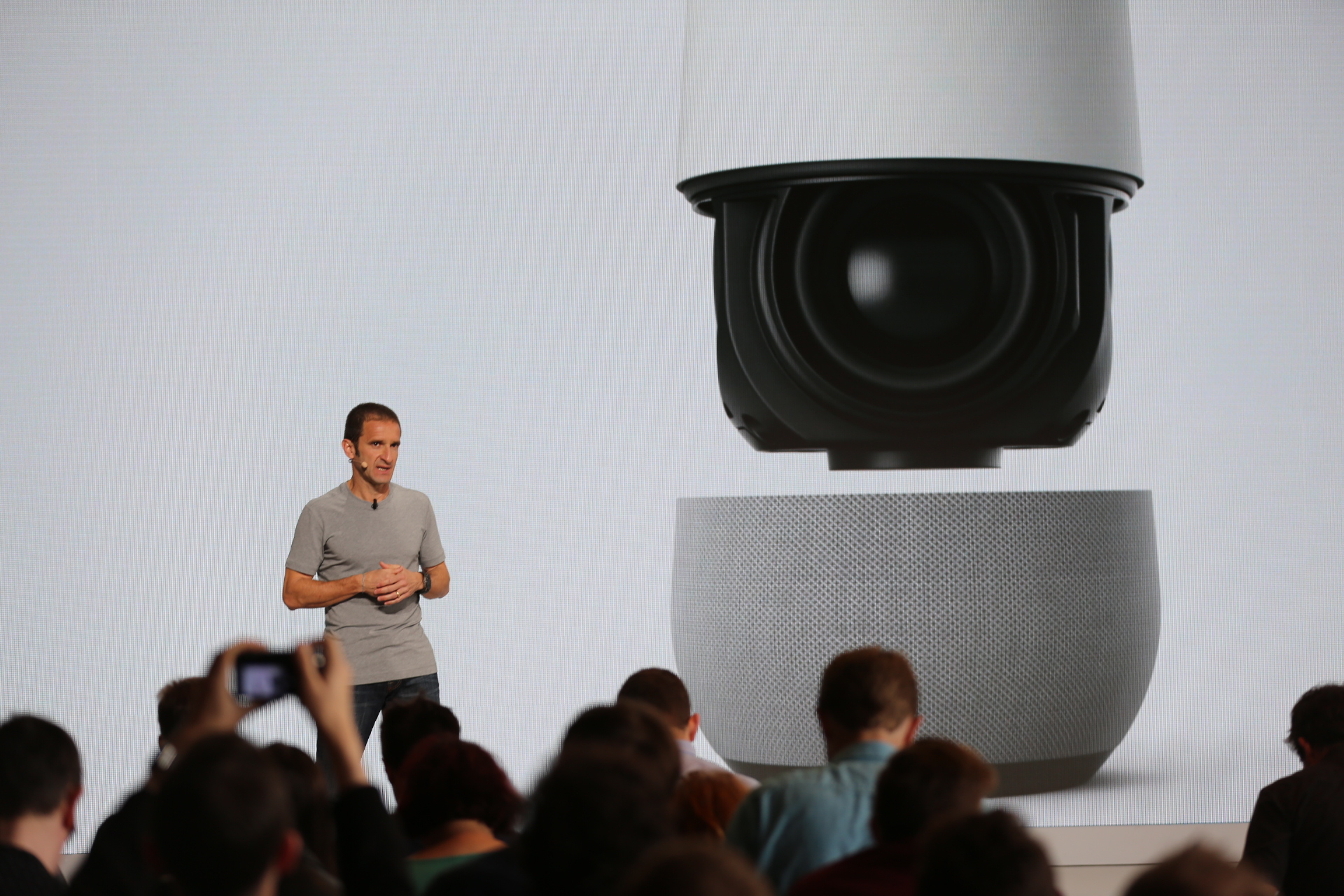
At its hardware launch event in San Francisco yesterday, Alphabet showed the sweeping breadth of its ambition to own consumers' personal data, as computing continues to accelerate away from static desktops and screens, coalescing into a cloud of connected devices with the potential to generate far more data -- and data of a far more intimate nature -- than ever before.

Google LLC, founded in 1998 by Larry Page and Sergey Brin, is one of the most influential technology companies in the world. Originally developed as a search engine...

Google: Organize the world's information Atmosphere: Let the world's information self-organize

TJ
In some ways, atproto, bluesky, @semble.so, @sill.social, @standard.site and so on are building new indexes for the web. I really hope atproto succeeds and goes fully mainstream. Think of the amazing search engines that can be built on such rich index data. Maybe web3 can actually happen.
Jun 4, 2026 at 1:30 PM
multiple ways of understanding the atmosphere are good - you can store extra stuff in your bluesky account : good - an open file system for your social graph : good - an ocean of possibility created by freeing data from the clutches of big tech : good different approaches reach different people

