How to create reading experiences that "go beyond information transmission and toward reader transformation.” Great paper by @blue-phia.bsky.social @lepidopterane.bsky.social @yijunliu.bsky.social Sarah Sterman @sh1m.bsky.social @maxkreminski.bsky.social arxiv.org/abs/2606.04308 >
Jun 16, 2026 at 3:27 PM
Creative Reading: Scaffolding Reading for Transformation
Reading augmentation systems increasingly help readers process text at scale. While these tools address real constraints of time and cognitive load, they often implicitly frame reading as...

Creative Reading: Scaffolding Reading for Transformation
However, recent work on augmenting reading largely focuses on making reading more efficient, especially in knowledge-intensive contexts where people must rapidly make sense of research papers and other complex documents (Lo et al., 2024). These systems often aim to help readers skim, summarize, and synthesize large volumes of information in order to reduce cognitive effort and accelerate document- and corpus-level sensemaking at scale (Gu et al., 2025; Lo et al., 2024; Fok et al., 2023). At one extreme, the form of reading implicitly envisioned by these systems may resemble what we call “reading to discard”: extracting the essential, actionable informational core of a document as quickly and efficiently as possible, so that the rest can be swiftly tossed aside—much like we often process inbound mail. This motivates us to ask what scaffolding approaches might resist “reading to discard,” what alternative forms of reading we might scaffold, and what alternative views and values of reading might guide the conversation.
Creative Reading: Scaffolding Reading for Transformation
Reading augmentation systems increasingly help readers process text at scale. While these tools address real constraints of time and cognitive load, they often implicitly frame reading as information transmission, or "reading to discard," delegating interpretation and effort to the machine. Yet this delegation changes the outcome of reading. For example, in scholarly reading, deciding what a research text implies and why it matters is central to the work of scholarly production. We propose creative reading as an alternative goal: reading augmentation that supports readers in creating both readings and themselves as readers. By putting literary and narrative theories into conversation with scholarly sensemaking and creativity support, we present a provocation-oriented design space for valuing the process of reading as a way of preserving a plurality of readings and transforming readers over time.
The revolt of the reader | The Observation Deck
Reading is important to me. While I’m not a quick reader nor an especially voracious one, I have found that long-form reading has had a profound influence on me over my life. And because reading is important to me, writing is too: writing not only allows us to convey our ideas, but the very act forces us to test and distill them — at once making our ideas more robust while providing the vehicle by which to share them.
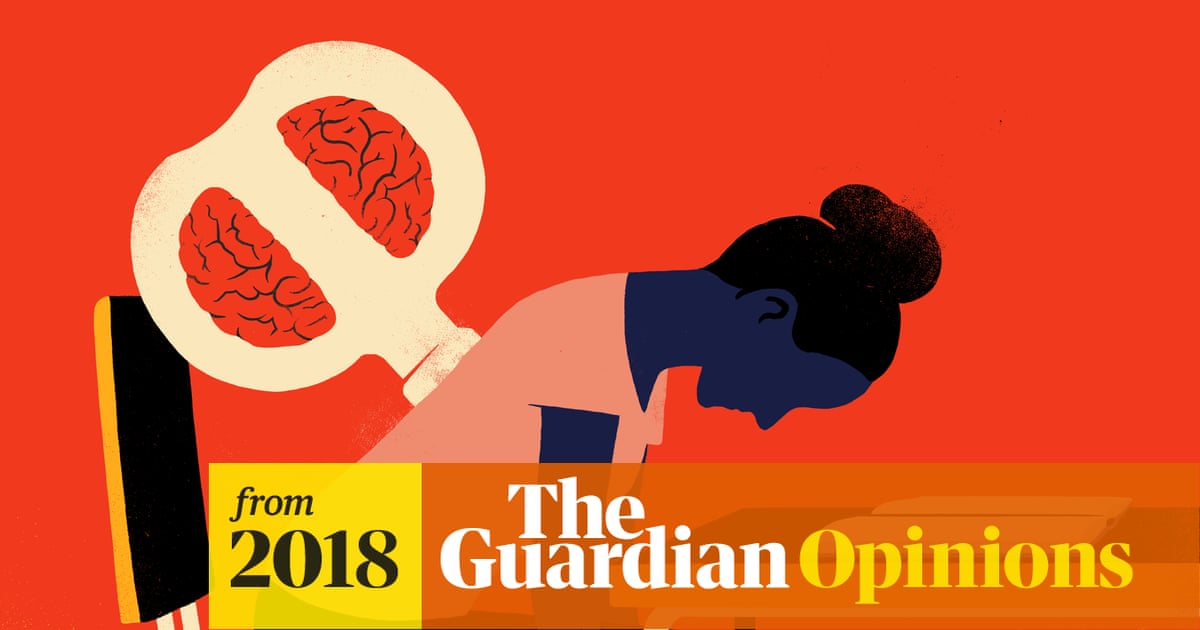
Skim reading is the new normal. The effect on society is profound | Maryanne Wolf
When the reading brain skims texts, we don’t have time to grasp complexity, to understand another’s feelings or to perceive beauty. We need a new literacy for the digital age writes Maryanne Wolf, author of Reader, Come Home
The Information Pathology
November 2018 When I write, my aim is to learn more about a subject, to start conversations, and to serve as a point of departure for further exploration (rather than a point of reference or conclu…
Reader guide · Standard Reader
How to use Standard Reader — following, reading, listening, and making it yours. No technical knowledge needed.
Reading in the Age of Constant Distraction by Mairead Small Staid
February 8, 2019 – Twenty-five years ago, Sven Birkerts published “The Gutenberg Elegies: The Fate of Reading in an Electronic Age.” Have his fears and projections come to pass?

Connecting with your readers on Semble [Patterns of Sensemaking #2] - Cosmik Labs
On how the references you make help your writing find its natural audience
Readeck: Home
Save interesting articles, long read, pictures, videos. Read or revisit them later.

How to write Medium stories people will actually read
More than 30 million people use Medium each month. They come here in search of something worth reading. Something substantial. And you can give it to them. Medium’s algorithms put you on a level playing field. Your stories can dominate news feeds. Yo...

Standard Reader · blog index
Ultra-Processed Minds: The End of Deep Reading and What It Costs Us
A reflection on the reading life. What formed it, what threatens it, and what remains.