

Remarkable how over a decade ago @michaelnielsen.bsky.social pointed the way towards solving long standing issues plaguing science to this day (issues that are all the more relevant in the age of AI mediated science)

Ronen Tamari
This is why @atproto.science is so relevant rn This compilation of essays indicates that scientists are most frustrated by insufficient “community tools and resources... Essential infrastructure for sharing, maintaining and building on existing work and data is also badly underdeveloped." >
Jul 24, 2026 at 7:25 PM
New Studies: How Commercial Forces Make Science Less Reliable
Computational social science has been distorted by commercial forces, and AI is making it worse.

Shahan Ali Memon (@shahanmemon.bsky.social)
Researching {science of AI-mediated science, metascience #SciSci, #AI4Science, #GenAI, LLMs, agents, alignment, AI governance, misinformation in science} PhD @ UW. Visiting @ NYU & MSR Alum @ Carnegie Mellon Academic webpage: https://samemon.github.io

AI as the Catalyst of the New Paradigm of Science? | Cadmus Journal
The rapid advancement of Artificial Intelligence (AI) is reshaping the landscape of scientific inquiry. This article examines the challenges confronting modern science, including knowledge fragmentation, diminishing returns of current paradigms, and the disconnect between science and society. It explores how AI offers solutions enhancing collaboration and integrating knowledge—as well as considers the possible “darker side” of using AI in research. However, the advent of AI in science not only enhances scientific research but also redefines the role of human researchers and fosters a new paradigm of human understanding. By embracing these transformations, a more cohesive and responsive scientific enterprise can emerge.
Field Theory: AI as Social Science Question, Object & Tool
Uses of advanced artificial intelligence are changing how societies organize labor, govern, produce knowledge, and make meaning. In light of these developments, this essay argues that AI models, tools, and systems pose three interrelated imperatives for social science: they demand renewed attention to social theories of how technology, human experience, and social order are entangled; they require study as objects of inquiry in their own right; and they offer capabilities that may transform—or upend—the practice of social investigation itself. From Weber’s analysis of rationalization to Du Bois’s study of technology and inequality to contemporary scholarship on algorithmic governance, the essay examines what social science distinctively offers: the capacity to historicize the apparently unprecedented, to trace connections across scales, and to center those most affected by technological change. It identifies how algorithmic systems are remaking the distribution of opportunity and risk as a central task of social inquiry and asks what futures social science might help bring into being.
How should social science think about AI?
Big structures and large processes are back, baby

AI as Social Technology: Astor Lecture by Professor Henry Farrell
AI as Social Technology: Astor Lecture by Professor Henry Farrell
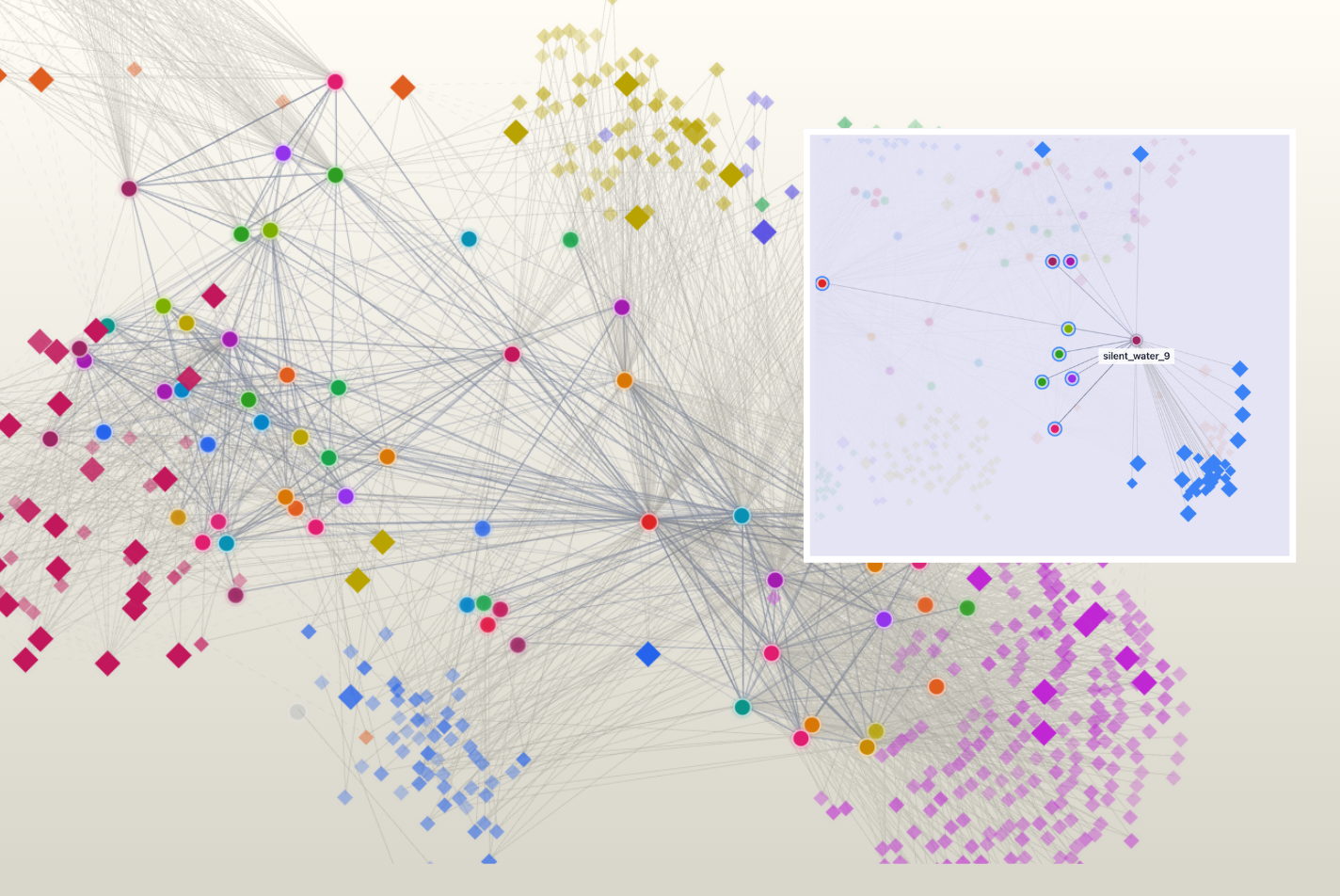
Kempner Researchers Create Social Network for “AI Scientists” to Collaborate - Kempner Institute
Science rarely advances exclusively through lone researchers. Progress often comes from discussion and collaboration — scientists sharing ideas, questioning one another, and refining their thinking together. Now, a team of […]
No. 010: AutoScientists governance, AI-agent monoculture, nonsense-term retractions - The Hallway Track
The Hallway Track No. 010 - How AI is affecting the practice of science
Thomas Wolf on Twitter / X
wtf is this way to handle mathematicians work and scientific communicationTLDR: Leven and Tristan worked over several months on one of the Millenium Prize Problems with various AIs to reach final interesting results. OpenAI apparently heard about it in the last days and… https://t.co/zNozwkFcFO pic.twitter.com/XcefJ17AQe— Thomas Wolf (@Thom_Wolf) September 8, 2026

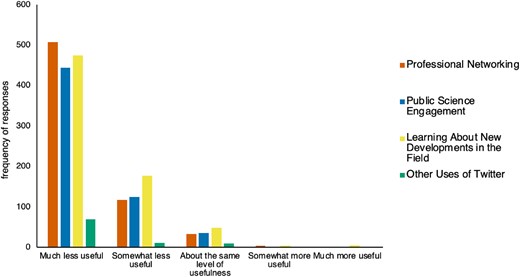
Scientists no Longer Find Twitter Professionally Useful, and have Switched to Bluesky
Synopsis Social media has become widely used by the scientific community for a variety of professional uses, including networking and public outreach. For the past decade, Twitter has been a primary home of scientists on social media. In recent years, new leadership at Twitter has made substantive changes that have resulted in increases in the prevalence of pseudoscience, conspiracy theory, and harassment on the platform, causing many scientists to seek alternatives. Bluesky has been suggested as a good alternative to Twitter, but the phenomenon of academics switching social media platforms has not previously been studied. Here we report on the results of a survey distributed to scientists on Twitter and Bluesky (n = 813). Results overwhelmingly confirm that changes to Twitter have made the social media platform no longer professionally useful or pleasant, and that many scientists have abandoned it in favor of Bluesky. Results show that for every reported professional benefit that scientists once gained from Twitter, scientists can now gain that benefit more effectively on Bluesky than on Twitter.
How to build an AI scientist: first peer-reviewed paper spills the secrets
AI Scientist, an autonomous research tool, first released in 2024, has now undergone peer review, highlighting its strengths and limitations.

1. We—@eduede.bsky.social, @mjcrockett.bsky.social, Kevin Gross, and I—have a new preprint on the arXiv today, based on ideas that emerged during an @sfiscience.bsky.social workshop in November 2024: The unintended consequences of large language models as a labor-augmenting technology in science.

The unintended consequences of large language models as a labor-augmenting technology in science
arxiv.orgWant to do something? Scholars: get organized. Join @aaup.org. Everyone: call your congresspeople. Tell them to defend science. Tell them to regulate the AI industry. Support @standupforscience.net I’m not giving up and neither should you. /end
A new report from the Project Liberty Institute, Social Web Foundation, Public AI, & @modalfoundation.eurosky.social stresses the importance of continued dialogue to create shared problem definitions, priorities, and identify next steps across research, standards development, and gov communities.


