

Excited to present at the Seeds of Renaissance research call this week! Modern tech has granted us extraordinary power for changing our external reality, but we still struggle to imagine inner transformation. Can social tools for thought like @semble.so help? Join us @ Nov 13 11am-12:30 EST

SoR Research Call - From Users to Sense-Makers: On the Role of Tools-for-Thought in Scaffolding Inner Development - with Ronen Tanari · Zoom · Luma
luma.comNov 10, 2026 at 8:54 PM
Second Renaissance Research Call - Where Does the Thinking Go?
Trees of change, forum discussions, and getting Second Renaissance to constantly evolve its vision.
Technopoly: The Surrender of Culture to Technology
A witty, often terrifying that chronicles our transform…

The Social Meaning of the Personal Computer: Or, Why the Personal Computer Revolution Was No Revolution
This essay presents a processual model of the personal computing movement that depicts the PC's birth within the context of complex and often contradictory social strategies, each of which used the meaning of computer technology in a distinctive way. It suggests that innovators are constrained by such processes to depict new artifacts in culturally meaningful ways, so that it is difficult for them to conceive of their technologies in radical terms. The rhetoric of "revolution" aside, innovators found it expedient to draw from the stock of meanings at hand as they created new meaning-frameworks for their artifacts. The result is that the new artifacts did not express a coherent or effective political vision and failed to have the intended social effects. This study implies that new technologies frequently reproduce existing social and meaning systems; if they do bring about social change, the changes may differ from those intended by the innovators.
Words for our Present Reality - Strange Matters
We need a new kind of thinking. It would involve a break from the absolutism with which we dress up our systems of thought. It would demand that we bring different communities of thinkers together – especially those who have been left on the margins – and get them talking to each other so that we can inch closer to a shared language and a usable history.
Topics — Real Life
ABOUT TOPICS: Since we began Real Life in the summer of 2016, we’ve run many essays across a range of topics, with a particular focus on the personal and cultural implications of living with technology. Our aim is not to track the news cycle so much as the longstanding social issues that inform and transcend it. We wanted to make it easier to read and explore Real Life beyond our chronological archive, so we’ve created these Topics to gather in one place the work we’ve published on some key themes. More Topics will be added to this page over time.


Technological Metamodernism (Sep 2024)
Technological Metamodernism A four-week course with Stephen Reid and special guests Telegram group: https://t.me/+4CC9lfZMBN04ZTdk Substack post announcing the open-sourcing of the notes: https://stephenreid.substack.com/p/technological-metamodernism-course This work is licensed under Cre...

About — Every Object an Archive
We interview people about their experiences with technological objects that were once everywhere, but are now being replaced or redesigned. We are interested in the physical experience of living with these objects, their handfeel and relationships to our bodies. We are also interested in how they shaped our habits, relationships, and ways of being. Technologies are more than physical objects: whole worlds of infrastructure, process, policy and culture are built around them.

FF26 – This is not the tech I signed up for! – An approach to permacomputing - Darío Gutiérrez Mori
Dark Futures: Dark Data by Nick Black
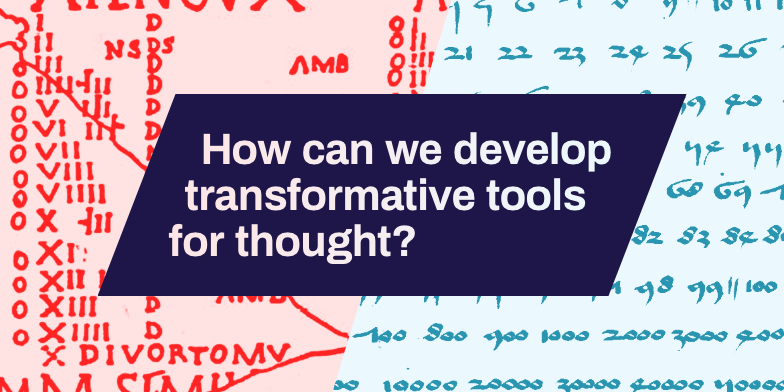
Remarkable how over a decade ago @michaelnielsen.bsky.social pointed the way towards solving long standing issues plaguing science to this day (issues that are all the more relevant in the age of AI mediated science)

Ronen Tamari
This is why @atproto.science is so relevant rn This compilation of essays indicates that scientists are most frustrated by insufficient “community tools and resources... Essential infrastructure for sharing, maintaining and building on existing work and data is also badly underdeveloped." >
I got into tech six years ago because I figured I could have an outsized impact on making a less harmful, more empowering world for workers and marginalised people. Only this year, I started connecting IRL with people who think this way. Here I tried to write about the ways that's transformed me.

DWeb, Culture and Resistance
meri.garden