

Seeing the "shingles vaccine protects from dementia" claim going around again. Unfortunately the main study it's based on is just not convincing. @epiellie.bsky.social has written a great post about why:
Shingles vaccine & dementia prevention: too good to be true?
medium.comApr 2, 2025 at 10:35 PM
The Terrorist in the Brain
What can Robin Williams and Bruce Willis teach us about dementia? This article explores the complex biological realities of brain diseases, controversies in Alzheimer's research, the risks of new drugs, and the multi-billion-dollar industry exploiting our fear of cognitive decline.

Can Alzheimer’s really be reversed, as a new documentary claims?
A CNN documentary follows two people with Alzheimer’s who took part in a study to determine if lifestyle changes can reverse symptoms.

Learning What Substance Is Suspected of Causing Alzheimer’s May Throw You Into an Existential Crisis
A surprisingly common substance was found to have a causal relationship with the kind of brain damage associated with Alzheimer's disease.

What to Know About New Covid Vaccines for Fall 2026
The shots have been approved for people 65 and older, and for younger people with underlying conditions. Others may be able to get them off label.

COVID-19 Vaccine Effectiveness and Safety for the 2026-2027 Respiratory Season
Importance SARS-CoV-2 remains a substantial cause of respiratory illness, morbidity, and mortality. Evidence to date has demonstrated that COVID-19 vaccines reduce the risk of severe disease, including hospitalization and death. Objective This systematic review identifies and summarizes newly published studies reporting on the effectiveness and safety of COVID-19 vaccines and COVID-19 epidemiology in the US. Evidence Review Cochrane Central Register of Controlled Trials, PubMed/MEDLINE, Embase, and Scopus were searched from August 1, 2025, through June 29, 2026. Studies were eligible if they reported on the effectiveness, efficacy, or safety of a US-licensed COVID-19 vaccine or SARS-CoV-2 epidemiology in the US. Findings From 11 829 identified references, 155 publications were eligible (15 randomized clinical trials, 84 observational studies with a comparator group, 38 product safety studies without a comparator group [single group], and 18 descriptive studies of disease burden). Consistent with prior evidence, studies reported that updated COVID-19 vaccines were associated with a reduction in the risk of hospitalization among both older adults (≥65 years; vaccine effectiveness [VE], 53.0%; 95% CI, 37.0%-65.0%; 2025-2026 season) and adults (18-64 years; VE, 54.0%; 95% CI, 1.0%-78.0%; 2024-2025 season). Maternal vaccination was associated with reduced risk of COVID-19–associated emergency department/urgent care encounters among individuals vaccinated (VE, 58.0%; 95% CI, 24.0%-77.0%) and with fewer COVID-19–related hospital contacts in the first 2 months of life among infants born subsequently (VE range, 50.0%-54.0%), regardless of trimester of vaccination. Vaccination was also associated with a significant reduction in COVID-19–related pediatric emergency department visits (9 months to 4 years; VE, 76.0%; 95% CI, 58.0%-87.0%). Vaccination was associated with a reduced risk of critical COVID-19 illness (intensive care unit admission or death) in immunocompromised adults (VE range, 32.0%-53.0%, depending on condition and other factors). Health care personnel who received 3 to 5 vaccine doses were less likely to develop laboratory-confirmed COVID-19 illness (VE, 41.0%; 95% CI, 34.0%-47.0%) and postacute COVID-19 symptoms (VE, 57.0%; 95% CI, 46.0%-66.0%) compared with those who received only 2 doses. Across adverse events of special interest (eg, stroke, thrombosis, myocarditis), safety profiles were consistent with those of previous reviews. No identified studies conducted under the updated guidance on extended dosing intervals for the primary series reported an increased risk of myocarditis or pericarditis. No new safety signals were reported in the recently published studies eligible for this updated review of US-licensed COVID-19 vaccines. Conclusions and Relevance COVID-19 vaccines were consistently associated with a reduction in the risk of hospitalization and other outcomes, including among individuals at high risk of severe COVID-19, such as infants, and those who were pregnant. No new safety concerns were identified.

We Are Entering the Age of Alzheimer's
We will all be touched by the disease. How are we going to get through this?

F.D.A. Approves New Covid Vaccines, and They Should Be Available Soon
The shots have been approved for people 65 and older, and for younger people with underlying conditions. Others may be able to get them off label.
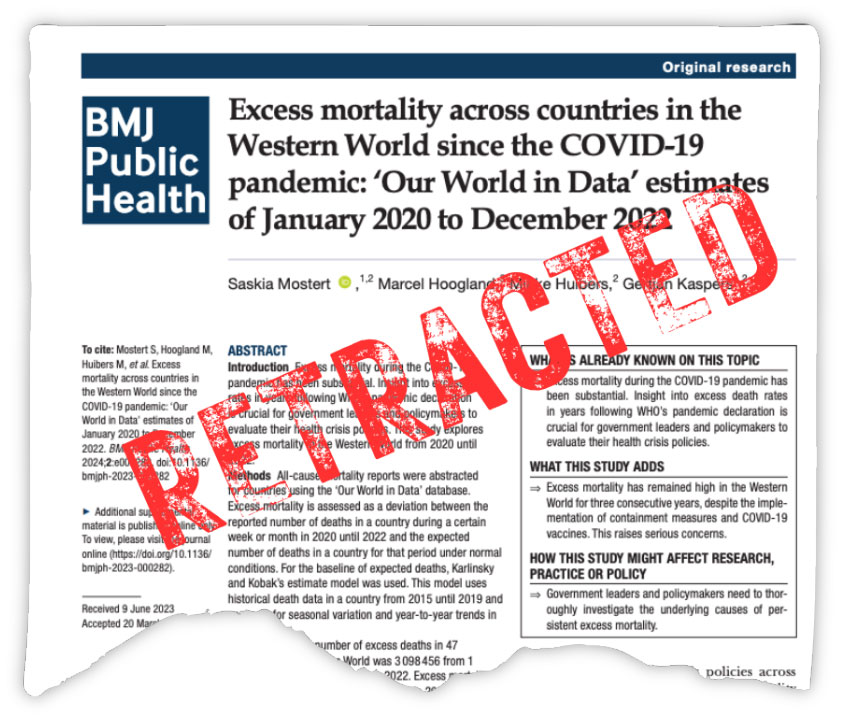
BMJ Group retracts paper on COVID-19 vaccines and mortality featured in Senate hearing
BMJ Public Health has retracted a paper some — including a witness at a recent U.S. Senate subcommittee hearing — have used to link COVID-19 vaccines to deaths. The action comes more than two years…
Scientists reveal foods to eat now to stave off cognitive decline later
Data on over 3,000 people shows only 8 percent with low-quality diets maintained high cognitive abilities into their 70s, a new study reveals.

COVID-19 Vaccine Effectiveness and Safety for the 2026-2027 Respiratory Season
This Special Communication aims to identify and summarize the most recently published evidence evaluating the effectiveness and safety of US-licensed COVID-19 vaccines and report on the epidemiology of SARS-CoV-2 in the US.
Underlying Conditions and the Higher Risk for Severe COVID-19
Learn risk factors for severe outcomes from COVID-19 and actions to take.
Is the Memory Shortage Intentional? | Contrary Research
A deep dive from Contrary Research.

Individual Experience vs. The Cochrane Review
On my decade-long exploration seeking a scientific language for singular evidence.

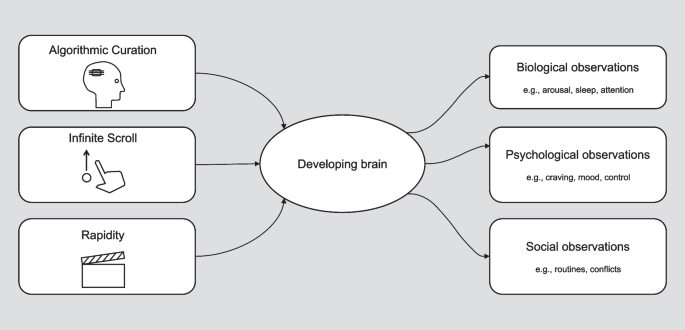
Taming the endless scroll? Short-form videos, digital routines and neurocognitive outcomes in youth
Short-form videos (SFVs) deliver digital content in a way that sets them apart from other media. Concerns have arisen that such user interfaces may diminish attention, memory and emotional wellbeing in young people, yet evidence has not previously been synthesised for this demographic and in isolation from other media types. To assess the association between exposure to SFV-interfaces and neurocognitive outcomes in individuals aged $$\varvec{\le 25}$$years, and to appraise the certainty of this evidence. Following PRISMA and Cochrane guidelines, four databases (PubMed, PsycINFO, WoS, Cochrane Reviews) were searched (2015–2025). Of 1,498 records, 42 studies (N = 46,912; mean age = 16.8) met the PICOS criteria. Most were cross-sectional (88%), with two longitudinal, one EEG, and one MRI study. Risk of bias and quality were evaluated using GRADE. Heavy, unstructured SFV use (typically $$\varvec{\ge 4}$$h/day) was consistently associated with: small-to-moderate increases in inattention ($$\varvec{\beta \approx 0.30}$$) and impulsivity ($$\varvec{\beta \approx 0.25}$$); moderate reductions in working-memory span ($$\varvec{\beta \approx -0.75}$$) and self-regulation ($$\varvec{\beta \approx -0.45}$$); moderate elevations in anxiety ($$\varvec{\beta \approx 0.35}$$), depression ($$\varvec{\beta \approx 0.48}$$) and stress ($$\varvec{\beta \approx 0.32}$$); and a moderate-to-large surge in addiction symptoms ($$\varvec{\beta \approx 0.60}$$). Two cross-sectional imaging studies also reported associations between heavier short-video use and neurobiological measures. These included grey-matter volume differences in the orbitofrontal cortex and cerebellum, altered resting-state signal synchrony, and reduced P300 amplitudes. Protective factors included supportive environments, digital routines, and digital literacy. Consistent, albeit preliminary, evidence links excessive SFV watching to cognitive and emotional challenges in youth. Longitudinal and experimental studies are urgently needed, alongside trials of modifiable levers to reduce addiction-like use and related harms.
Does the new shingles vaccine (Shingrix) protect against cardiovascular disease (CVD)? Yes, according to a new 'natural experiment' study in @natmed.nature.com. But the truth is sadly far less convincing! Pull up a chair and let's examine another peer review failure in a Nature journal. 1/10 🧵

