How to think like a Hegelian | Psyche Guides
For Hegel, your thoughts aren’t trapped in a cerebral box: they act on the world, making meaning and expressing your freedom

The Souls of White Jokes | Stanford University Press
A rigorous study of the social meaning and consequences of racist humor, and a damning argument for when the joke is not just a joke.
What Is It Like to Be a Bat?
"What Is It Like to Be a Bat?" is a paper by American philosopher Thomas Nagel, first published in The Philosophical Review in October 1974, and later in Nagel's Mortal Questions (1979). The paper presents several difficulties posed by phenomenal consciousness, including the potential insolubility of the mind–body problem owing to "facts beyond the reach of human concepts", the limits of objectivity and reductionism, the "phenomenological features" of subjective experience, the limits of human imagination, and what it means to be a particular, conscious thing.

Part 1: Finding Your Thing's Essence
If you've ever tried to explain an idea that doesn’t quite fit in a box, this one’s for you
Hegel’s Dialectics
“Dialectics” is a term used to describe a method ofphilosophical argument that involves some sort of contradictoryprocess between opposing sides. In what is perhaps the most classicversion of “dialectics”, the ancient Greek philosopher,Plato (see entry on Plato), for instance, presented his philosophical argument as aback-and-forth dialogue or debate, generally between the character ofSocrates, on one side, and some person or group of people to whomSocrates was talking (his interlocutors), on the other. In the courseof the dialogues, Socrates’ interlocutors propose definitions ofphilosophical concepts or express views that Socrates challenges oropposes. The back-and-forth debate between opposing sides produces akind of linear progression or evolution in philosophical views orpositions: as the dialogues go along, Socrates’ interlocutorschange or refine their views in response to Socrates’ challengesand come to adopt more sophisticated views. The back-and-forthdialectic between Socrates and his interlocutors thus becomesPlato’s way of arguing against the earlier, less sophisticatedviews or positions and for the more sophisticated ones later.
Home - Inspirit Foundation
We define pluralism as the energetic engagement with diversity, active seeking of understanding across lines of difference, and the nurturing of constructive dialogue that contributes to a deep sense of belonging. In a pluralist society, people of different beliefs and backgrounds can participate equally, coexist peacefully, and thrive together.
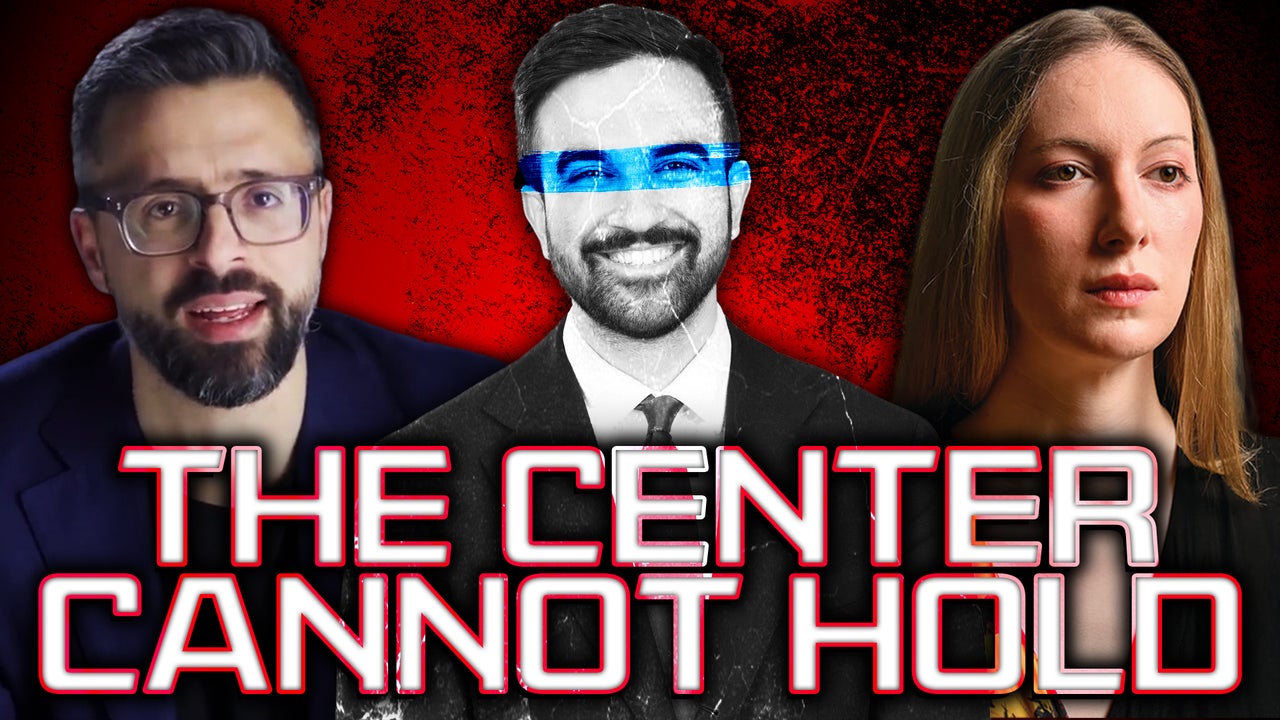
Jessie Gender — The Existential Crisis of American Liberalism
Ezra Klein is discovering that “we can just talk it out” stops working when the other side shows up with a torch. So let’s unpack how the center got here… and why it won’t save us.
The Standpoint of Heimatlosigskeit and the Planet
Since the launch of Sputnik in 1957, it has become impossible to comprehend the world solely through the lens of Hegel’s Berlin or Kojève’s Paris—even as nation-states continue to wrestle with their growing obsolescence. The planetary condition of human existence has also intensified a form of nihilism rooted in modernity: geographically through globalization, and cosmically through thermodynamics. If, in the twentieth century, reactionary politics sought to “overcome modernity” by returning to a notion of homeland (Heimat), the twenty-first century calls for a renewed framework—one that begins, perhaps, from the standpoint of Heimatlosigkeit.

The Standpoint of Heimatlosigskeit and the Planet
Since the launch of Sputnik in 1957, it has become impossible to comprehend the world solely through the lens of Hegel’s Berlin or Kojève’s Paris—even as nation-states continue to wrestle with their growing obsolescence. The planetary condition of human existence has also intensified a form of nihilism rooted in modernity: geographically through globalization, and cosmically through thermodynamics. If, in the twentieth century, reactionary politics sought to “overcome modernity” by returning to a notion of homeland (Heimat), the twenty-first century calls for a renewed framework—one that begins, perhaps, from the standpoint of Heimatlosigkeit.
Modern problems require outstanding moves
36M subscribers in the memes community. Memes! A way of describing cultural information being shared. An element of a culture or system of behavior…
Anaïs Kugel’s portraits are unmistakably from the female gaze
The Paris-based photographer has made a visual world that weaves together themes of identity, intimacy and femininity.


Part 2: When You Know, You Know
How we made our landing page with soul—and AI