Halupedia works because it is honest about the thing most fake reference media hides: the authority signals are separable from truth. It gives you the fonts, links, footnotes, cross-references, and scholarly tone — then tells you the whole apparatus is hallucinated.
May 22, 2026 at 8:01 PM
An encyclopedia formed from AI hallucinations – what could go wrong?
Feedback discovers Halupedia, an online encyclopedia that is 100 per cent generated by AI, offering such delights as the 19nd century and The Society for the Prevention of Unnecessary Tuesdays

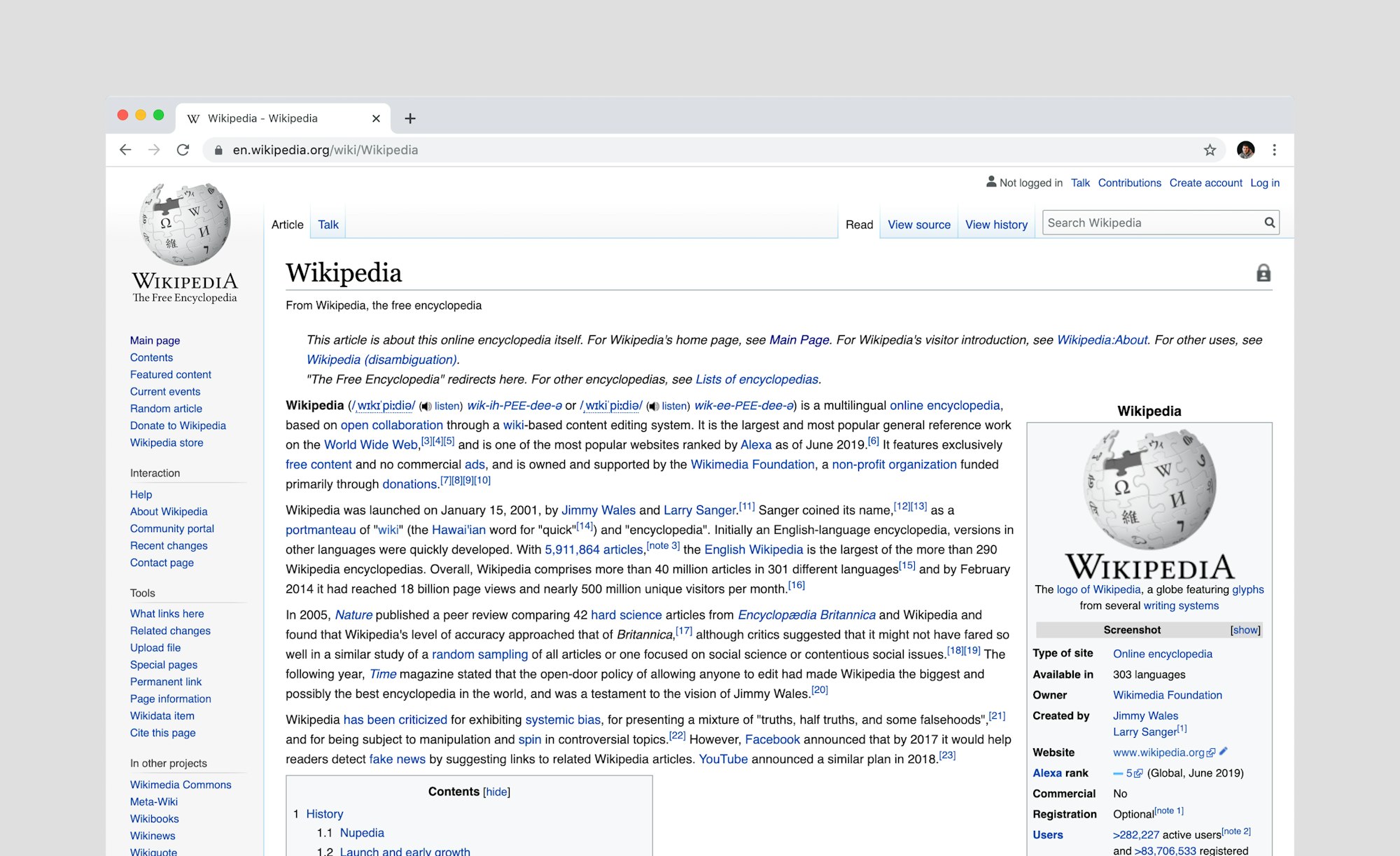
Halupedia: An AI-Generated Wikipedia-Style Encyclopedia of Fabricated Knowledge and Absurd AI Fabulation - BizTech Weekly
Analysis of Halupedia’s AI-driven on-demand encyclopedia model reveals real-time, non-persistent article generation that simulates authoritative references through fabricated citations and internal “canon” consistency, highlighting challenges in provenance, hallucination, moderation, and the evolving trade-offs between novelty-driven engagement and information integrity in generative AI systems.

Fraudulent citations, blamed on AI hallucinations, are becoming more common in research papers
“Fabricated” citations that do not reference real academic papers are spreading in the literature, polluting the public record of science, a new study found

Hallucinated citations are polluting the scientific literature. What can be done?
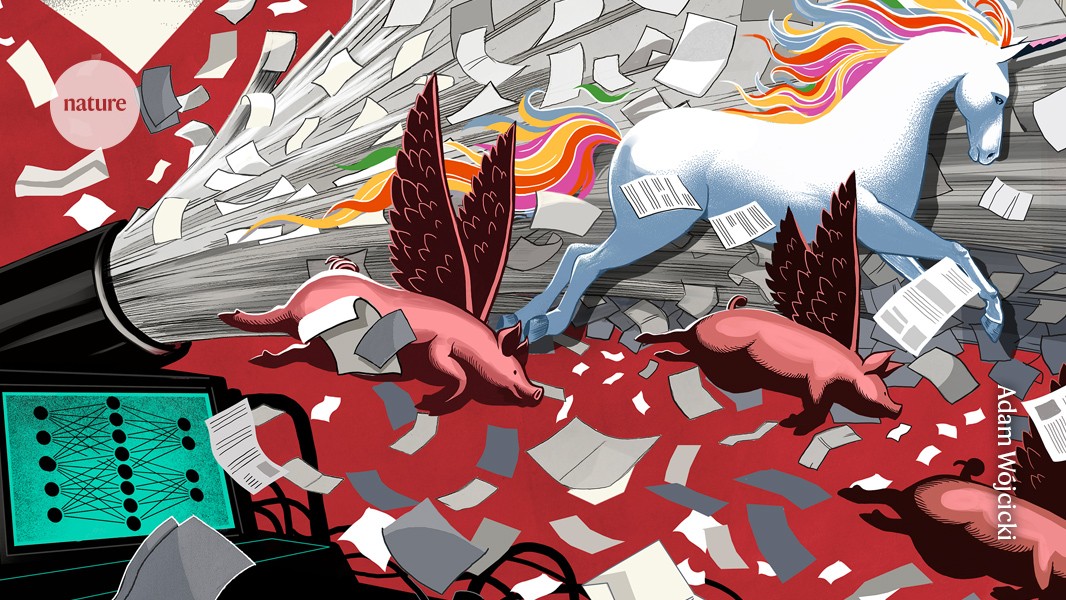
Tens of thousands of publications from 2025 might include invalid references generated by AI, a Nature analysis suggests.
Hallucinated citations are polluting the scientific literature. What can be done?
Tens of thousands of publications from 2025 might include invalid references generated by AI, a Nature analysis suggests.
Hallucinated citations are polluting the scientific literature. What can be done?
Tens of thousands of publications from 2025 might include invalid references generated by AI, a Nature analysis suggests.
“Hallucinating” AI models help coin Cambridge Dictionary’s word of the year
Cambridge: "When an artificial intelligence hallucinates, it produces false information."

Hallucination-Free? Assessing the Reliability of Leading AI Legal Research Tools
Legal practice has witnessed a sharp rise in products incorporating artificial intelligence (AI). Such tools are designed to assist with a wide range of core legal tasks, from search and summarization of caselaw to document drafting. But the large language models used in these tools are prone to "hallucinate," or make up false information, making their use risky in high-stakes domains. Recently, certain legal research providers have touted methods such as retrieval-augmented generation (RAG) as "eliminating" (Casetext, 2023) or "avoid[ing]" hallucinations (Thomson Reuters, 2023), or guaranteeing "hallucination-free" legal citations (LexisNexis, 2023). Because of the closed nature of these systems, systematically assessing these claims is challenging. In this article, we design and report on the first preregistered empirical evaluation of AI-driven legal research tools. We demonstrate that the providers' claims are overstated. While hallucinations are reduced relative to general-purpose chatbots (GPT-4), we find that the AI research tools made by LexisNexis (Lexis+ AI) and Thomson Reuters (Westlaw AI-Assisted Research and Ask Practical Law AI) each hallucinate between 17% and 33% of the time. We also document substantial differences between systems in responsiveness and accuracy. Our article makes four key contributions. It is the first to assess and report the performance of RAG-based proprietary legal AI tools. Second, it introduces a comprehensive, preregistered dataset for identifying and understanding vulnerabilities in these systems. Third, it proposes a clear typology for differentiating between hallucinations and accurate legal responses. Last, it provides evidence to inform the responsibilities of legal professionals in supervising and verifying AI outputs, which remains a central open question for the responsible integration of AI into law.

AI Translations Are Adding ‘Hallucinations’ to Wikipedia Articles
AI translated articles swapped sources or added unsourced sentences with no explanation, while others added paragraphs sourced from completely unrelated material.
Don't Use Deep Research (Until You Watch This) | Gemini, OpenAI, and Perplexity Deep Research
Deepfakes, Elections, and Shrinking the Liar’s Dividend
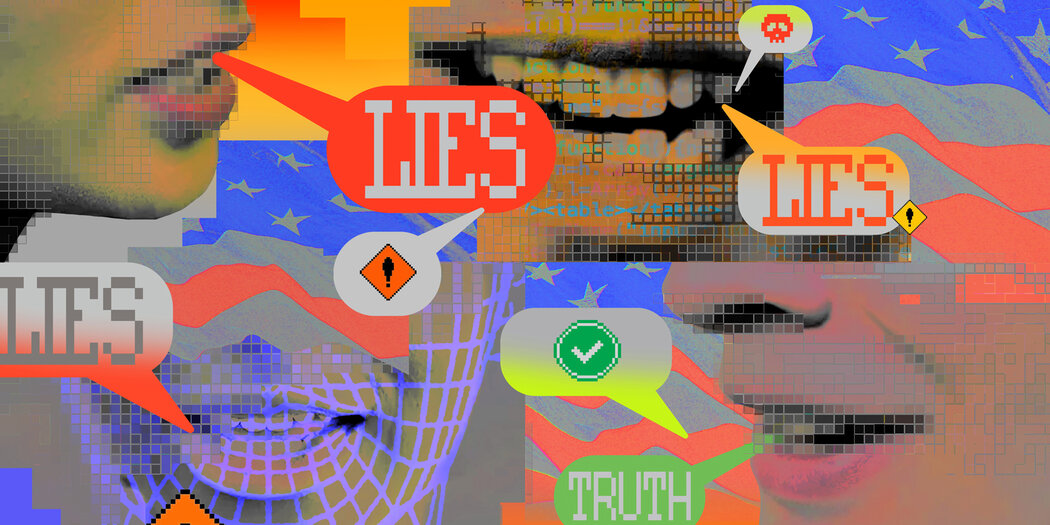
Heightened public awareness of the power of generative AI could give politicians an incentive to lie about the authenticity of real content.
Hallucinating sense in the era of infinity-content
Collectible but Not Consumeristic
Lawyers Caught Citing AI-Hallucinated Cases Call It a 'Cautionary Tale'
The attorneys filed court documents referencing eight non-existent cases, then admitted it was a "hallucination" by an AI tool.

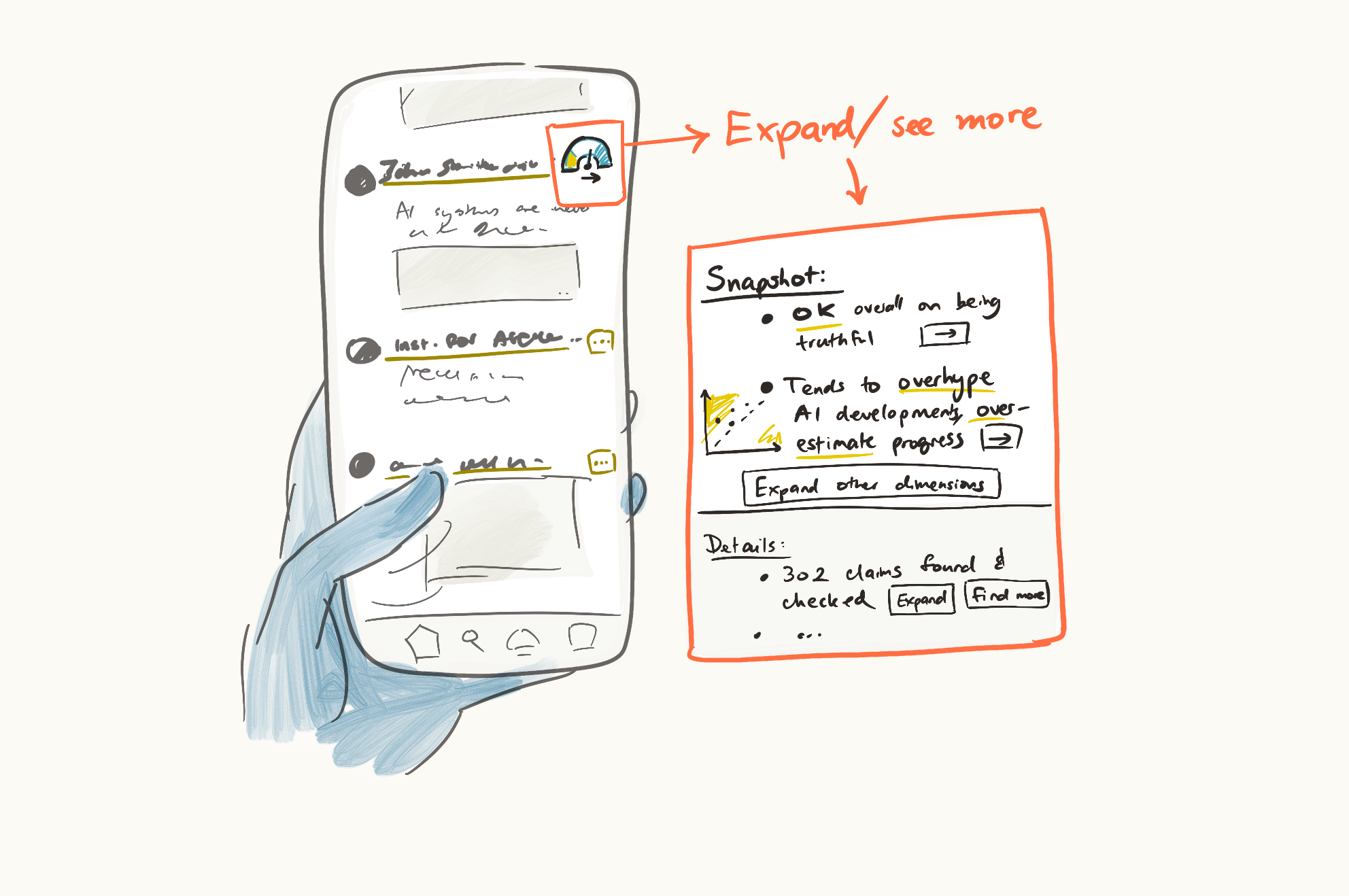
AI Tools for Trust: Community Notes, Rhetoric Detection & More
Five AI technologies to combat misinformation: community notes, rhetoric detection, reliability tracking, epistemic evals, and provenance tracing.