What if paper reading and reviewing was interactive and visual? Tools today assume a very passive way of engaging with a paper: you open a PDF and read linearly, top to bottom. But most of us already break that assumption: results first, figures before text, abstract then conclusion. 🧵 #scisci
Jul 23, 2026 at 8:49 AM

The new way we’ll do science
Papers should become human-readable views over a graph of data, tools, results, and certificates.

OpenAIReview — AI-Powered Academic Paper Reviewer
we recommend using uv, and there are additional guidelines for best results with PDF inputs
Connected Papers | Find and explore academic papers
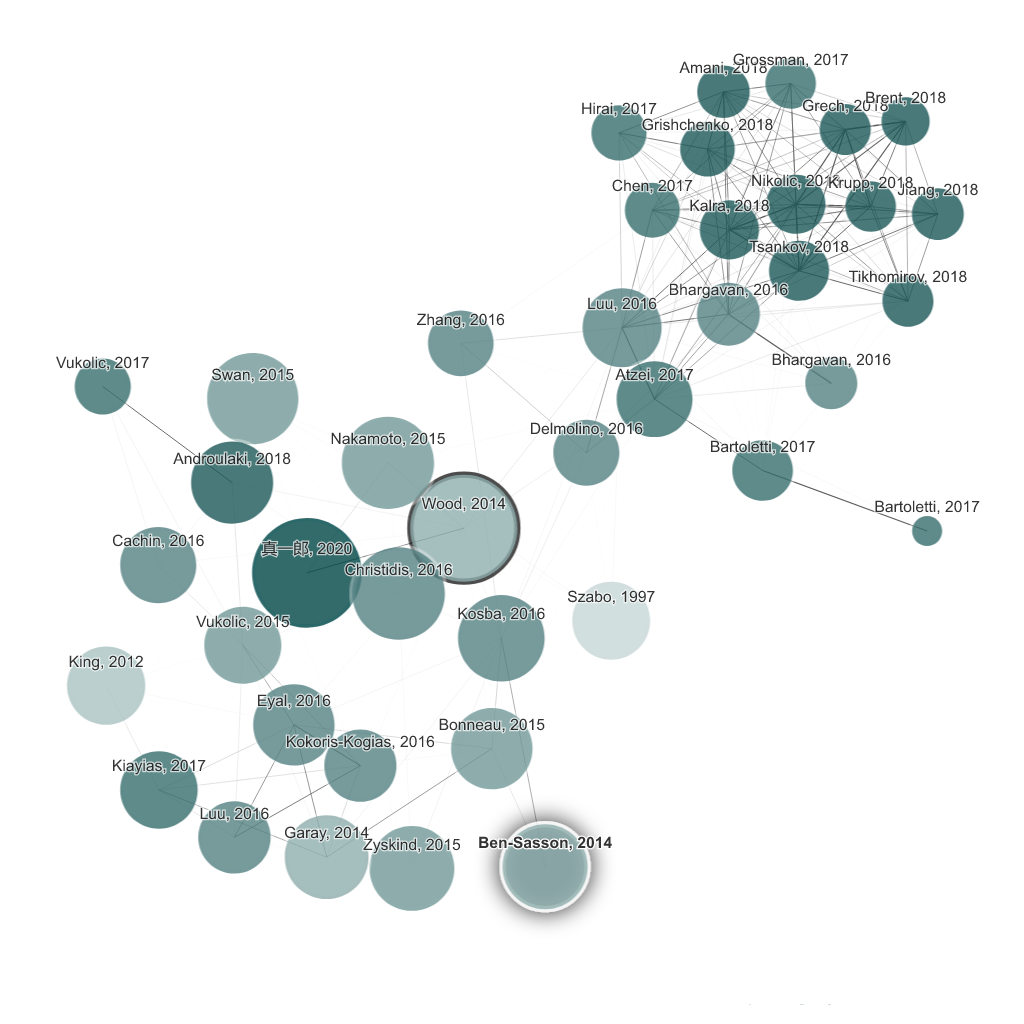
A unique, visual tool to help researchers and applied scientists find and explore papers relevant to their field of work.
Connected Papers | Find and explore academic papers
A unique, visual tool to help researchers and applied scientists find and explore papers relevant to their field of work.
A budding discipline around how science gets read and judged - Aris
Scholarly publishing spent thirty years arguing about access. It has barely begun arguing about what readers do with the paper once they have it. At Aris we call that second argument scholarly interface design. Mike Morrison's community calls it ScienceUX. Either way it is becoming a field, and here is why it is worth your attention.
Paperstars
A better way to evaluate scientific papers. Methodological soundness and transparency, not citation counts.
On Close and Distant Reading in Digital Humanities: A Survey and Future Challenges
We present an overview of the last ten years of research on visualizations that support close and distant reading of textual data in the digital humanities. We look at various works published within both the visualization and digital humanities

supernote-cli: pen, paper, and a pipe
A recent NYT piece argued we need a mental fitness revolution to combat the cognitive decay caused by algorithmic feeds and generative AI. It's an efficient one-two punch. If you're not brainrotting on short form video content, you're outsourcing all of your thinking to an LLM. The result is a kind of cognitive strip-mining. What's left requires active defense. For me, one way of defending that capacity for deep work is with a pen on e-ink. Whether it's annotating a paper or starting a sketch from scratch, I'm intentionally making room for focused thought. My army of clawed Claudes and Codexes will just have to wait.
The Future of Text
We are a community dedicated to working on how we can better develop text to augment our capabilities and we invite you to join us. We believe that the potential of richly interactive text to truly augment how we think & communicate is massive. Text after all, is externalized symbols we can interact with to extend our mind’s reach. Therefore text is not just a medium, it is also a tool for thought, and we are looking Beyond Visual Range.
You can just review things: A digital ethnography of informal peer review
Across scholarly communities, manuscripts face similar evaluative rituals: editors invite experts to privately assess submissions through formal peer reviews. This closed, loosely structured, and...

Fundamentals of Interactivity | Interactive Storytelling Tools for Writers | Chris Crawford
Working notes on the role of vision papers in basic science
Many of the papers I most admire are vision papers1. Rather than abstractly define what a vision paper is, here's a list of a few examples of such papers, to convey the gist:
Ink & Switch
An independent research lab exploring the future of tools for thought.