

The Divide — Jason Hickel
The Divide: A Brief Guide to Global Inequality and its Solutions Penguin Random House UK, 2017

Unequal exchange of labour in the world economy
Researchers have argued that wealthy nations rely on a large net appropriation of labour and resources from the rest of the world through unequal exchange in international trade and global commodity chains. Here we assess this empirically by measuring flows of embodied labour in the world economy from 1995–2021, accounting for skill levels, sectors and wages. We find that, in 2021, the economies of the global North net-appropriated 826 billion hours of embodied labour from the global South, across all skill levels and sectors. The wage value of this net-appropriated labour was equivalent to €16.9 trillion in Northern prices, accounting for skill level. This appropriation roughly doubles the labour that is available for Northern consumption but drains the South of productive capacity that could be used instead for local human needs and development. Unequal exchange is understood to be driven in part by systematic wage inequalities. We find Southern wages are 87–95% lower than Northern wages for work of equal skill. While Southern workers contribute 90% of the labour that powers the world economy, they receive only 21% of global income.

New Capitalism II: Compositional vs income inequality
Are all class-based societies unequal?
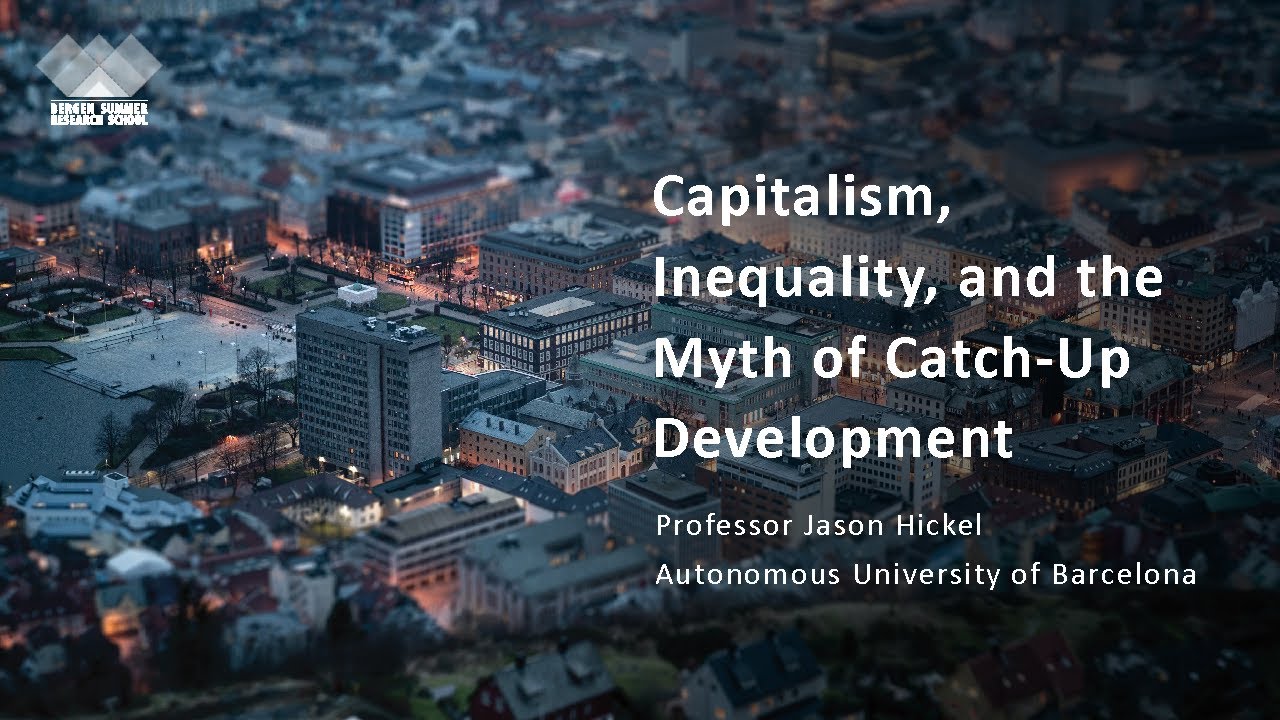
Capitalism, Inequality, and the Myth of Catch-Up Development
Prevailing narratives in international development hold that poorer countries can and will "catch-up" with richer countries through the process of
IDS Annual Lecture 2026 with Jason Hickel - Institute of Development Studies
Join us for the IDS Annual Lecture 2026 delivered by world-renowned political economist and author Prof Jason Hickel.

Why the super rich are inevitable
Why some mathematicians argue the economy is designed to create a few super rich people – unless we stop it.

Wealth Capture Policies | Windfall Policy Atlas
What mechanisms can ensure AI-driven productivity gains are captured for the public benefit?

The myth of catch-up development: trends in core–periphery inequality from 1960 to 2023
The conventional narrative in international development holds that poorer countries are “catching up” with richer countries through the process of capitalist growth. This paper assesses this claim ...

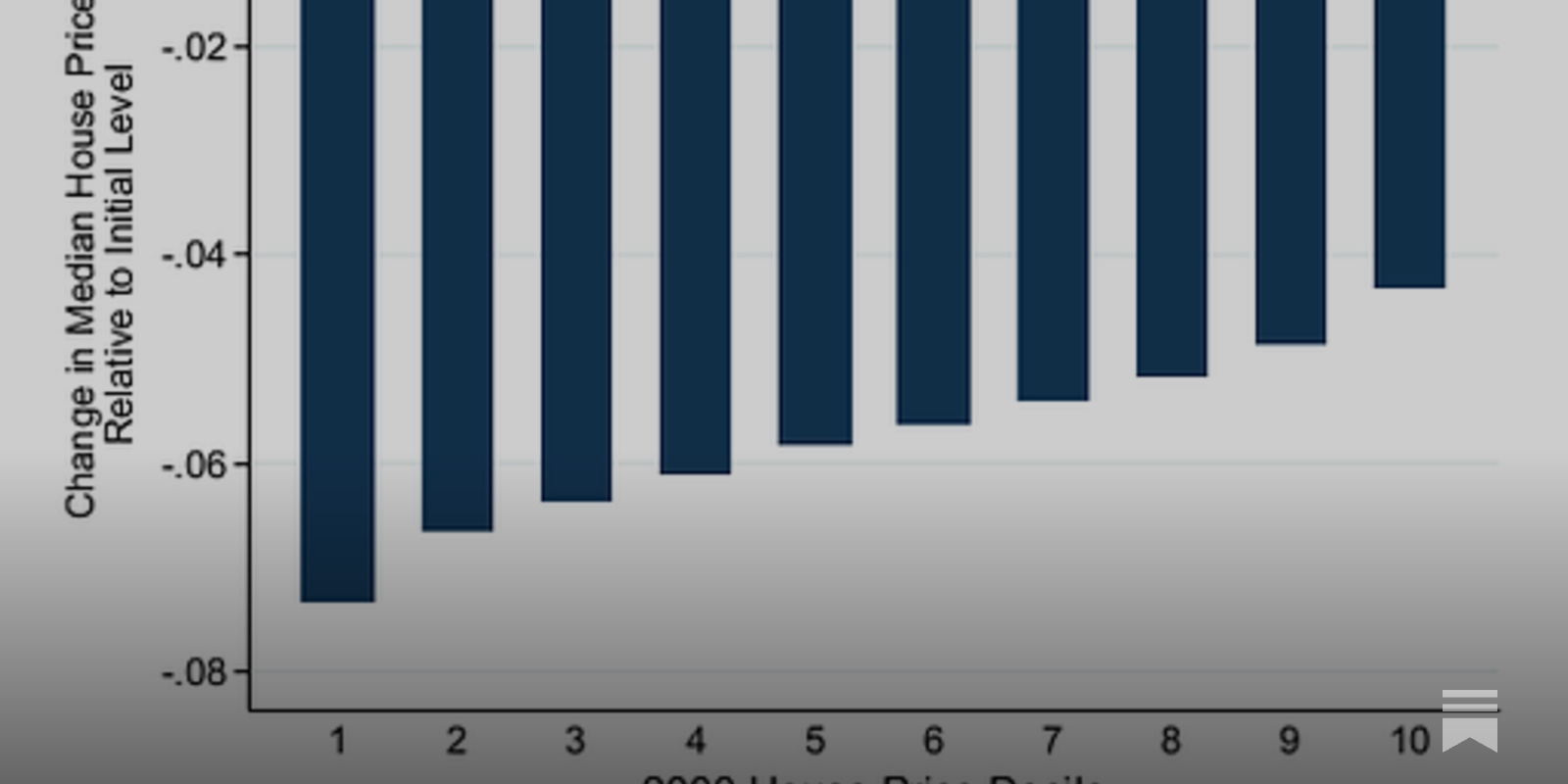
Housing ladder spillovers
Rich newcomers can raise low-end rents, and adding high-end homes can lower them
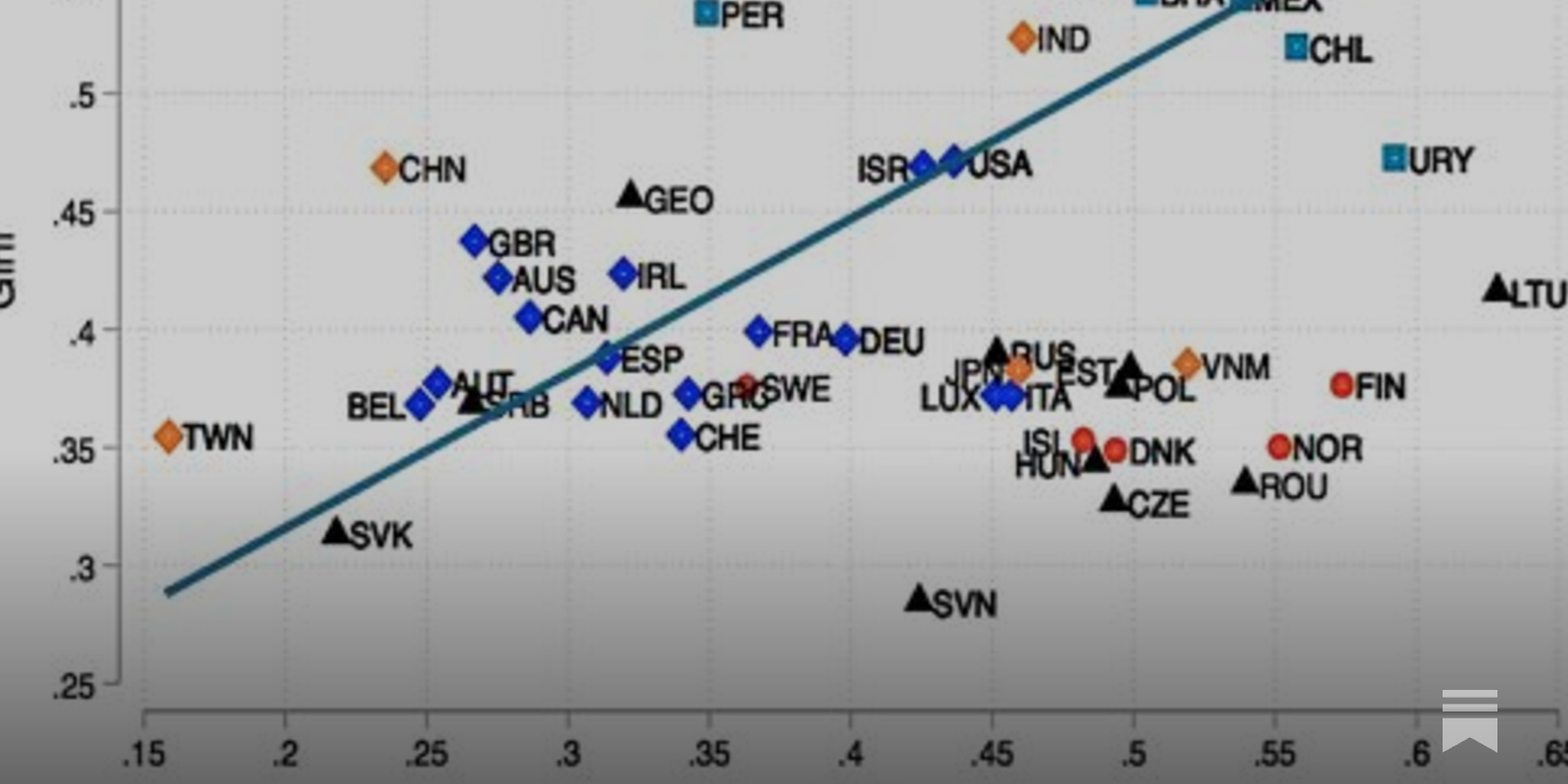
Le nouveau capitalisme (2/3) : inégalités compositionnelles versus inégalités de revenu
Traduction de "New capitalism II: Compositional vs income inequality. Are all class-based societies unequal?" de Branko Milanovic

(PDF) The Precariat and Class Struggle *
PDF | The world economy is in the midst of a Global Transformation that is producing a new global class structure. A new class is emerging – the... | Find, read and cite all the research you need on ResearchGate

The Fallacy of Endless Economic Growth
What economists around the world get wrong about the future.

The end of development economics
Some decades ago, development economists saw their approach as being distinctive compared to mainstream economics in general and better grounded in the reality of actual economies. This column argues that two trends over the last decades – the significant improvement in the average income of what were called developing countries and the homogenisation of economics methodology across the board – mean that the distinction between development economics and economics in general is increasingly untenable and indeed unnecessary.
Global Inequality — Harvard University Press
Winner of the Bruno Kreisky Prize, Karl Renner InstitutA Financial Times Best Economics Book of the Year An Economist Best Book of the Year A Livemint Best Book of the YearOne of the world’s leading economists of inequality, Branko Milanovic presents a bold new account of the dynamics that drive inequality on a global scale. Drawing on vast data sets and cutting-edge research, he explains the benign and malign forces that make inequality rise and fall within and among nations. He also reveals who has been helped the most by globalization, who has been held back, and what policies might tilt the balance toward economic justice.“The data [Milanovic] provides offer a clearer picture of great economic puzzles, and his bold theorizing chips away at tired economic orthodoxies.”—The Economist“Milanovic has written an outstanding book…Informative, wide-ranging, scholarly, imaginative and commendably brief. As you would expect from one of the world’s leading experts on this topic, Milanovic has added significantly to important recent works by Thomas Piketty, Anthony Atkinson and François Bourguignon…Ever-rising inequality looks a highly unlikely combination with any genuine democracy. It is to the credit of Milanovic’s book that it brings out these dangers so clearly, along with the important global successes of the past few decades.—Martin Wolf, Financial Times
annotations: A propos de la super-implication des super-riches dans la politique américaine
Blog de sciences économiques et sociales de Martin Anota. Traductions, revues de presse.
This is worth paying attention to, but be careful excluding government transfers which create huge amounts of spending that should *not* be assumed away. Also an aging population will naturally increase their role over time.

Carl Quintanilla
“.. Real personal income per capita has not grown in 15 months and is meaningfully below the pre-pandemic trend.” - @thedailyshot.bsky.social

