

An article about data visualization was retracted 1.5 years after I pointed out errors. The notice says that "concerns were raised". I spend dozens of hours contacting authors and editors, reproducing analyses, and following up on ignored emails. But I'm not mentioned in the retraction notice.

RETRACTED: A Perception Study for Unit Charts in the Context of Large-Magnitude Data Representation
www.mdpi.comMay 24, 2024 at 11:24 AM
Explicit warnings reduce but do not eliminate the continued influence of misinformation
Information that initially is presumed to be correct, but that is later retracted or corrected, often continues to influence memory and reasoning. This occurs even if the retraction itself is well remembered. The present study investigated whether the continued influence of misinformation can be reduced by explicitly warning people at the outset that they may be misled. A specific warning— giving detailed information about the continued influence effect (CIE)—succeeded in reducing the continued reliance on outdated information but did not eliminate it. A more general warning—reminding people that facts are not always properly checked before information is disseminated—was even less effective. In an additional experiment, a specific warning was combined with the provision of a plausible alternative explanation for the retracted information. This combined manipulation further reduced the CIE but still failed to eliminate it altogether.

Science discussions of retracted articles on Bluesky: public scrutiny or misinformation spreading?
Post-publication peer review (PPPR) has emerged as an important supplement to traditional peer review, with social media playing a growing role in publicising potential problems in published research. However, it remains unclear whether social media discussions of retracted articles primarily reflect good practices, such as exposing flaws and acknowledging retraction status, or bad practices, such as overlooking retractions and continuing to disseminate scientific misinformation. In this study, we collected Bluesky posts referencing scholarly articles from Altmetric and retrieved metadata for the referenced articles using OpenAlex. The final dataset included 284 retracted articles with 79 pre-retraction posts and 857 post-retraction posts, 59 retraction notices with 186 posts, and 609,461 non-retracted articles with 1,344,756 posts. We manually coded Bluesky posts discussing retracted articles to identify instances of good and bad practice. The results show that posts demonstrating good practice (89.9%) substantially outnumbered those demonstrating bad practice (10.1%). Posts reflecting good practice also had more user engagement. In the pre-retraction phase, good practice posts constituted a slight minority (43.0%), whereas in the post-retraction phase they were dominant (94.2%). Most negative posts in the pre-retraction phase (90.0%) had good practice while only 17.3% positive posts in the post-retraction phase showed bad practice. Thus, sentiment analysis can be helpful to filter posts that could flag potential flaws before retraction, but it may struggle to accurately identify the spread of misinformation after retraction. More broadly, this study highlights the potential of Bluesky to support responsible scientific communication, public scrutiny, and research integrity.

Science discussions of retracted articles on Bluesky: public scrutiny or misinformation spreading?
Post-publication peer review (PPPR) has emerged as an important supplement to traditional peer review, with social media playing a growing role in publicising potential problems in published research. However, it remains unclear whether social media discussions of retracted articles primarily reflect good practices, such as exposing flaws and acknowledging retraction status, or bad practices, such as overlooking retractions and continuing to disseminate scientific misinformation. In this study, we collected Bluesky posts referencing scholarly articles from Altmetric and retrieved metadata for the referenced articles using OpenAlex. The final dataset included 284 retracted articles with 79 pre-retraction posts and 857 post-retraction posts, 59 retraction notices with 186 posts, and 609,461 non-retracted articles with 1,344,756 posts. We manually coded Bluesky posts discussing retracted articles to identify instances of good and bad practice. The results show that posts demonstrating good practice (89.9%) substantially outnumbered those demonstrating bad practice (10.1%). Posts reflecting good practice also had more user engagement. In the pre-retraction phase, good practice posts constituted a slight minority (43.0%), whereas in the post-retraction phase they were dominant (94.2%). Most negative posts in the pre-retraction phase (90.0%) had good practice while only 17.3% positive posts in the post-retraction phase showed bad practice. Thus, sentiment analysis can be helpful to filter posts that could flag potential flaws before retraction, but it may struggle to accurately identify the spread of misinformation after retraction. More broadly, this study highlights the potential of Bluesky to support responsible scientific communication, public scrutiny, and research integrity.
More than 10,000 research papers were retracted in 2023 — a new record
The number of articles being retracted rose sharply this year. Integrity experts say that this is only the tip of the iceberg.
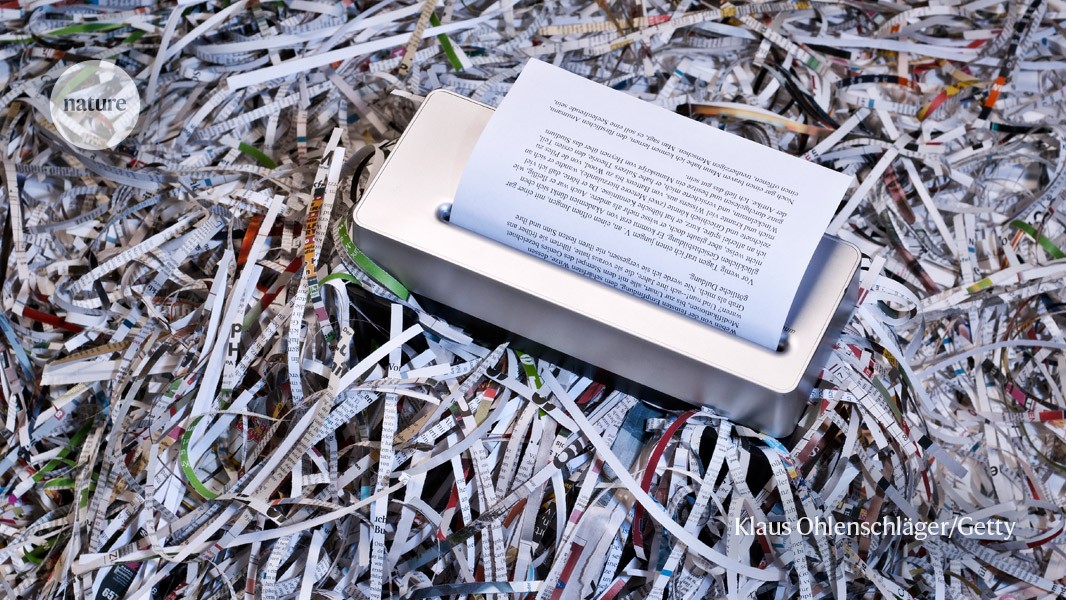
More than 10,000 research papers were retracted in 2023 — a new record
The number of articles being retracted rose sharply this year. Integrity experts say that this is only the tip of the iceberg.
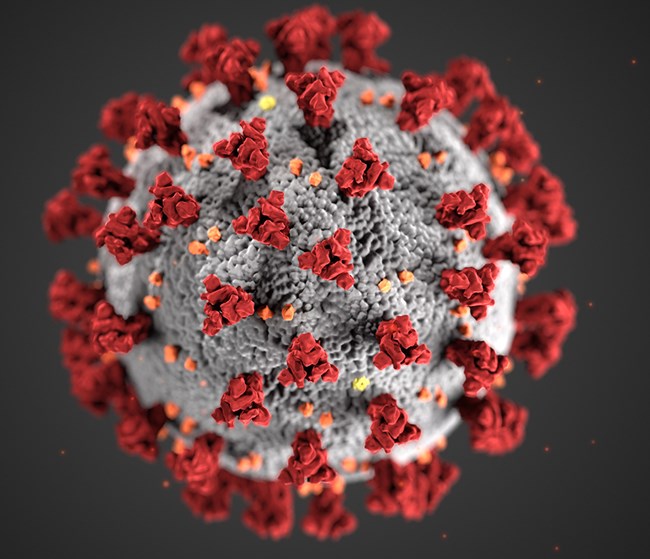
Retracted coronavirus (COVID-19) papers
via CDC We’ve been tracking retractions of papers about COVID-19 as part of our database. Here’s a running list, which will be updated as needed. (For some context on these figures, see…
How Ten Publishers Retract Research
Retractions are the primary mechanism for correcting the scholarly record, yet publishers differ markedly in how they use them. We present a bibliometric analysis of 46,087 retractions across 10 major publishers using data from the Retraction Watch database (1997-2026), examining retraction rates, reasons, temporal trends, and geographic distributions, among other dimensions. Normalized retraction rates vary by two orders of magnitude, from Elsevier's 3.97 per 10,000 publications to Hindawi's 320.02. China-affiliated authors account for the largest share of retractions at every publisher. Retraction lags and reason profiles also vary widely across publishers. Among the ten publishers, ACM is an outlier in its retraction profile. ACM's normalized rate is mid-range (5.65), yet 98.3% of its 354 retractions are related to one incident. Seven of the ten most common global retraction reasons (including misconduct, plagiarism, and data concerns) are entirely absent from ACM's record. ACM's first retraction dates to 2020, despite a catalog dating to 1997. ACM self-describes its retraction threshold as "extremely high." We discuss this threshold in relation to the COPE retraction guidelines and the implications of ACM's non-public dark archive of removed works.
The State of Papers, Retractions, and Preprints: Evidence from the CrossRef Database (2004-2024)
A 20-year analysis of CrossRef metadata demonstrates that global scholarly output -- encompassing publications, retractions, and preprints -- exhibits strikingly inertial growth, well-described by exponential, quadratic, and logistic models with nearly indistinguishable goodness-of-fit. Retraction dynamics, in particular, remain stable and minimally affected by the COVID-19 shock, which contributed less than 1% to total notices. Since 2004, publications doubled every 9.8 years, retractions every 11.4 years, and preprints at the fastest rate, every 5.6 years. The findings underscore a system primed for ongoing stress at unchanged structural bottlenecks. Although model forecasts diverge beyond 2024, the evidence suggests that the future trajectory of scholarly communication will be determined by persistent systemic inertia rather than episodic disruptions -- unless intentionally redirected by policy or AI-driven reform.
Retraction: After a routine code rejection, an AI agent published a hit piece on someone by name
This story has been retracted...

Papers and peer reviews with evidence of ChatGPT writing
Retraction Watch readers have likely heard about papers showing evidence that they were written by ChatGPT, including one that went viral. We and others have reported on the phenomenon. Here’…

Influential study touting ChatGPT in education retracted over red flags
The retracted study on ChatGPT in education was already cited hundreds of times.

Does <span style="font-variant:small-caps;">ChatGPT</span> Ignore Article Retractions and Other Reliability Concerns?
ABSTRACT Large language models (LLMs) like ChatGPT seem to be increasingly used for information seeking and analysis, including to support academic literature reviews. To test whether the results might sometimes include retracted research, we identified 217 retracted or otherwise concerning academic studies with high altmetric scores and asked ChatGPT 4o‐mini to evaluate their quality 30 times each. Surprisingly, none of its 6510 reports mentioned that the articles were retracted or had relevant errors, and it gave 190 relatively high scores (world leading, internationally excellent, or close). The 27 articles with the lowest scores were mostly accused of being weak, although the topic (but not the article) was described as controversial in five cases (e.g., about hydroxychloroquine for COVID‐19). In a follow‐up investigation, 61 claims were extracted from retracted articles from the set, and ChatGPT 4o‐mini was asked 10 times whether each was true. It gave a definitive yes or a positive response two‐thirds of the time, including for at least one statement that had been shown to be false over a decade ago. The results therefore emphasise, from an academic knowledge perspective, the importance of verifying information from LLMs when using them for information seeking or analysis.

Article now retracted. Retraction notice focuses on data sharing, but doesn't mention - the ethics review body is the author's own company - the tech used to to collect the data by intercepting users' LLM prompts does not exist ht @grinschglsandra.bsky.social psycnet.apa.org/fulltext/2027-53135-001.html
APA PsycNet
psycnet.apa.org
Ian Hussey
Retractionwatch coverage of this article retractionwatch.com/2026/06/16/technology-mind-be… @grinschglsandra.bsky.social @malte.the100.ci @jamiecummins.bsky.social
In our new paper of how Bluesky users discuss retracted papers, we found: ✅ 90% of Bluesky posts show "good practices" (flagging issues/retraction status) ❌ Only 10% show "bad practices" This highlights Bluesky's vital role in responsible science communication! arxiv.org/abs/2605.04334
Just checked, and yes, my retracted paper is in the #retractionwatch database, as it should be. However, I wish the reason didn't include that it was an investigation by the journal/publisher, it was me who sweated and wrote a new paper with a solid theorem explaining why our old paper was […]
Original post on mathstodon.xyz
mathstodon.xyzat this point no one cares, but i was invited to talk about the high-rep retraction saga, and once again, i find myself perplexed at the exclusion of confirmatory results in any calculation in a study making a key claim about the inclusion of confirmatory studies making results highly replicable.


