

Problem Framing
Explore a problem space and formulate a robust problem statement to ensure you’re solving the right problem. Time: 45+minutes Group Size: 2+ people Level: Intermediate
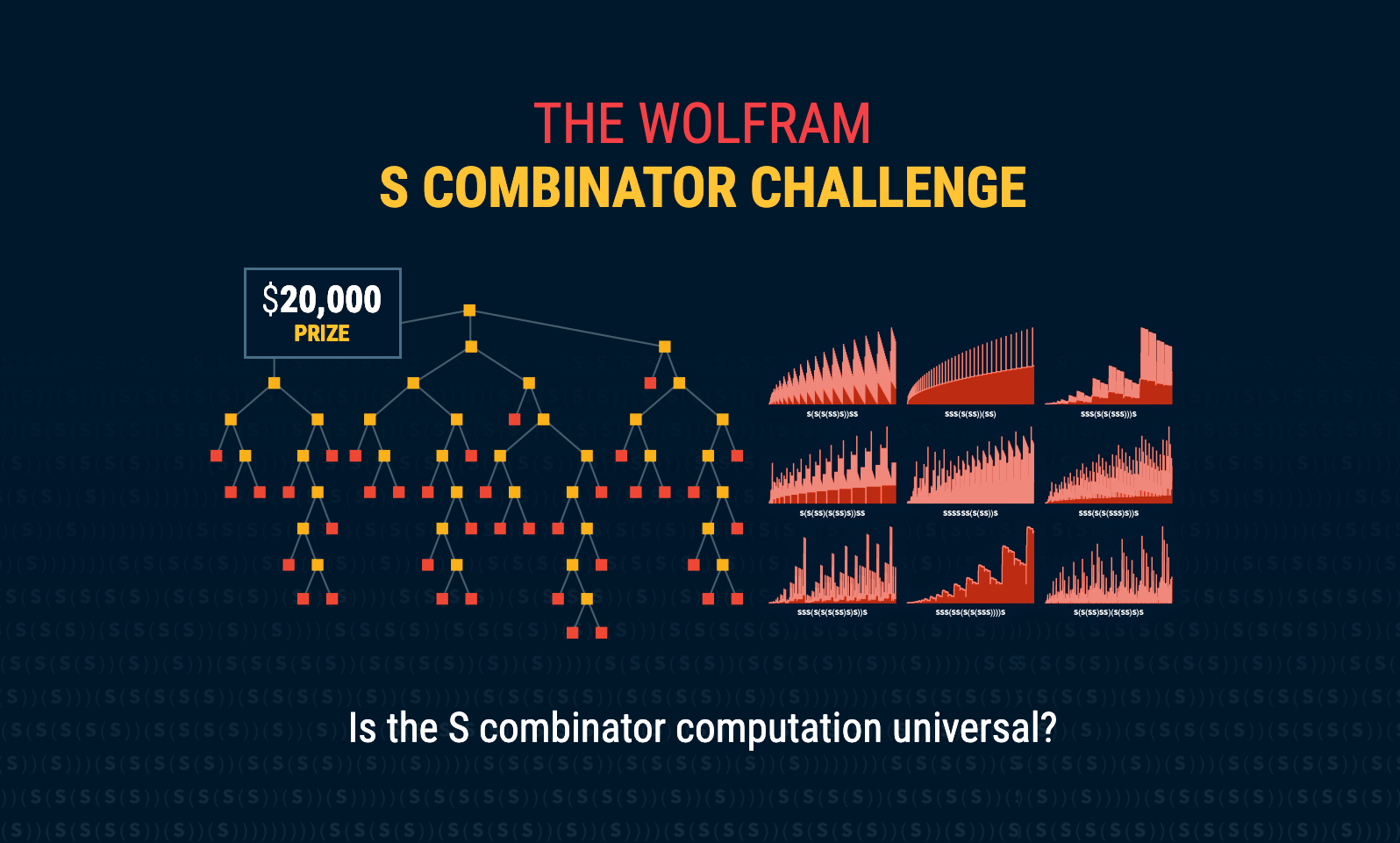
The Wolfram S Combinator Challenge
Wolfram is offering a total of $20,000 in prize money to determine if the S combinator is universal. Statement of problem to be solved, full guidelines, committee of judges and submission guidelines.

STAMINA Working Group
STAMINA Working Group - Social Tech And ModellIng for kNowledge & Action
Feedbackmaxxing
You know the TV gameshow Play Your Cards Right? Contestants are shown a sequence – in two rows – of giant playing cards presented face-down. The host turns over the first card. The cont…

Running ML models in a game (and in Wasm!)
Using Tract and Bevy, guess the number being drawn.
Quality Wednesdays: How we trained our team to see what doesn’t work - Linear
In early 2023 at an offsite in Tenerife, our European engineering team did a series of exercises that ended up changing the way we work.
The Task Space: An Integrative Framework for Team Research
Research on teams spans many contexts, but integrating knowledge from heterogeneous sources is challenging because studies typically examine different tasks that cannot be directly compared. Most investigations involve teams working on just one or a handful of tasks, and researchers lack principled ways to quantify how similar or different these tasks are from one another. We address this challenge by introducing the “Task Space,” a multidimensional space in which tasks—and the distances between them—can be represented formally, and use it to create a “Task Map” of 102 crowd-annotated tasks from the published experimental literature. We then demonstrate the Task Space’s utility by performing an integrative experiment that addresses a fundamental question in team research: when do interacting groups outperform individuals? Our experiment samples 20 diverse tasks from the Task Map at three complexity levels and recruits 1,231 participants to work either individually or in groups of three or six (180 experimental conditions). We find striking heterogeneity in group advantage, with groups performing anywhere from three times worse to 60% better than the best individual working alone, depending on the task context. Critically, the Task Space makes this heterogeneity predictable: it significantly outperforms traditional typologies in predicting group advantage on unseen tasks. Our models also reveal theoretically meaningful interactions between task features; for example, group advantage on creative tasks depends on whether the answers are objectively verifiable. We conclude by arguing that the Task Space enables researchers to integrate findings across different experiments, thereby building cumulative knowledge about team performance. This paper was accepted by Sameer Srivastava, organizations. Funding: The authors thank the Alfred P. Sloan Foundation [Grant #202-13924] and the MIT Wade Fund for their generous support of this research. Supplemental Material: The online appendix and data files are available at https://doi.org/10.1287/mnsc.2023.03544 .

nobody should type code by hand anymore. here's what's left.
Josh Wulf and I talked loop engineering for four episodes. The models stopped being the constraint a long time ago; what's left is vision, verification and agency. Delete your skill packs, put the whole system under test, and revisit everything that used to be hard.

4 - Kanjun Qiu - Foo Camp Lightning Talk_ AI\x27s Incentive Problem
AI’s Incentive Problem Kanjun Qiu CEO, Imbue June 27, 2026 1

Rules for the Millennium Prize Problems
The revised rules for the Millennium Prize Problems were adopted by the Board of Directors of the Clay Mathematics Institute on 26 September, 2018. Please read this document carefully before contacting CMI about a proposed solution. In particular, please note that:
Steelmanning: How to Find the Truth by Helping Your Opponent
Tackle the steelmanning challenge, a three-step method to win arguments by helping your opponent. Its only downside: Nobody will ever take it.

Inkling: Our open-weights model
Mira Murati's Thinking Machines Lab just released their first open-weights model. Inkling is "a Mixture-of-Experts transformer with 975B total parameters, 41B active" - an Apache-2.0 licensed multimodal model trained on …
> Making the models smarter doesn't solve the problem. It makes the problem harder to see. So many relatable sentences here.

Mary Berk
I found this article so, so helpful at explaining why slogging through is the best way to learn (and so much more): ergosphere.blog/posts/the-machines-are-fine/

