

True
True most commonly refers to truth, the state of being in congruence with fact or reality.
The social media context interferes with truth discernment
Simply considering whether to share news on social media reduces the extent to which people discriminate truth from falsehood.

A Bayesian Truth Serum for Subjective Data
Subjective judgments, an essential information source for science and policy, are problematic because there are no public criteria for assessing judgmental truthfulness. I present a scoring method for eliciting truthful subjective data in situations ...

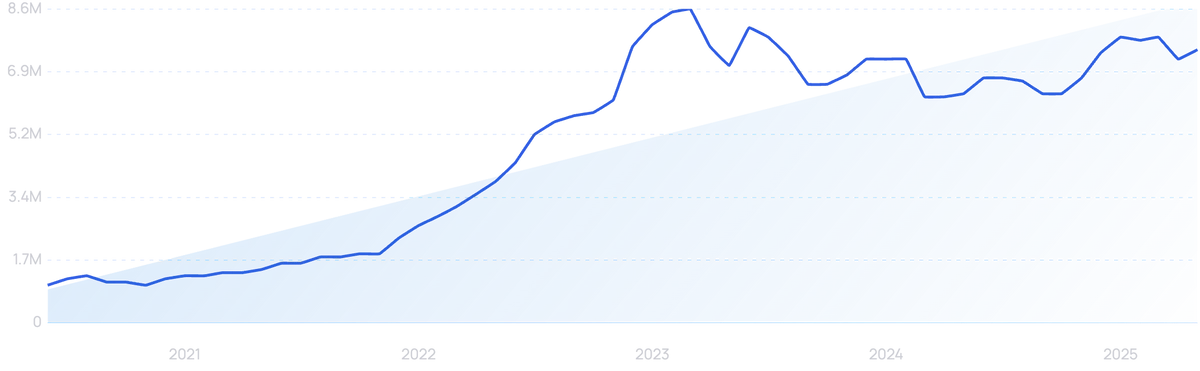
The AI Trust Gap: 82% Are Skeptical, Yet Only 8% Always Check Sources
Original Exploding Topics survey data explores public sentiment on AI Overviews and AI-generated content, highlighting trust, skepticism, and shifting content consumption habits.
Facts and Myths about Misperceptions
Misperceptions threaten to warp mass opinion and public policy on controversial issues in politics, science, and health. What explains the prevalence and persistence of these false and unsupported beliefs, which seem to be genuinely held by many people? Though limits on cognitive resources and attention play an important role, many of the most destructive misperceptions arise in domains where individuals have weak incentives to hold accurate beliefs and strong directional motivations to endorse beliefs that are consistent with a group identity such as partisanship. These tendencies are often exploited by elites who frequently create and amplify misperceptions to influence elections and public policy. Though evidence is lacking for claims of a “post-truth” era, changes in the speed with which false information travels and the extent to which it can find receptive audiences require new approaches to counter misinformation. Reducing the propagation and influence of false claims will require further efforts to inoculate people in advance of exposure (for example, media literacy), debunk false claims that are already salient or widespread (for example, fact-checking), reduce the prevalence of low-quality information (for example, changing social media algorithms), and discourage elites from promoting false information (for example, strengthening reputational sanctions).
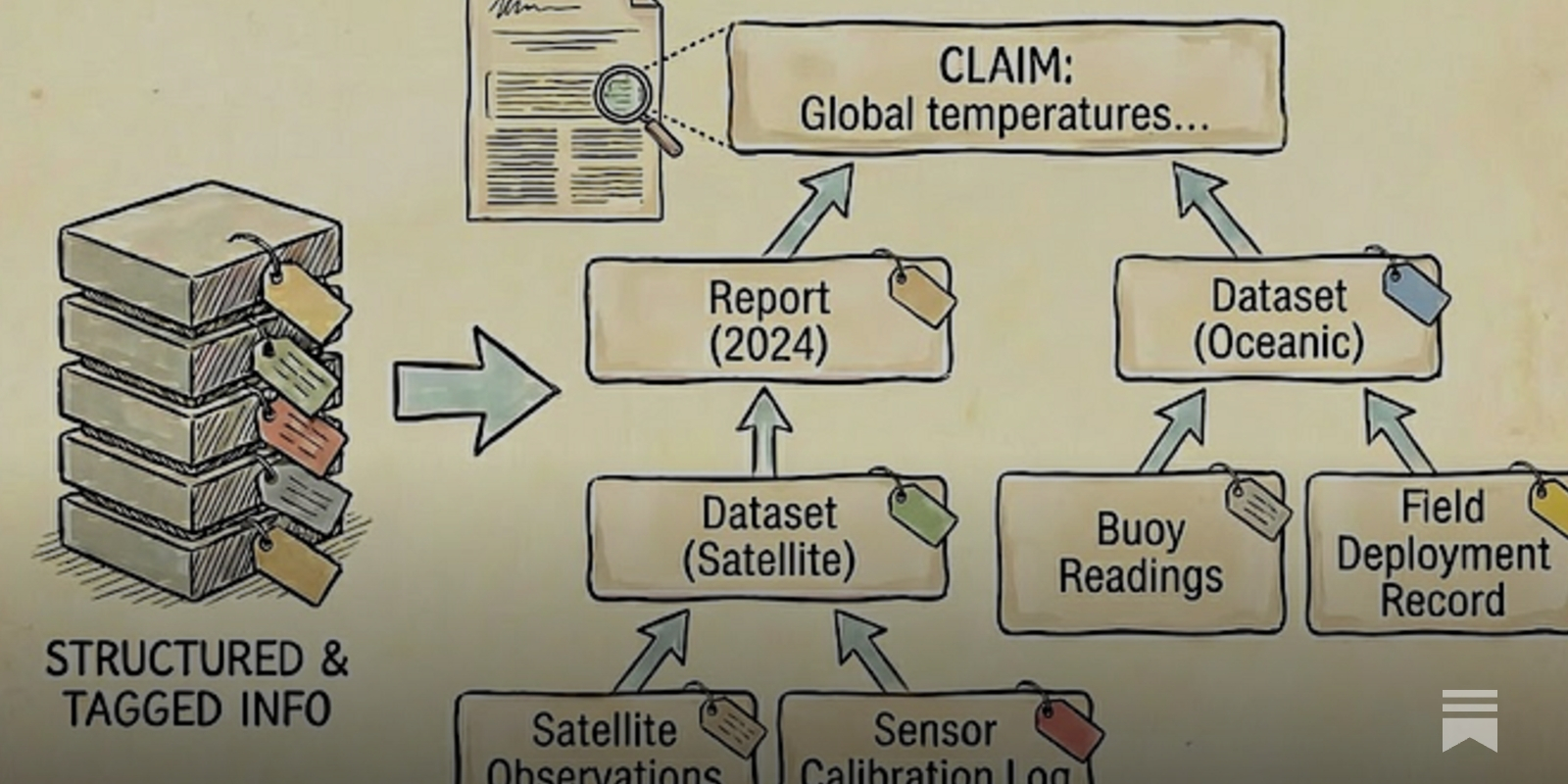
A Knowledge Commons for the 21st Century
Truth-seeking infrastructure at scale
AI chatbots are becoming experts at changing people's minds. What's their secret?
ChatGPT and other AIs use a flood of facts, and the occasional lie, to persuade humans

How Social Media Rewards Misinformation
A majority of false stories are spread by a small number of frequent users, suggests a new study co-authored by Yale SOM’s Gizem Ceylan. But they can be taught to change their ways.

Epistemic Infrastructure: Building Shared Truth in an Era of Disaggregation
The Construct of Collective Perception

Falsehoods programmers believe about email
In the spirit of falsehoods programmers believe about names and time, here’s some falsehoods about email which are all too common.

It's not much but at least we surpassed Truth Social here and I'm okay with that. #bluesky #socialMedia #us #usa #uspol #pew #research

Americans’ Social Media Use 2025
www.pewresearch.organd this is why Bluesky 💙

Goddess Delilah Dee
It will never NOT piss me off that vanillas and SWERFS can say whatever the hell they like about sex work and spread misinformation, but actual people who DO the work are shadowbanned to shit and have the looming threat of our accounts being taken away if we correct them.
The lie here is suggesting that "9% of @bsky.app users are active daily" is the same measurement as "9% of @wsocial.eu users have ever posted more than once". #Wsocial 's actual DAU is less than 1%. This is how propaganda works. Tell little lies often enough and eventually it sounds like truth.

Ingmar Rentzhog
Yes read the analysis. Not number of users but user activity. denys.dev/w-mythology-vol3/
"I can’t help but view Community and the State as two sides of the same coin: Apparitions of the mind construed in a desperate attempt to eliminate violence with the assumption that conflict can be controlled. -

♍ Bee 🐝

