

That's the meaning: You cannot just take tools whose purpose and politics is dominance and violence and "make them liberatory". This goes deeper than "just" embedded politics or lofty talks about ethics, it comes down to what kind of relations you believe do and should and must not define the world.
Mar 18, 2026 at 12:40 PM
Capitalism, Democracy, and Du Bois’s <em>Two</em> Proletariats
[epq-quote align="align-right"]"What can be more radical or liberating than freedom and justice for all?"[/epq-quote] As an ideal, liberal democracy has great appeal. What can be more radical or liberating than...
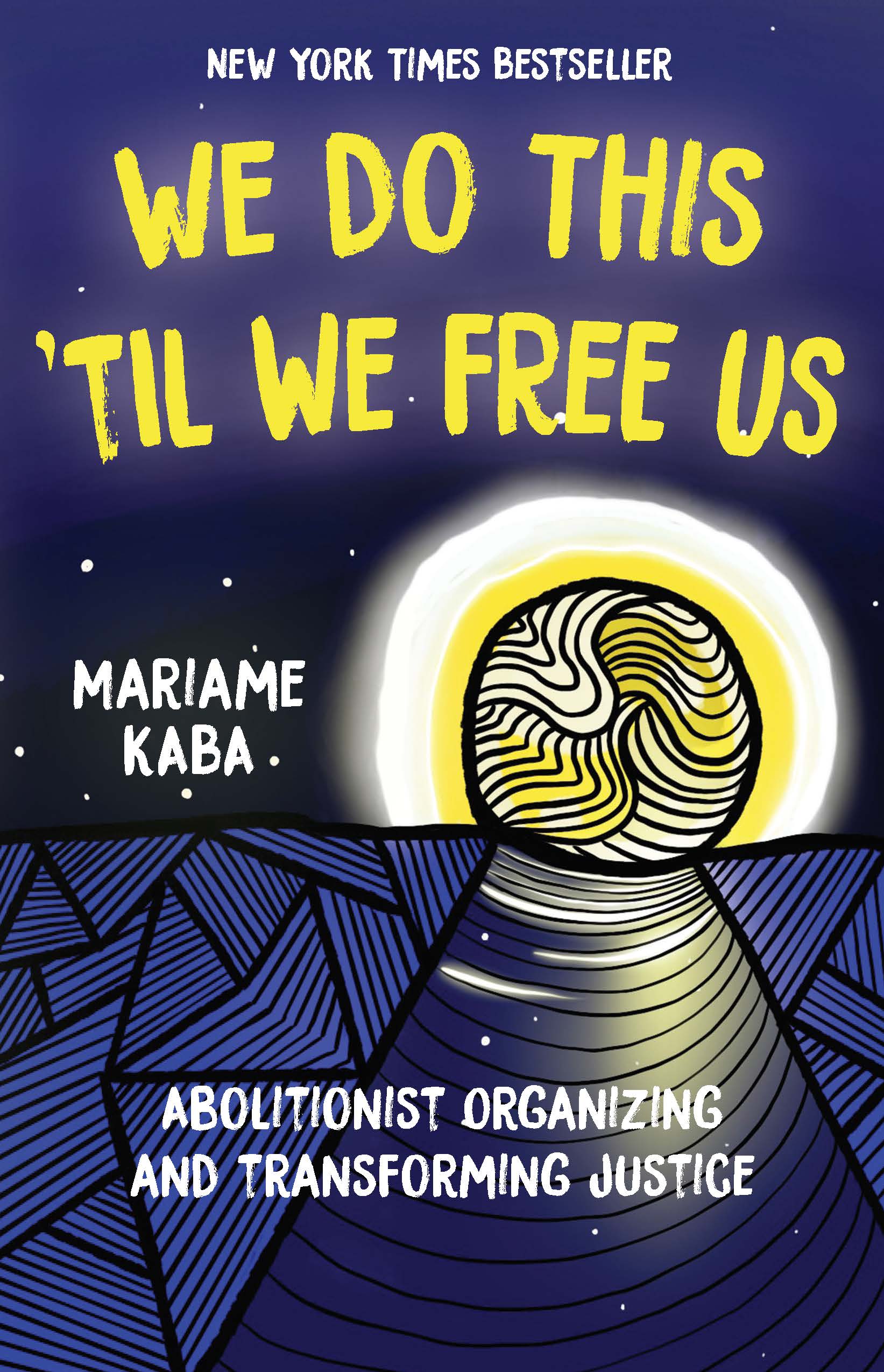
We Do This 'Til We Free Us
New York Times Bestseller “Organizing is both science and art. It is thinking through a vision, a strategy, and then figuring out who your targets are, always being concerned about power, always being concerned about how you’re going to actually build power in order to be able to push your issues, in order to be able to get the target to actually move in the way that you want to.” What if social transformation and liberation isn’t about waiting for someone else to come along and save us? What if ordinary people have the power to collectively free ourselves? In this timely collection of essays and interviews, Mariame Kaba reflects on the deep work of abolition and transformative political struggle. With a foreword by Naomi Murakawa and chapters on seeking justice beyond the punishment system, transforming how we deal with harm and accountability, and finding hope in collective struggle for abolition, Kaba’s work is deeply rooted in the relentless belief that we can fundamentally change the world. As Kaba writes, “Nothing that we do that is worthwhile is done alone.”
Sparks fly up
Once you’ve seized the tools of political life to build communal power, it’s hard to forget what a hammer feels like in your hand.

The Dispersion of Power: A Critical Realist Theory of Democracy
Abstract The Dispersion of Power is an urgent call to rethink centuries of conventional wisdom about what democracy is, why it matters, and how to make it better. Drawing from history, social science, psychology, and critical theory, it explains why elections do not and cannot realize the classic ideal of popular rule, and why prevailing strategies of democratic reform often make things worse. Instead, Bagg argues, we should see democracy as a way of protecting public power from capture—an alternative vision that is at once more realistic and more inspiring. Despite their many shortcomings, real-world elections do prevent the most extreme forms of tyranny, and are therefore indispensable. In dealing with the vast inequalities that remain, however, we cannot rely on standard solutions such as electoral reform, direct democracy, deliberation, and participatory governance. Instead, Bagg shows, protecting and enriching democracy requires addressing underlying inequalities of power directly. In part, this entails substantive policies attacking the advantages of wealthy elites. Even more crucially, deepening democracy requires the organization of oppositional, countervailing power among ordinary people. Neither task is easy, but historical precedents exist in both cases—and if democracy is to survive contemporary crises, leaders and citizens alike must find ways to revive and reinvent these essential democratic practices for the twenty-first century.

Liberation Toolbox by YK Hong
Liberatory Strategy + Tech Justice for our expansive world

Humanitarian Governance
This review examines humanitarian governance, defined as the increasingly organized and internationalized attempt to save the lives, enhance the welfare, and reduce the suffering of the world's most vulnerable populations. Political scientists and international relations scholars are only now beginning to explain this rapidly growing global governance of humanity, which is particularly evident in the developing literatures on humanitarian intervention, emergency relief, peacebuilding, and refugee protection. As they increasingly engage this relatively unexplored area of global life, political scientists are using the familiar analytics of the global governance literature to explain the origins, design, and effectiveness of this collective activity. This essay, though, interjects an alternative perspective, one that draws from critical theory, to widen the research agenda of the study of humanitarian governance. Specifically, the essay raises six central questions: What kind of world is being imagined and produced? What accounts for the tremendous growth of humanitarian governance over the last century? Who governs? How is humanitarian governance organized and accomplished? What are the principal techniques of control? By what authority do humanitarians govern and what do they do with that authority?

Democracy has Hamlet’s Problem: The Search for Relevance in a Complex World
To cope with the complexity of the world, cognitively limited agents must employ framing to identify what is relevant and stabilise meaning. Yet democracy rests on the Popperian fallibilist imperat...

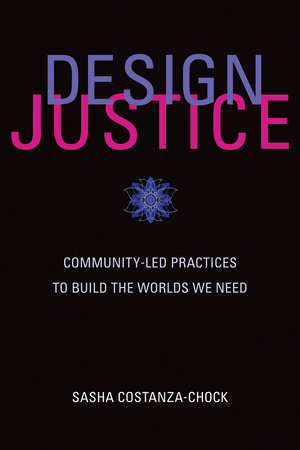
Design Justice: Community-Led Practices to Build the Worlds We Need
An exploration of how design might be led by marginalized communities, dismantle structural inequality, and advance collective liberation and ecological survival. What is the relationship between design, power, and social justice? “Design justice” is an approach to design that is led by marginalized communities and that aims expilcitly to challenge, rather than reproduce, structural inequalities. It has emerged from a growing community of designers in various fields who work closely with social movements and community-based organizations around the world. This book explores the theory and practice of design justice, demonstrates how universalist design principles and practices erase certain groups of people—specifically, those who are intersectionally disadvantaged or multiply burdened under the matrix of domination (white supremacist heteropatriarchy, ableism, capitalism, and settler colonialism)—and invites readers to “build a better world, a world where many worlds fit; linked worlds of collective liberation and ecological sustainability.” Along the way, the book documents a multitude of real-world community-led design practices, each grounded in a particular social movement. Design Justice goes beyond recent calls for design for good, user-centered design, and employment diversity in the technology and design professions; it connects design to larger struggles for collective liberation and ecological survival. The open access edition of this book was made possible by generous funding from Knowledge Unlatched and the MIT Press Frank Urbanowski Memorial Fund.
The Ecology of Freedom: The Emergence and Dissolution o…
"The very notion of the domination of nature by man ste…

The Inner Life of Liberalism - Aaron Ross Powell’s Blog
The practices that make your life better are the same ones that sustain a free society. It's time liberalism took that seriously.
When is Political Violence Justified
What the Liberal Tradition Says on the Subject

Freedom Now | Polity: Vol 52, No 3
Left-wing politics is resurgent. Self-proclaimed socialists are unexpectedly popular. Proposals like universal health care are a commonplace of Democratic campaigns. But there is not yet a clear, unifying idea behind this political shift. We propose that that idea is freedom. While the left once understood freedom as emancipation from the economy, the right spent the twentieth century neutralizing and appropriating the idea of freedom by reinventing the economy as the true site of freedom. To reclaim freedom as a value of the left, we have to begin with the daily experience of most people: the unfreedom of the workplace. The authoritarian organization of work is not just an offense against freedom; it also helps us understand how freedom requires emancipation both from the economy and within the economy, and why that emancipation requires mass struggle.

Further Back to the Future: Neo-Royalism, the Trump Administration, and the Emerging International System
With the Liberal International Order (LIO) in decline, scholars have focused increasingly on the possible return to a Westphalian great power system marked by sovereigntist claims and balancing among states. The actions of the Trump administration, however, raise a number of significant puzzles for such accounts—the US seems willing to sign deals with traditional adversaries including Russia and China, while targeting long-standing allies like Canada and Denmark. At the same time, transactional politics often serve narrow personalist interests rather than national objectives. In short, a Westphalian lens focused on states and sovereignty may generate intellectual blinders that misreads the emerging international order. To overcome these limitations, we propose an alternative account, which we label neo-royalism. The neo-royalist order centers on an international system structured by a small group of hyper elites, which we term cliques. Such cliques seek to legitimize their authority through appeals to their exceptionalism in order to generate durable material and status hierarchies based on the extraction of financial and cultural tributes. This short paper lays out the key elements of the neo-royalist order, differentiating it from the Westphalian and Liberal International Orders, and applies its insights to better grapple with the emerging system being promoted by the United States under Donald J. Trump. For policymakers and scholars, the neo-royalist approach clarifies recent events in US foreign policy. Theoretically, the field should take contending ideas of international order seriously, and establish a research agenda beyond a backward looking view to the Westphalian moment.
Radical Interoperability is a Political Agenda
Model the world you want to live in.
Democracy is an epistemic discipline, it only works if truth can constrain power. Without a faster, more transparent architecture for shared reality, the arc of democracy bends away from substance, through simulation, and toward authoritarianism. Without major action, it's the inevitable end state.


