

I’m collecting visions of the university at least ten years out (i.e, stories about equilibrium conditions, not short term fixes). What interests me is that the ones I’ve seen so far are compatible. Molly Worthen’s proposal for a technology fast has a radical title, but when you dig deeper +

Opinion | Why Universities Should Be More Like Monasteries (Published 2023)
www.nytimes.comJun 19, 2026 at 2:48 PM
Alternative Universities: Speculative Design for Innovation in Higher Education
Imagining the universities of the future.How can we re-envision the university? Too many examples of what passes for educational innovation today—MOOCs especially—focus on transactions, on questions of delivery. In Alternative Universities, David J. Staley argues that modern universities suffer from a poverty of imagination about how to reinvent themselves. Anyone seeking innovation in higher education today should concentrate instead, he says, on the kind of transformational experience universities enact. In this exercise in speculative design, Staley proposes ten models of innovation in higher education that expand our ideas of the structure and scope of the university, suggesting possibilities for what its future might look like. What if the university were designed around a curriculum of seven broad cognitive skills or as a series of global gap year experiences? What if, as a condition of matriculation, students had to major in three disparate subjects? What if the university placed the pursuit of play well above the acquisition and production of knowledge? By asking bold "What if?" questions, Staley assumes that the university is always in a state of becoming and that there is not one "idea of the university" to which all institutions must aspire. This book specifically addresses those engaged in university strategy—university presidents, faculty, policy experts, legislators, foundations, and entrepreneurs—those involved in what Simon Marginson calls "university making." Pairing a critique tempered to our current moment with an explanation of how change and disruption might contribute to a new "golden age" for higher education, Alternative Universities is an audacious and essential read.

Nicky Case: The Attractors Behind Disasters
What’s the best technology that doesn’t exist yet?
We analyzed 100+ conversations and essays on positive futures to find out
Ali Alkhatib: On techno-optimism
I’ve got a longer draft in the works, but I don’t think that’s going to become a blog post, so I figure it might be useful to publish something here and solicit feedback, or just plant a flag in the ground that this was a thing I did. Last week Several weeks ago I gave a talk at Wayne State University titled “the uncanny pessimism of techno-optimism”. In this post I’m going to breeze through some of the stuff I talked about and give a sense of what’ll be coming. Eventually.
How to Do Ambitious Research in the Modern Era
Innovative Time Strategies for Schools | Unlocking Time
Explore free resources about innovative time strategies to fuel student-centered learning in schools -- includes tools, case studies and opportunities to dig deeper.

other futures: tech, resistance & imagining otherwise
big tech wants to control our future, but there are other paths we can choose instead. on "other futures" we bring together leading tech researchers, organizers, critics, and storytellers to help us imagine what more liberatory and human-centered tech futures could look like—and how we can build them together. brought to you by DAIR and the All Tomorrows Institute.
PhD/papers/Network Relativity/Network Relativity Theory.md at main · leo-guinan/PhD
Open notebook for my research in memetic economics - leo-guinan/PhD

Open source beyond the market
Keynote on the topic of open source, markets, debts, purpose, and no less than the meaning of life. Delivered at RailsConf 2019. Also available as a long read below.

Homepage
Foresight Institute supports ambitious, interdisciplinary science through grants, prizes, fellowships, and events.

Technological Metamodernism (Sep 2024)
Technological Metamodernism A four-week course with Stephen Reid and special guests Telegram group: https://t.me/+4CC9lfZMBN04ZTdk Substack post announcing the open-sourcing of the notes: https://stephenreid.substack.com/p/technological-metamodernism-course This work is licensed under Cre...

Technology without Industry
A home for poorly researched ideas that I find myself repeating a lot anyway
A People’s History of Tech
A collective storytelling project to build a more representative history that reflects the human impacts of technology.

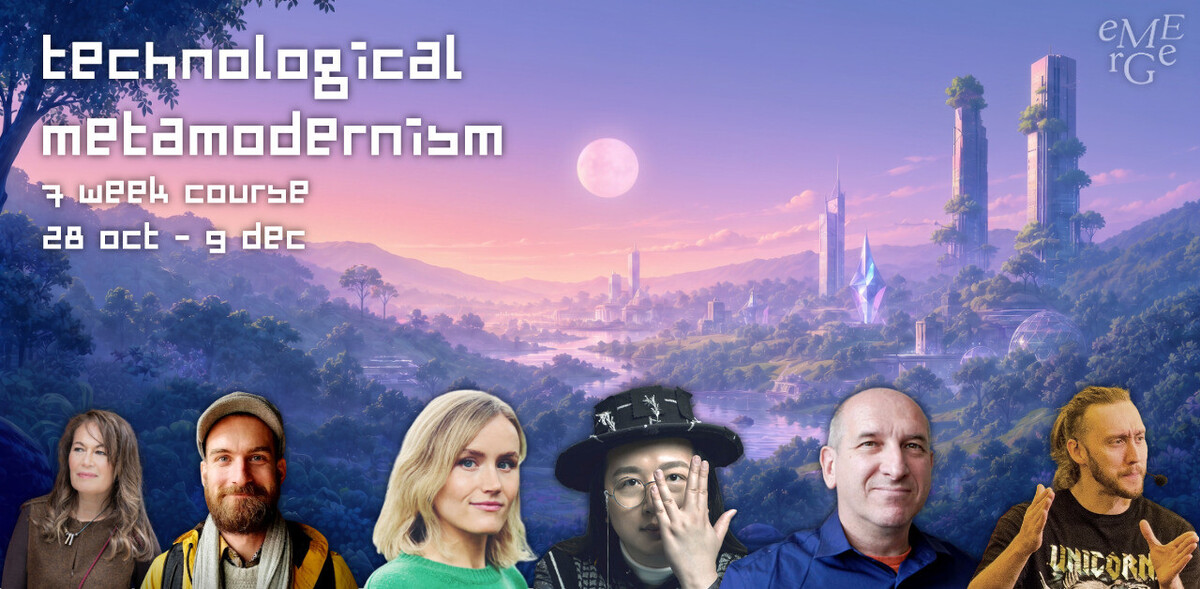
Technological Metamodernism: A seven-week course
Wed 28th Oct 2026, 1pm – Wed 9th Dec 2026, 2pm EDT (UTC -04:00)
1/ Lots of thoughts about the new White House science and tech policy report, meanwhile just a few quick notes (I only skimmed it so far but plan to read through it)

Science: A New Golden Age
www.whitehouse.gov
