

Thoughtful and relevant outside math. A partial summary: Gowers thinks it’s important to sustain a human mathematical culture, but is unconvinced by the Leiden Declaration’s attempt to do that by reaffirming human ownership of specific *discoveries*.

tachikoma
an interesting blog post by Timothy Gowers on the Leiden declaration (on AI and Math), on why he didn't sign. it gets to a subtler aspect of control over AI and our future.
Jul 27, 2026 at 2:14 AM
Thoughts about the Leiden Declaration
Last September I went to a workshop at the Lorentz Centre in Leiden to discuss mathematics and AI with historians, philosophers, computer scientists, AI researchers, and mathematicians of several d…

Leiden Declaration on Artificial Intelligence and Mathematics
This declaration calls for action to address the challenges posed by the use of artificial intelligence within mathematics research.
Leiden Declaration on Artificial Intelligence and Mathematics
This declaration calls for action to address the challenges posed by the use of artificial intelligence within mathematics research.
Leiden Declaration on Artificial Intelligence and Mathematics
This declaration calls for action to address the challenges posed by the use of artificial intelligence within mathematics research.
Leiden Declaration on Artificial Intelligence and Mathematics
This declaration calls for action to address the challenges posed by the use of artificial intelligence within mathematics research.
The End of Mathematics — Daniel Litt
I'm currently returning to Toronto from a summit on the future of mathematics, at OpenAI. Sebastian Bubeck asked me to talk a bit about the future we'd all like to avoid, where humans are mathematically disempowered. Jacob Tsimerman advised us to try to prioritize detail over correctness, and I have no doubt that I succeeded in deprioritizing correctness.

Kill Math
The power to understand and predict the quantities of the world should not be restricted to those with a freakish knack for manipulating abstract symbols.
The Technological Turn in Mathematics
Quickly evolving technologies, such as Interactive Theorem Provers (ITPs), Automated Theorem Provers (ATPs), and Large Language Models (LLMs), all falling under the general heading 'AI for mathematics,' are transforming mathematical practice in profound ways. This chapter explores the implications of these innovations, focusing on their impact on how mathematical knowledge is created and shared. It also discusses how they are reshaping the social dimension of mathematics, altering collaboration dynamics, trust relationships, and the collective production of knowledge. For instance, tools like ITPs facilitate large-scale collaborations and make new types of teamwork possible, where trust is not a necessary ingredient. ITPs also help us mitigate our human fallibility, yet they raise questions about the nature of formalization and the relationship between traditional and formal mathematics. Technologies such as LLMs are reshaping the division of epistemic labour between humans and machines and urge philosophers of mathematics to ask questions about the value of their work.

Mathematical Thinking Isn’t What You Think It Is | Quanta Magazine
The mathematician David Bessis claims that everyone is capable of, and can benefit greatly from, mathematical thinking.
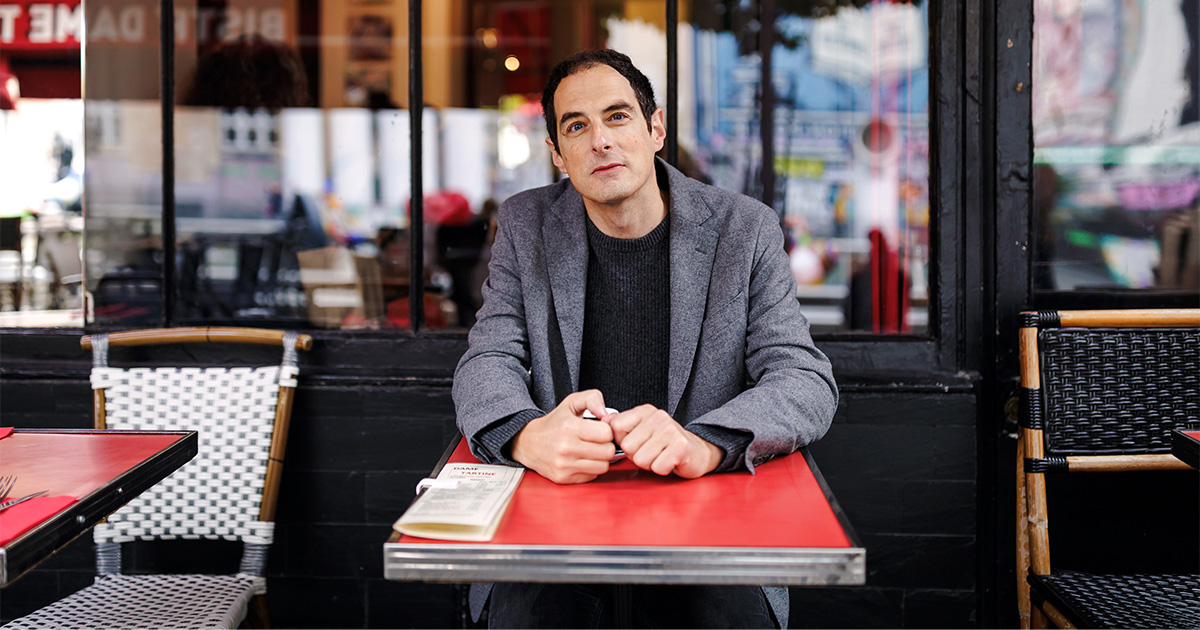
Applied Pure Mathematics
Some thoughts about mathematics as a cultural and social technology.


Mathematics in the age of AI
An essay, based on a public lecture delivered at the 2026 International Congress of Mathematicians, on how the mathematical community might respond to the arrival of artificial intelligence tools that are capable of performing research-level mathematical tasks. Rather than debating the capabilities of such tools, we condition on the hypothesis that these capabilities will arrive, and examine instead a question that is orthogonal to it: what the goals and values of mathematical research actually are. The problem-solving component of mathematics is used as a case study.
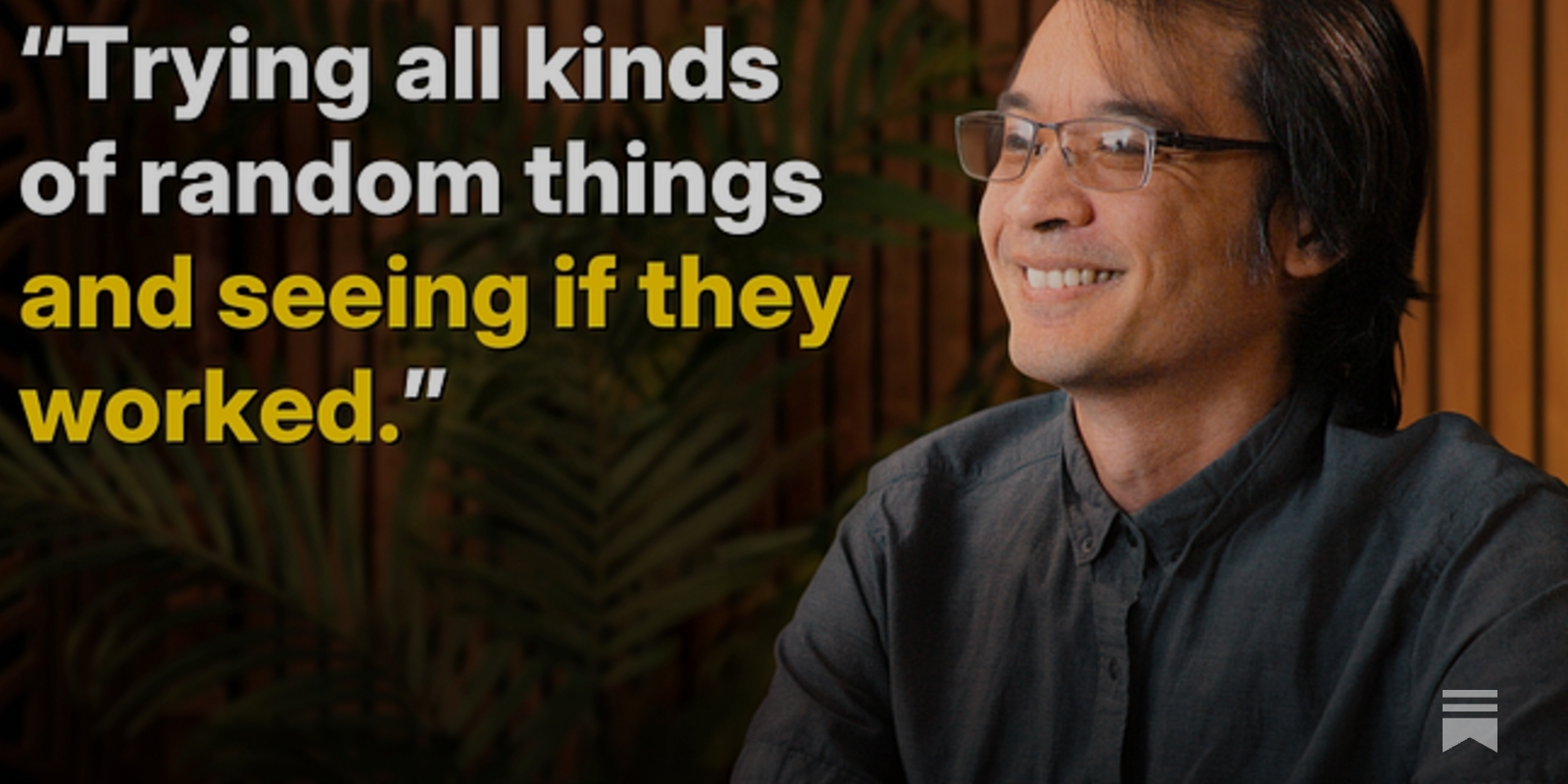
Terence Tao – Kepler, Newton, and the true nature of mathematical discovery
“And what those stories teach us about how AI will revolutionize math”
Bartosz Naskręcki on Twitter / X
Congrats to @LechMazur for the solution and to Terence Tao for the digestion and storytelling. You see the trend. Mathematicians are still needed if we want to make any sense of the formal proofs. For now... Maybe the next gen LLMs will simply read allthe blogs of Terry and… https://t.co/yXiISCrNAF— Bartosz Naskręcki (@nasqret) August 13, 2026
zach lieberman on Twitter / X
Today I was able to weave a line from Myron Krueger in a talk I gave : Computation is the medium of our lifetimes - it’s not just a technical medium but a cultural medium as well. We should explore the culture of computation.— zach lieberman (@zachlieberman) April 10, 2024
