

Imagine community attestation for (scientific) achievements. Labeling that. Which brings me back to the question whether #ATScience should replicate trad. reputation? I really don't know!
Aug 24, 2026 at 9:27 PM
The Problem With Promoting ‘Gold Standard Science’
Opinion | Branding scientific research with a simplified label risks misleading the public and harming scientific literacy.
Breadcrumbs: physical attestations for ecosystem contributions
Hey atmospheric friends, over the weekend I started experimenting with physical attestations, as part of my exploration of an ATScience community labeller. breadcrumbs: physical objects — NFC tags, printed QR codes — that let someone attest to their own participation in something, or let an authority attest that someone did something specific. Two record types separate self-attested contributions (crumbs) from community-authored ones (badges). Lexicons: - `id.breadcrumbs.trail` — self-minted...
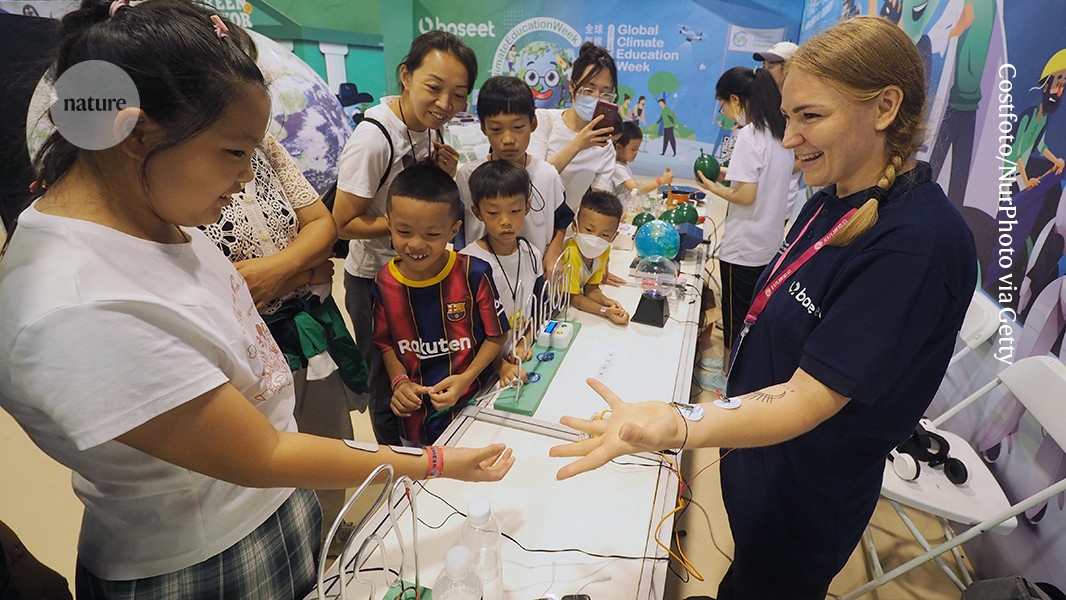
Why we don’t really know what the public thinks about science
Measuring trust isn’t enough. Furthering knowledge about the institutions and norms of science is the best way to build credibility.
ATScience 2026 Agenda - ATScience Notes
Join us for a full-day of scientific explorations on the AT Protocol
ATScience Ecosystem Map
An interactive map of research applications, infrastructure and communities built on AT Protocol.
Guest Post — Restoring Trust in Science: What Would Make a Difference? - The Scholarly Kitchen
Today's guest post asserts that trust won’t be restored by "better messaging" alone, but via better incentives, more disciplined public communication, and really listening to the people who have walked away from us.
ReScience organization
Reproducible Science is good. Replicated Science is better. - ReScience organization

San Francisco Declaration on Research Assessment
The San Francisco Declaration on Research Assessment (DORA) is a statement that denounces the practice of correlating the journal impact factor to the merits of a specific scientist's contributions. Also according to this statement, this practice creates biases and inaccuracies when appraising scientific research. It also states that the impact factor is not to be used as a substitute "measure of the quality of individual research articles, or in hiring, promotion, or funding decisions".

Half of social-science studies fail replication test in years-long project
Results from massive, ‘eagerly awaited’ initiative reinforce concerns about the credibility of science — but raise hope for solutions.

Hypercerts — Collective Intelligence for Funding Impact
Hypercerts create shared context—evidence, expert input, and community trust—for better resource allocation.
Where Should Science Go Next
Where Should Science Go Next? Prashant Garg, April 2026 Every researcher has to choose what to work on next. Science has formal procedures for judging answers, but no comparable procedure for comparing questions. Einstein said in 1918 at Max Planck's sixtieth birthday: "There is no logical path t...

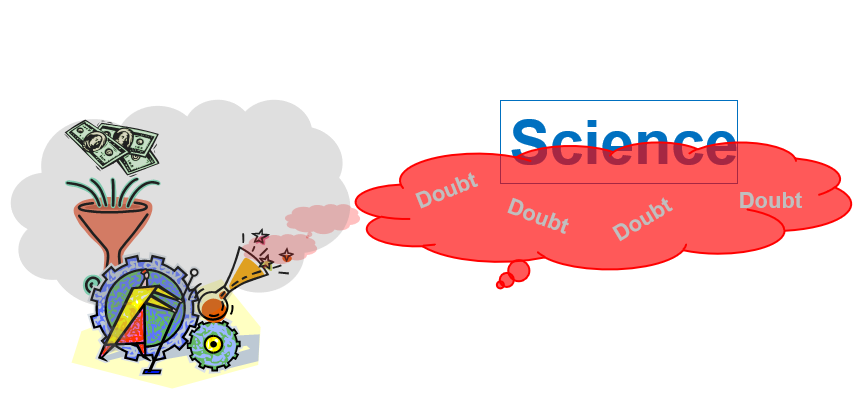
Dark-Moneyed Denialists Are Running 'Fixing Science' Symposium of Doubt
The “Fixing Science” symposium, which is hosted by the National Association of Scholars and kicks off today in Oakland, California, includes credible speakers who want to improve some areas of science hurt by the use of poor statistical methods or making irreproducible claims. Unfortunately, they are outnumbered by people who have often cast doubt on mainstream climate, environmental, and health sciences. For […]
Shareouts from ATScience 2026 in Vancouver - ATScience Notes
Since when do science conferences have such wild energy?
"experiments to be in the realm of search and discovery, enabling curation, trust signals, and other approaches that build on the modular elements of science" #modularscience #atscience Congrats to the whole @openrxiv.bsky.social team!! So exciting.

openRxiv
Introducing openRxiv Labs! 🔬 Growing from the strong foundation of bioRxiv & medRxiv, Labs is an experimental space for working with collaborators to push the boundaries of open scientific communication. 👉 Check it out and learn more: openrxiv.org/openrxiv-labs-launch/ #OpenScience #Preprints #Scicomm
I think #ATScience should subsume those old, storied, and respected(?) reputation systems. What value they provide can be a great starting point for something far greater.


