

Who and What comprise AI Skepticism?
An attempt to do justice to a diverse community

Pluralistic: Conspiratorialism as a material phenomenon (29 Oct 2024) – Pluralistic: Daily links from Cory Doctorow
I think it behooves us to be a little skeptical of stories about AI driving people to believe wrong things and commit ugly actions. Not that I like the AI slop that is filling up our social media, but when we look at the ways that AI is harming us, slop is pretty low on the list.
Trump and Musk's history obsession
The frenemies' strange obsession with historical "accuracy" has disturbing connections to big AI

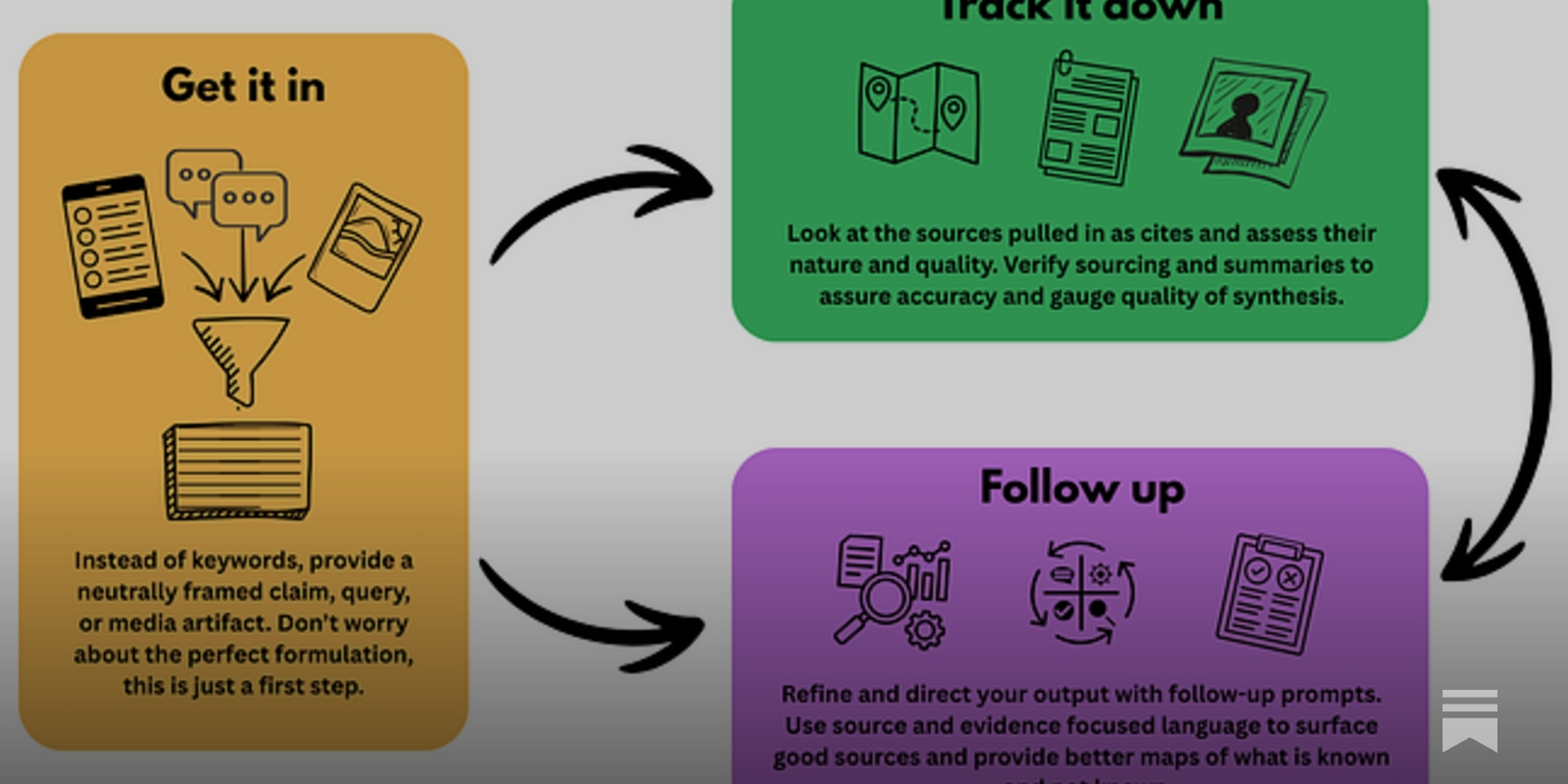
We're not taking the fact-checking powers of AI seriously enough. It's past time to start.
Some notes on the Nobel Prize hallucination that wasn't
The Sinister Valley: The dangerous deception behind the AI revolution
Behind the hype surrounding artificial intelligence lies a corporate agenda of exploitation, environmental destruction and evasion of accountability.

Deepfakes, Elections, and Shrinking the Liar’s Dividend
Heightened public awareness of the power of generative AI could give politicians an incentive to lie about the authenticity of real content.
"AI" is Automated Inequality
Tech bros still dominate the discussions about so-called "AI" with false claims. Even most "AI"-critical researchers spend much of their time meticulously debunking (always only a subset of) claims, leaving vast areas of the economic consequences of "AI" unexplored. (Even the "AI"-evangelist Economi

Facts and Myths about Misperceptions
Misperceptions threaten to warp mass opinion and public policy on controversial issues in politics, science, and health. What explains the prevalence and persistence of these false and unsupported beliefs, which seem to be genuinely held by many people? Though limits on cognitive resources and attention play an important role, many of the most destructive misperceptions arise in domains where individuals have weak incentives to hold accurate beliefs and strong directional motivations to endorse beliefs that are consistent with a group identity such as partisanship. These tendencies are often exploited by elites who frequently create and amplify misperceptions to influence elections and public policy. Though evidence is lacking for claims of a “post-truth” era, changes in the speed with which false information travels and the extent to which it can find receptive audiences require new approaches to counter misinformation. Reducing the propagation and influence of false claims will require further efforts to inoculate people in advance of exposure (for example, media literacy), debunk false claims that are already salient or widespread (for example, fact-checking), reduce the prevalence of low-quality information (for example, changing social media algorithms), and discourage elites from promoting false information (for example, strengthening reputational sanctions).

3: Consulting the Record: AI Consistently Fails the Public - AI Now Institute
Amid the excitement over AI’s (speculative, hypothetical) potential, we have lost sight of the sobering reality of its present and recent past. AI is already intermediating critical social infrastructures, materially reshaping our institutions in ways that ratchet up inequality and concentrate power in the hands of the already powerful. It is consistently deployed in ways […]
Your Favorite Science YouTubers Are Wrong About AI, (e.g. SciShow, Kurzgesagt, and Kyle Hill )
Human perspectives on AI · Global Voices
This GV Spotlight edition will explore how the use of, promotion of, and resistance to artificial intelligence is playing out for the Global Majority.

Google research shows the fast rise of AI-generated misinformation | CBC News
From fake images of war to celebrity hoaxes, AI technology has spawned new forms of reality-warping misinformation online. New analysis co-authored by Google researchers shows just how quickly the problem has grown.

AI-based disinformation is probably not a major threat to democracy
Alarmism surrounding this topic is driven by popular but mistaken views about psychology, democracies, and disinformation.

AI Epistemic Risks: Emerging Mechanisms & Evidence
<p>Advances in artificial intelligence pose risks to humanity's collective capacity to form accurate beliefs, reason well, and maintain a healthy information en

Building Political Superintelligence
Amidst fears of dystopia, a blueprint for how we use AI to reinvent the way we govern ourselves

It's the “1998” of the AI Revolution. So Why Can I Safely Ignore It?
Researchers, please get in touch with me. I can be part of your control group.

