Agent teams perform better when they communicate This paper shows that giving each agent a sendMessage tool allows even weak agents to perform significantly better than running the same LLM K times in isolation A punch to the gut for GPT-Pro, DeepThink, etc models arxiv.org/pdf/2609.21032
Sep 22, 2026 at 12:36 AM
Scaling Discovery through Test-Time Communication
Science advances not in isolation but through collaboration, yet existing agentic systems capture little of this. Whether communicating agents help remains an open question with mixed prior results. We show that test-time communication can substantially outperform independent parallel attempts on challenging tasks, where sharing a breakthrough can push the whole group forward. We first study the effect of scaling multi-agent test-time communication, where agents have no predefined roles and communicate via a shared directory, on ARC-AGI-3, a benchmark requiring novel problem solving. We find that a team of $k$ communicating agents, team@$k$, matches the success rate of $4k$ independent agents, and this advantage grows with $k$, suggesting gains compound with scale. The effect is not merely efficiency: a task that no single agent can solve, a team of agents can solve reliably. Furthermore, these gains transfer to research-oriented tasks, given sufficient compute. On polyomino packing, communicating agents outperform best@$k$ and exceed the prior best-known score. On MNIST classifier compression, communication surpasses the best-known human solution. A team of four agents produced a 1,957-byte classifier submission achieving 99.4% test accuracy, smaller than both the best-known human solution and the best single-agent result. These gains are not unconditional. Independent agents may outperform communication when compute is limited or when a clear measure of progress is absent. However, under sufficient compute and clear feedback, multi-agent communication consistently yields stronger results.

Philipp Schmid on Twitter / X
Should we build the web for agents, not agents for the web? 🤔 A new paper argues that current research is misguidedly focuses on improving LLMs leading to significant problems with efficiency, reliability, and safety, proposing a new "Agentic Web Interface" (AWI) that sits on… pic.twitter.com/I90k6kdYdk— Philipp Schmid (@_philschmid) June 14, 2025

AI Agents: Key Concepts and How They Overcome LLM Limitations
An AI agent is an autonomous software entity that is often used to augment a large language model. Here's what developers need to know.

Collaborative AI Engineering: One Dev, Two Dozen Agents, Zero Alignment — Maggie Appleton, GitHub
Agentic test processes, LLM benchmarks, and other notes on agentic coding from Galapagos Island
I've been using AI fairly heavily since last November and the whole thing is a funny experience. An agent will do something that, if a human did it, you'd immediately fire them. My reaction, of course, is to act as if this is great and spin up a thousand agents so they can do even more of that.
🚨 AI News | TestingCatalog on Twitter / X
OPENAI 🚨: Early look at an upcoming Agent Studio for building and hosting configurable, always-on 24/7 agents on ChatGPT. The "Hermes" feature is tightly coupled with the existing Workflows builder on the OpenAI Platform, and you will also be able to open your Agents in the… https://t.co/7U4m2vNS3z pic.twitter.com/tfPIGdXRAs— 🚨 AI News | TestingCatalog (@testingcatalog) April 21, 2026

Can agentic coding raise the quality bar?
Five examples of using agentic coding to improve software quality, instead of delivery throughput.
Optimizing Agentic Workflows using Meta-tools
Agentic AI enables LLM to dynamically reason, plan, and interact with tools to solve complex tasks. However, agentic workflows often require many iterative reasoning steps and tool invocations,...
LangChain on Twitter / X
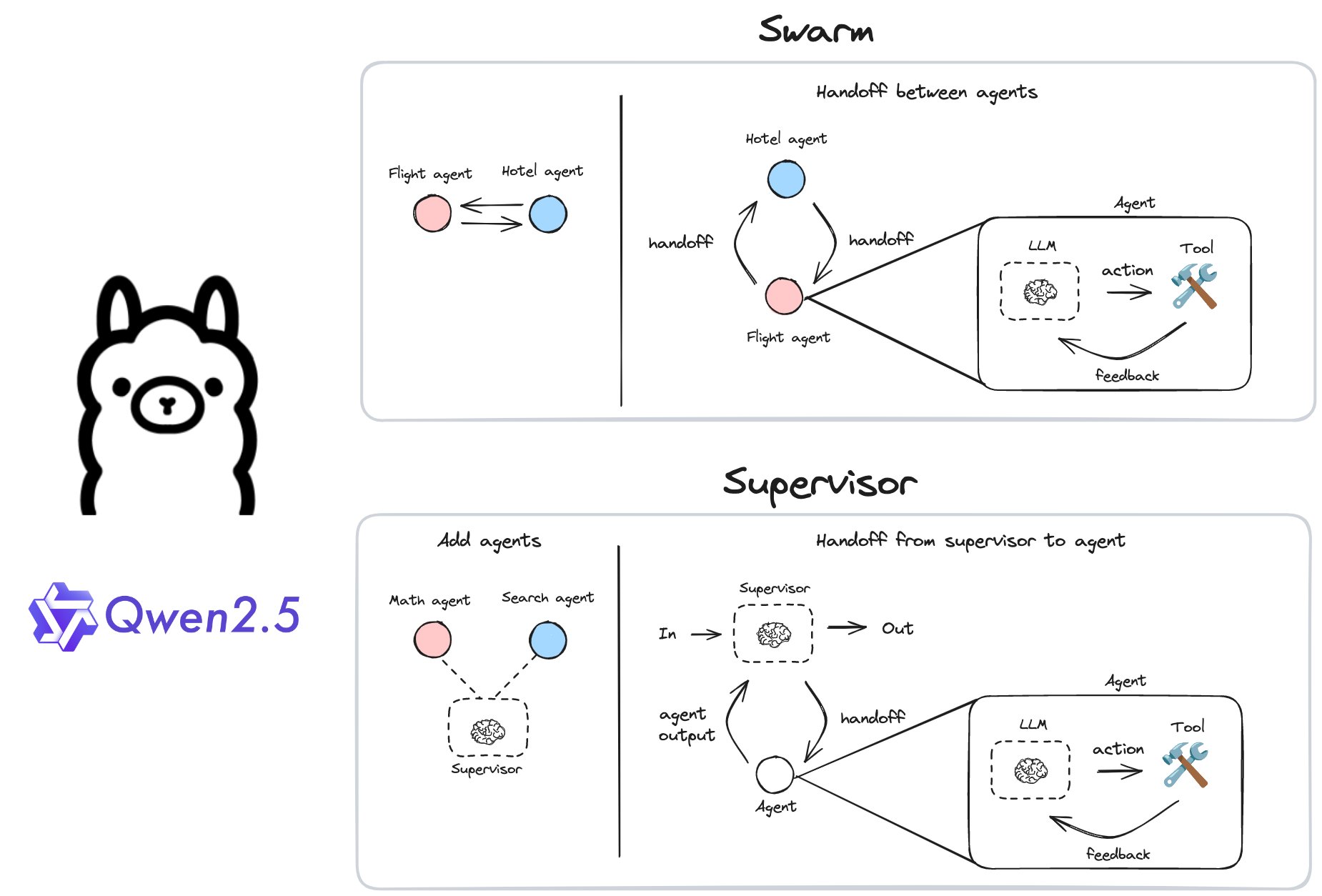
Fully local multi-agent systems with LangGraphWith the release of OpenAI agent SDK, there's high interest in multi-agent systems.We review Swarm and Supervisor based multi-agent systems and run both locally w/ @ollama + LangGraph.📽️:https://t.co/xoUlPob4xL pic.twitter.com/arrmeHu1Hm— LangChain (@LangChain) March 15, 2025
How to Train Your Agent: Building Reliable Agents with RL — Kyle Corbitt, OpenPipe
Small Language Models are the Future of Agentic AI
Large language models (LLMs) are often praised for exhibiting near-human performance on a wide range of tasks and valued for their ability to hold a general conversation. The rise of agentic AI systems is, however, ushering in a mass of applications in which language models perform a small number of specialized tasks repetitively and with little variation. Here we lay out the position that small language models (SLMs) are sufficiently powerful, inherently more suitable, and necessarily more economical for many invocations in agentic systems, and are therefore the future of agentic AI. Our argumentation is grounded in the current level of capabilities exhibited by SLMs, the common architectures of agentic systems, and the economy of LM deployment. We further argue that in situations where general-purpose conversational abilities are essential, heterogeneous agentic systems (i.e., agents invoking multiple different models) are the natural choice. We discuss the potential barriers for the adoption of SLMs in agentic systems and outline a general LLM-to-SLM agent conversion algorithm. Our position, formulated as a value statement, highlights the significance of the operational and economic impact even a partial shift from LLMs to SLMs is to have on the AI agent industry. We aim to stimulate the discussion on the effective use of AI resources and hope to advance the efforts to lower the costs of AI of the present day. Calling for both contributions to and critique of our position, we commit to publishing all such correspondence at https://research.nvidia.com/labs/lpr/slm-agents.
Mesh-LLM/mesh-llm
Distributed AI/LLM for the people. Share compute privately or publicly to power your agents and chat.
Agent Coordination on ATProto
How agents can coordinate tasks, share work, and communicate using the AT Protocol
Multi Model Training for Multi Agent Communication Skills
Agent Skills
AI coding agents take the shortest path to done, which usually means skipping the specs, tests, and reviews that make software reliable at scale. Agent Skill...