

Cognitive Load | Laws of UX
The amount of mental resources needed to understand and interact with an interface.

Cognitive Surrender
Cognitive offloading is delegating to the AI and still owning the answer. Cognitive surrender is when the AI's output quietly becomes your output and there i...
Some concerns from a researcher in this space · Issue #22 · zakirullin/cognitive-load
Hi, I do research about the cognitive factors of programming. I just completed my Ph.D. at Stanford involving studies of cognitive load in program comprehension, as detailed here: https://arxiv.org...
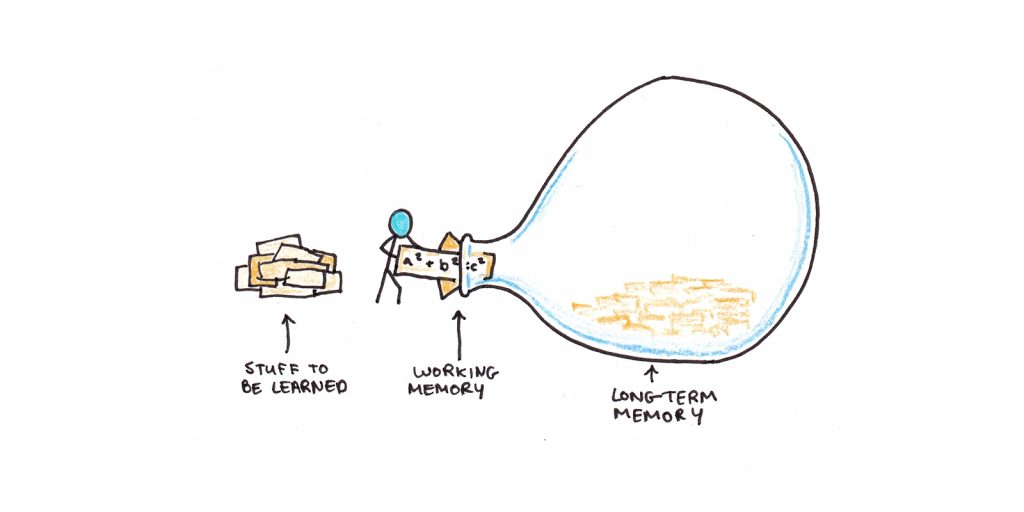
Cognitive Load Theory and its Applications for Learning - Scott H Young
What makes learning hard? How can we make it easier? Cognitive load theory explains how we learn and how to do it better.
Cognitive load is what matters
There are so many buzzwords and best practices out there, but let's focus on something more fundamental. What matters is the amount of confusion developers feel when going through the code.

Cognitive Offloading
If you have ever tilted your head to perceive a rotated image, or programmed a smartphone to remind you of an upcoming appointment, you have engaged in cognitive offloading: the use of physical action to alter the information processing requirements of a task so as to reduce cognitive demand. Despite the ubiquity of this type of behavior, it has only recently become the target of systematic investigation in and of itself. We review research from several domains that focuses on two main questions: (i) what mechanisms trigger cognitive offloading, and (ii) what are the cognitive consequences of this behavior? We offer a novel metacognitive framework that integrates results from diverse domains and suggests avenues for future research.
Generative artificial intelligence reliance and executive function attenuation: Behavioral evidence of cognitive offload in high-use adults.
The Personalized Learning Revolution
The allure of AI lies predominantly in its unmatched potential for efficiency, convenience, and accuracy. However, this unprecedented convenience brings with it a hidden yet profound threat: the subtle erosion of human capacity for critical thinking through cognitive offloading.
Cognitive Load and Social Media Advertising
Social media engagement requires cognitive resources, which subsequently impact the advertisements consumers see while browsing. For the most part, however, advertising practitioners and scholars s...

The Cognitive Debt of Digging Through Preprints
Your Brain on MIT Media Lab

Adults Lose Skills to AI. Children Never Build Them.
Discussions of cognitive offloading often miss a critical distinction: What AI does to a 45-year-old's brain is categorically different from what it does to a 14-year-old's.

The efficiency-gain illusion: People underestimate the rate of AI use and overestimate its benefits on simple tasks
People are increasingly turning to AI assistance for simple tasks, e.g., arithmetic, spell-check, and answering simple questions. But does AI assistance actually save users time and effort? We investigate people's propensity to use AI for cognitively simple tasks and assess whether their reliance is well-calibrated. Across three pre-registered user studies (N = 2691), we find that people frequently choose to use AI even when doing so is inefficient (i.e. provides no meaningful time or effort savings). We identify systematic miscalibration at two levels: (1) a self-estimate miscalibration where people on average believe that they are using AI less than they actually are, and (2) efficiency-gain illusions where people overestimate how much time and effort savings AI use affords. We also identify a session-level carryover effect where a participant's prior AI use leads to further AI adoption and entrenches their miscalibration about time savings. Our results shed light on the mechanisms and biases underlying people's choice of whether to use AI as well as the risk of an overreliance feedback loop.

Google Search's AI is (or should be) about cognitive load
Web search has always existed as a weird bargain.

The Busy Person's Guide to Thinking
Thinking better isn't about learning more; it's about doing a few simple things that really help create unstoppable progress.
‘AI gravity’ is pulling you toward dependency. Here’s how to push back | MIT Sloan
AI systems hold the promise of competitive advantage, but they can usher in cognitive decline among workers, says MIT Sloan School of Management’s Eric So. Learn how to protect cognitive capital.

‘AI gravity’ is pulling you toward dependency. Here’s how to push back | MIT Sloan
AI systems hold the promise of competitive advantage, but they can usher in cognitive decline among workers, says MIT Sloan School of Management’s Eric So. Learn how to protect cognitive capital.
